Overview
The global automotive industry is undergoing a significant transformation as regional trade blocs increasingly influence production strategies. Instead of relying heavily on distant manufacturing hubs, companies are shifting toward localized production models to reduce risks, improve efficiency, and align with regional regulations. This shift is not only reshaping automotive manufacturing but also redefining how import-export businesses operate across industries such as IT, aviation, medical, and automotive.
Localization in automotive manufacturing refers to producing vehicles and components closer to the end market. This approach helps manufacturers respond quickly to demand changes, reduce transportation costs, and comply with regional trade policies. As geopolitical uncertainties and the world is an uncertain place right now and things like trade wars and supply chain problems are happening companies are starting to focus more on making things in their own regions. Localization in manufacturing is really important for companies to be able to do this.
Regional Trade Blocs
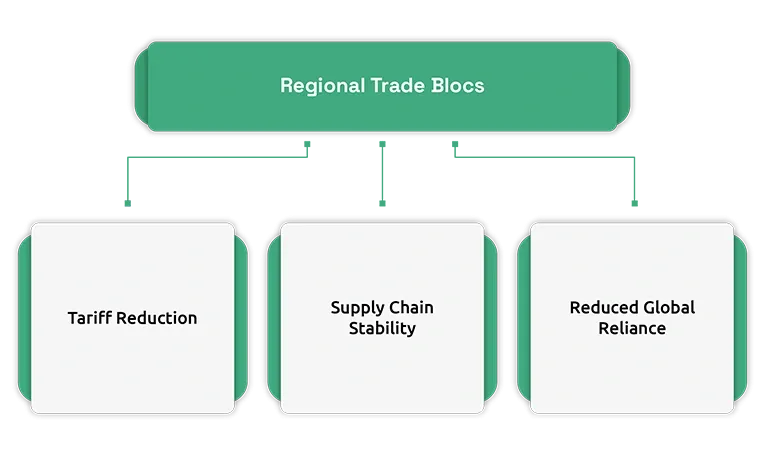
Regional trade blocs are agreements between countries that facilitate trade by lowering tariffs, which’s like a fee on imported goods and making rules simpler. This helps countries work together better and makes it easier for them to do business with each other. For example there are trade agreements in North American, European and Asian regions. These agreements make it easier for companies to do business within their region instead of trying to work with companies across distant global networks.
These blocs create a favorable environment for localized manufacturing by lowering the fees for bringing things imported from countries and making the rules and regulations easier. For import-export businesses, these blocs create a place for localized manufacturing and that is why the blocs are so important, for import-export businesses.
Additionally trade blocs help get materials and parts from nearby locations. This makes companies less reliant on suppliers from over the world. It also helps them deal with problems in the supply chain. For industries like automotive, which need different parts from many suppliers, trade blocs make it easier to plan and be stable.
Automotive Manufacturing
Automotive manufacturing is one of the most complex and interconnected industries in the world. It involves multiple stages, from sourcing raw materials to assembling finished vehicles. Now they are facing some big problems like the production of automotive and figuring out how to increase production.
Localization allows manufacturers to establish production facilities closer to key markets. This not only reduces lead times but also improves coordination with regional suppliers. For example, automotive companies can source components locally, ensuring faster delivery and better quality control.
For import-export businesses, this shift creates new opportunities and challenges. While the volume of long-distance shipments may decrease, the demand for regional trade services increases. Companies must adapt by developing expertise in regional regulations, compliance requirements, and efficient distribution networks.
Moreover, the integration of advanced technologies such as automation and digital manufacturing is further driving localization. These technologies enable manufacturers to maintain high production standards while operating in multiple regional locations.
Trade Blocs Driving Localization in Automotive Manufacturing
Regional trade blocs play a crucial role in accelerating localization in automotive manufacturing. By offering economic incentives and reducing trade barriers, they encourage companies to invest in regional production facilities. This shift is particularly evident in the automotive sector, where proximity to markets is essential for meeting customer demands and regulatory requirements.
The main reason for this trend is that companies want supply chains that can handle problems. Big events around the world have shown that it is not an idea to rely too much on suppliers that are very far away. By localizing production within trade blocs, manufacturers can minimize these risks and ensure continuity.
Regulatory compliance is another thing to think about. When it comes to emissions and safety and quality different places have their rules. If a company makes products in a region it is easier for them to follow the rules of that region. This way companies that do manufacturing can avoid getting in trouble and having to deal with regulatory compliance issues, which means they can avoid penalties and delays with regulatory compliance. Regulatory compliance is a deal so localized manufacturing really helps with that.
For import-export businesses, this evolving landscape requires a strategic approach. Import-export businesses have to make sure they have connections, they need to know what the local rules are for trading and they have to use technology to make their work easier.. If import-export businesses use tools to follow the rules and make their processes simpler they can deal with the complicated parts of trading in their region.
Some industries, like IT and aviation and medical equipment are also doing well because of this change. The fact that they all use the supply chain system means they can work together and come up with new ideas, which makes everything more efficient.

Conclusion
Regional trade blocs are changing the way the global automotive industry works by making companies set up factories in regions. This is really changing the way things are done. Now businesses want to make sure the global automotive industry can handle problems work well and follow the rules.
For import-export businesses operating across IT, aviation, medical, and automotive sectors, this is a chance to change and get bigger. They can do this by understanding how trade works in regions using technology to their advantage and making strong connections with local authorities.
Localization is getting more important all the time. To figure out what the future and global trade will be like we need to know what regional trade blocs do. Regional trade blocs will play a part, in automotive manufacturing and global trade.
DID YOU KNOW
“Directed export and import flows, comprising 30 automotive components and parts among 42 countries (accounting for 98% of world trade flows of those items). ”
FAQs
1. What are regional trade blocs?
They are agreements between countries that promote trade by reducing tariffs and simplifying regulations within a specific region.
2. What does localization in automotive manufacturing mean?
It refers to producing vehicles and components closer to the target market to improve efficiency and reduce risks.
3. How do trade blocs influence automotive manufacturing?
They encourage companies to set up regional production by offering incentives and reducing trade barriers.
4. Why is localization important for supply chains?
It improves resilience, reduces lead times, and minimizes dependency on distant suppliers.
5. How does this trend affect import-export businesses?
Businesses must adapt to regional regulations, develop local networks, and optimize operations to stay competitive.