Introduction
In 2026, the growth of AI infrastructure will change international logistics. Large numbers of GPUs, servers, storage systems, networking hardware, racks, and cooling systems are required in AI data centers. These goods are usually costly, large, sensitive, and regulated by strict deployment timelines.
Moving this equipment gets more difficult when businesses build and grow AI data centers across national borders. Businesses need to carefully review local laws, import documents, customs clearance, & transportation. For worldwide AI deployments, this is making import compliance, data center equipment shipping, & AI hardware logistics more important.
Why AI Hardware Is Creating New Logistics Challenges
As more AI data centers are developed by companies, the demand for GPUs and AI servers is increasing. Large shipments of servers, storage systems, networking devices, racks, and cooling systems are usually required for these projects. For a single project, equipment may also need to be shipped to different countries, which makes difficult the logistics of AI equipment.
High-value AI equipment is usually needed on strict deployment times. Transportation, import documents, customs clearance, taxes, and local rules must all be carefully planned by companies. Because of this, shipping data center equipment and following to import rules are important parts of any AI hardware setup.
What AI Hardware Is Being Shipped Globally?
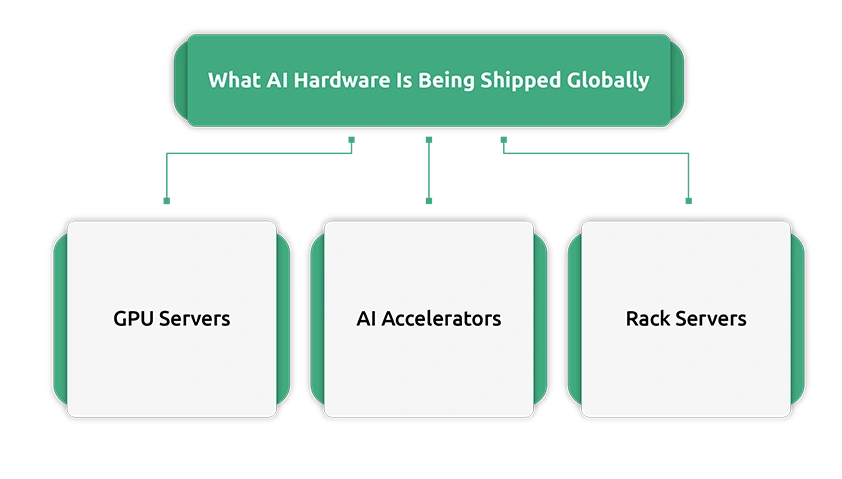
AI data centers need many types of equipment to support computing and daily operations. GPUs and AI accelerators, including GPU servers, AI accelerator cards, and high-performance computing equipment, provide the computing power needed for AI workloads.
Companies also ship servers and storage equipment, such as rack servers, storage systems, and compute nodes. Networking equipment like switches, routers, firewalls, and network interface equipment connects these systems and helps move data across the data center.
Other important shipments include data center power and cooling equipment. Racks, PDUs, UPS systems, liquid cooling systems, CDUs, and heat exchangers help power, protect, and cool the equipment. As AI deployments grow, data center equipment shipping must cover all these systems together.
How AI Hardware Is Changing International Shipping
International shipping is changing as a result of AI hardware since companies are delivering more costly equipment in larger quantities. In order to transfer equipment safely and efficiently, shipment planning, secure shipping, and careful handling are now commonly required in AI hardware logistics. Companies can also use different types of shipment for large projects in order to reach to their main goal.
When GPUs, servers, or other equipment are urgently required for a deployment, air freight for AI equipment may be useful. For larger, planned goods where delivery time is less important, ocean freight can be a better choice. The cargo’s size, value, urgency, and deployment timing all affect the correct decision. When equipment needs to move via multiple methods of shipping before reaching at the data center, transportation with multiple modes can also be used.
Customs Compliance Is Becoming More Important for AI Hardware
Before AI hardware shipments to enter a country, they must have the correct customs information. Companies must check the correctness of the import documents, customs value, country of origin, tariffs, taxes, & HS classification. Also some products may require import permits, approvals, or other requirements specific to the product. Customs officials may also check the equipment’s final purpose and user.
For GPUs, servers, and network equipment, correct HS classification is important since it could affect customs charges and regulatory checks. Also, requirements can change by country. Depending on the location, power systems, computing devices, and wireless and telecom equipment may require different licenses. Before shipping, companies are more prepared for these requirements by following to good import compliance for AI equipment.
The Role of Warehousing and Distribution in AI Hardware Logistics
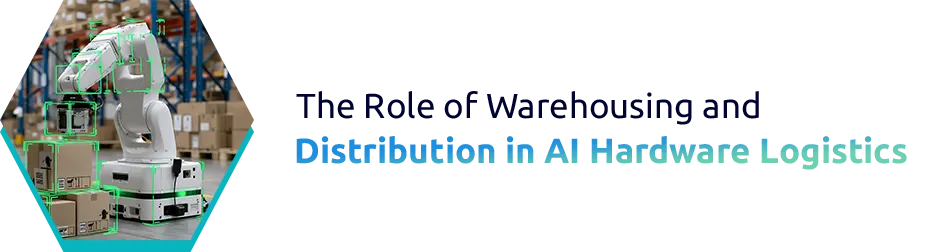
Before AI technology reaches at the data center, warehousing helps companies in handling it. Cross-docking, inventory staging, shipment combining, & short-term storage are typical uses of AI hardware logistics. Depending on the project design, equipment can be distributed to different sites after being stored securely.
International shipping may be the initial stage in the logistics process, which can then proceed to a local warehouse or staging place. The equipment can then proceed through final-mile delivery to the data center and country-level deployment. Throughout the process, safe handling is important, particularly for costly GPUs, servers, and other data center hardware.
How IOR and Global Logistics Providers Support AI Hardware Deployments
AI hardware deployments often involve moving GPUs, servers, networking equipment, and other data center equipment across several countries. One Union Solutions provides IOR services, freight forwarding, cross-border shipments, local delivery planning, and customs clearance to help these projects. This helps companies in controlling various elements of the shipment, from international shipping to destination.
For larger or more important shipments, white-glove delivery allows for careful handling and delivery to the proper location. Customs clearance & freight forwarding do not instantly change a company into a legal importer, thus the tasks should remain different. When import duties are required and accepted, the Importer of Record (IOR) takes responsibility for them.
Conclusion
The AI hardware boom is changing global logistics. Companies must plan how to transport, import, clear, store, and deliver GPUs, servers, networking equipment, & other data center equipment in different countries as they ship more of these devices.
Transport, customs, regulatory compliance, IOR services, warehousing, and final-mile delivery should all be included in a strong AI hardware logistics plan. Companies can more easily handle their AI infrastructure deployments if they plan these areas together.
Did you know
The global AI server market was valued at roughly 124 to 128 billion dollars in 2024 and is forecast to reach around 850 billion dollars by 2030, a compound annual growth rate near 38 percent, among the fastest sustained expansions of any major hardware category on record.
FAQ
What types of AI hardware are shipped internationally?
GPUs, AI servers, storage systems, switches, routers, racks, UPS systems, and data center cooling equipment are all commonly delivered.
Why is shipping GPUs more complex than normal equipment?
GPUs are often high-value and may be needed quickly for a data center project. This requires careful transport, customs planning, and secure handling.
Can the same AI hardware be shipped to different countries?
Yes, but each country can have different customs and product requirements. A shipment plan may need to be checked separately for each destination.
What happens after AI hardware reaches the destination country?
The equipment can move to a warehouse or staging place following import clearance before final-mile delivery to the data center.
Can One Union Solutions support multi-country AI hardware shipments?
Yes. One Union Solutions can support IOR services, customs coordination, freight forwarding, multi-country shipments, and local delivery coordination for accepted AI hardware shipments.