Introduction
Businesses today depend on high-value equipment such as servers, GPUs, data center equipment, networking devices, medical equipment, and industrial machinery. These goods are often shipped across international borders to support business operations. However, shipping high-value equipment internationally needs careful planning because these items are expensive and sensitive.
Importers may face risks such as cargo theft, physical damage, poor packaging, customs delays, incorrect shipping documents, and high shipping costs. Proper packaging, secure cargo transportation, shipment tracking, and import compliance can help protect valuable goods and make cross-border equipment transportation easier.
What Makes High-Value Equipment Shipments Different?
The carrier should have documented procedures in place for high value or cargo vulnerable to theft or damage. The carrier should have liability limits commensurate with the value of the largest shipment you anticipate. The carrier should have specific experience and expertise in handling your equipment/products. The carrier should employ modern tracking technologies such as GPS tracking for both the tractor and the trailer.
Shippers usually opt for air transportation if their cargo requires shorter transit times or if it has high value. Items of special cargo have specific needs during air transportation – they may need special packaging, labelling, documentation, and handling, for example. The sub-category of special cargo known as valuables includes items at high risk of theft.
You may also require additional security measures, such as an escorted truck with GPS or warehouse storage within a high-value cage. This minimizes the risk of loss and damage in transit.
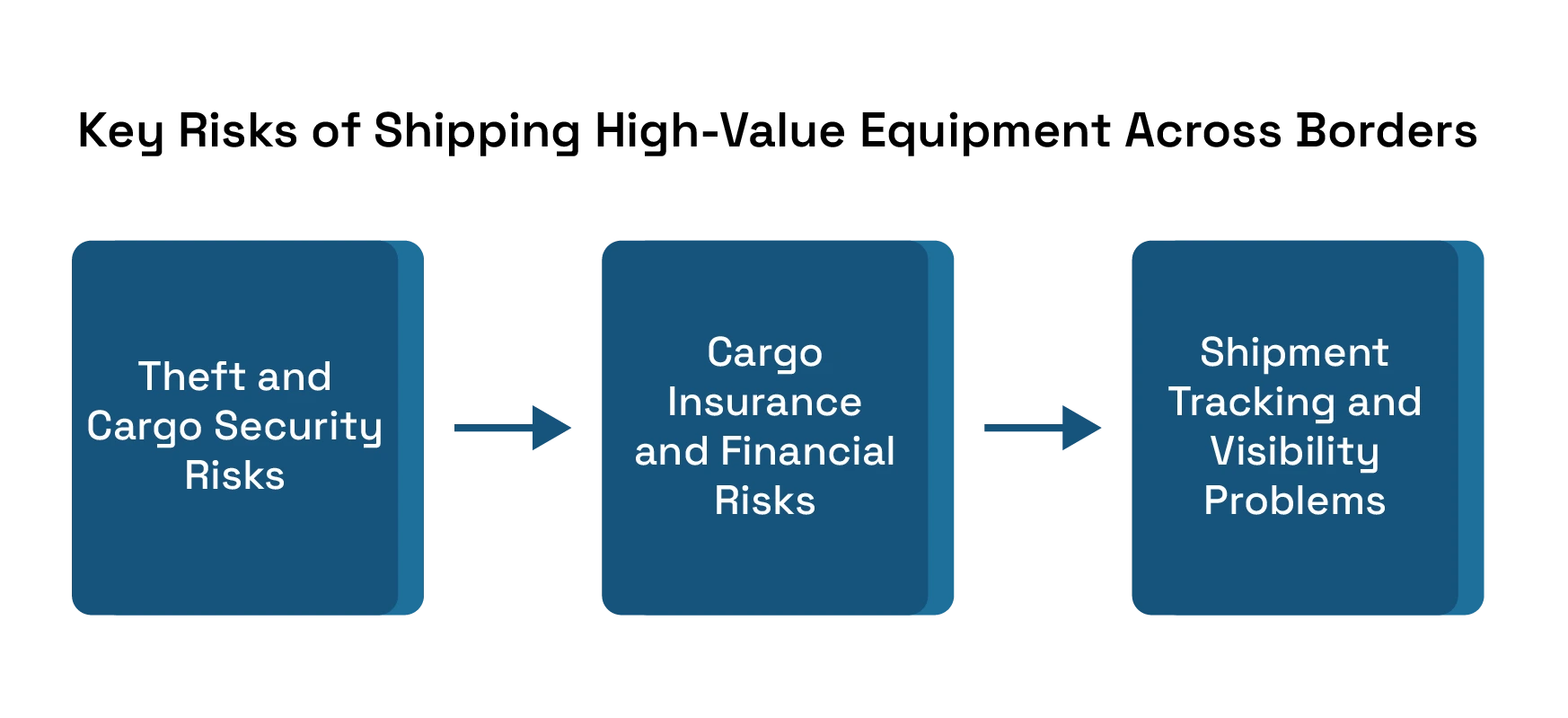
Key Risks of Shipping High-Value Equipment Across Borders
Shipping expensive equipment across countries involves several risks. Importers need to understand these problems before sending their goods. Even a small mistake during transportation or customs clearance can lead to extra costs, delays, or damage.
Theft and Cargo Security Risks
Straight cargo theft occurs when cargo is physically stolen from its current location. Strategic cargo theft occurs when thieves incorporate deceptive tactics to commit theft. Theft can occur from, but not limited to, the Methods of transportation like railroads truck aircraft, other vehicle, Locations like storage facility, station house, platform, depot, airport, air navigation facility, container freight station, warehouse, freight distribution facility, freight consolidation facility and Containers like intermodal container, intermodal chassis, trailer. Never leave loads unattended, especially in known cargo theft areas.
Customs Delays and Import Compliance Issues
Customs rules are different in every country. Importers may face delays if they use incorrect HS code classification, provide incomplete shipping documents, or declare the wrong customs value. Some equipment may also need import permits or product-specific approvals before shipment. Missing details in customs declarations can lead to inspections, extra charges, or shipment holds. Checking import rules before dispatch can help avoid these problems.
Cargo Insurance and Financial Risks
The Bill of Entry is subject to verification by the proper officer of Customs (under self-assessment scheme) and may be reassessed if declarations are found to be incorrect. It is at the time of clearance of goods that these are examined by the Customs to confirm the nature of goods, valuation and other aspects of the declarations.
Shipment Tracking and Visibility Problems
Conveyance and container integrity is maintained while the conveyance is en route transporting cargo to the point of export. Utilizing a tracking and monitoring activity log or equivalent technology is required drivers should notify the dispatcher of any route delays due to weather, traffic and/or rerouting. Transportation provider management must perform a documented, periodic, and unannounced verification process to ensure the logs are maintained and conveyance tracking and monitoring procedures are being followed and enforced.
How Importers Can Reduce Risks When Shipping High-Value Equipment
Importers must conduct a comprehensive assessment of their international supply chains. importers must require their business partners to demonstrate that they are meeting C-TPAT security criteria via written/electronic confirmation. High risk supply chain components should be reviewed more frequently than low risk components.
The importer must work with these business partners to ensure that pertinent security measures are in place and adhered to throughout their supply chain. Foreign suppliers, manufacturers, cargo handling and storage facilities in foreign locations must have physical barriers and deterrents that guard against unauthorized access.
All shortages, overages, and other significant discrepancies or anomalies must be resolved and/or investigated appropriately. Customs and/or other appropriate law enforcement agencies must be notified if illegal or suspicious activities are detected as appropriate.
Choosing the Right Shipping Method for High-Value Equipment
Offering or using any combination of road, rail, air or sea to transport your goods overseas. A freight forwarder may save you time and money if you’re exporting large volumes of goods or high-value items.
Incoterms (international commercial terms) are an international shorthand system to make sure all your responsibilities, costs and associated risks of exporting products are clearly allocated, agreed and recorded.
Air is more expensive than surface or sea transport, but the higher costs may be offset by faster delivery, lower insurance, cheaper warehousing, exotic markets and better inventory control.
Shipping large items, bulk commodities and goods to offshore markets that do not require fast delivery is more economical by sea.
Conclusion
This details helps you confirm that key legal and regulatory requirements are identified and addressed before you finalize export deals, shipments or partnerships. Before shipment or contract signature, has a final compliance check been completed for this order or project, and has any required internal approval been have been submitted.
Did you know
The data center information technology (it) equipment market size has grown strongly in recent years. It will grow from $148.13 billion in 2025 to $161.87 billion in 2026 at a compound annual growth rate (CAGR) of 9.3%.
FAQ
What type of equipment needs special care during international shipping?
Servers, GPUs, networking devices, medical equipment, and industrial machinery need special care because they are expensive and may contain sensitive parts.
How can importers protect servers and GPUs during transportation?
Importers can use shock-resistant packaging, moisture protection, secure containers, and careful handling to protect servers and GPUs from damage.
What causes customs delays when importing high-value equipment?
Incorrect HS codes, missing documents, wrong customs values, and pending import approvals can cause delays during customs clearance.
Is air freight a better option for shipping expensive IT equipment?
Air freight is useful when IT equipment needs quick delivery. However, importers should compare shipping costs, cargo restrictions, and handling requirements before choosing it.
What documents are needed to ship high-value equipment across borders?
Common documents include a commercial invoice, packing list, Air Waybill or Bill of Lading, and certificate of origin where required. Some equipment may also need special permits or approvals.