The semiconductor industry has a complex supply chain with parts of production spread out internationally. Countries rely on other countries for delivering and producing the key elements of the semiconductors. Problems in the supply chain, shipping delays, and limited stocks in major locations can also affect the whole industry. It relies on global suppliers, equipment, and raw material manufacturing & shipping. It also requires global planning and supply chain management and logistics in operating the semiconductor production.
Understanding Semiconductor Manufacturing Equipment
The semiconductor supply chain is global, specialized, and interconnected. Chipmakers do business with thousands of individual suppliers that provide the highly complex materials and tools used to produce semiconductors. Often, even the biggest chipmakers lack full visibility into their entire supply chain.
Subsystems of a photolithography machine. A single photolithography machine incorporates many subsystems that are often sourced from highly specialized suppliers who have many suppliers of their own. The proliferation of suppliers at tier 2 and above—subsystems and materials suppliers that chipmakers often have no direct relationship with—makes it difficult for any one company to have full supply-chain visibility.
Advancing U.S. technology leadership. Major U.S. semiconductor manufacturing equipment and materials suppliers will increase their footprints in the United States, reinforcing American technology leadership in the supply chain. In addition, non-U.S. suppliers of the world’s most advanced semiconductor manufacturing equipment, materials, and subsystems will establish large-scale footprints in the United States for the first time, contributing to and benefiting from the domestic innovation ecosystem and bringing new strategic capabilities and know-how to the United States.
The Global Supply Chain of Semiconductor Equipment.
Semiconductors are produced through an extremely disaggregated global supply chain, with thousands of production stages spread across the world. This has generated a high degree of interdependence, complexity and geographical concentration across different production stages. For example, most manufacturing takes place in East Asia, particularly in Taiwan.
Semiconductor production involves three broad stages like design, wafer and chip manufacturing, and assembly, testing, and packaging (ATP). Manufacturing and ATP both require specialized equipment and many different raw materials. Different companies based in multiple countries produce the equipment and materials, which introduces complexity to the supply chain. In addition, all three stages continue to evolve through advancements in research and development (R&D).
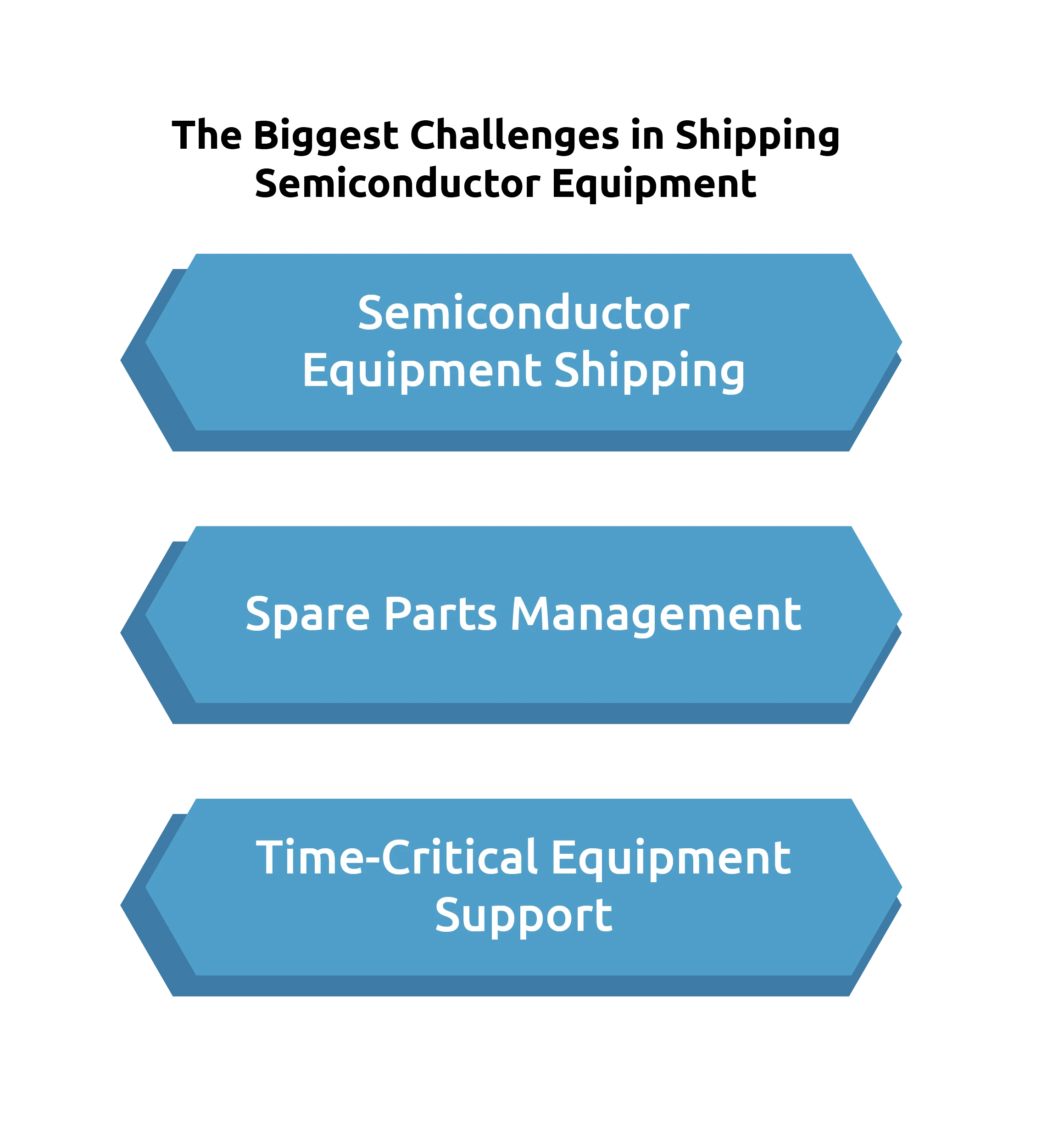
The Biggest Challenges in Shipping Semiconductor Equipment
At the heart of every semiconductor fab are the expensive and highly specialized machines used to etch the transistors and other components onto silicon wafers. These machines are produced by only a handful of companies worldwide. Manufactures the most advanced extreme ultraviolet (EUV) equipment needed to produce today’s most advanced chips.
During the operating life of a fab, equipment providers will remain on hand to support, maintain, and repair their equipment. The service level agreements between suppliers and customers are stringent, with response times measured in minutes or hours rather than days. To deliver that level of support, equipment makers will hold spare parts inventories at forward stocking locations or warehouse facilities close to the customer. Suppliers face significant competition for the critical warehousing locations close to newly constructed fabs, which tend to be in short supply. They also require rapid and efficient transport links back to their home operations.
The Role of Specialized Logistics in Semiconductor Equipment Shipping
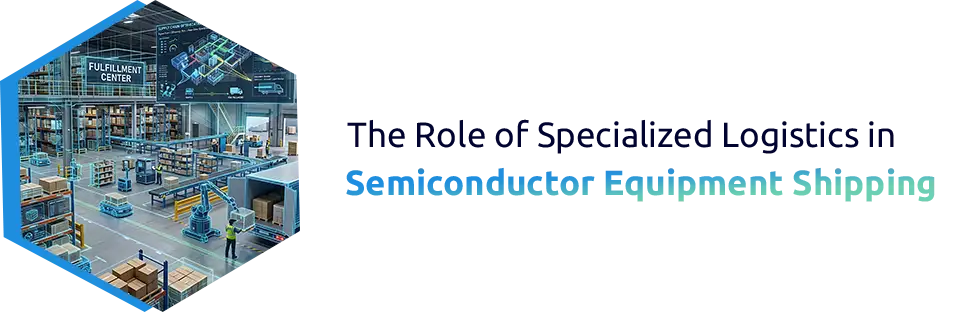
Semiconductor manufacturing equipment is large, highly valuable, and extremely sensitive precision machinery that can be affected by even slight vibrations or shocks. As a result, in addition to transportation from manufacturing sites to customer factories, highly specialized handling and strict operational management are required throughout the entire process, including delivery into cleanrooms and installation. Each stage of this process requires specialized expertise, from packing at the manufacturing site to transportation, customs clearance, and delivery and installation inside cleanrooms.
Meeting the complex logistics demands that are involved in moving the highly sophisticated and sensitive equipment used to produce semiconductors requires high-security storage of capital equipment IT infrastructure with real-time end-to-end visibility and control tools so you can keep your semiconductor supply chain flowing reliably. This can include a control tower solution that coordinates all of your semiconductor operations providing you with one point of contact and an optimised supply chain.
How Global Trade Restrictions Affect Semiconductor Equipment Movement
Semiconductor machines are affected by the rules and laws of different countries. Some countries do not allow specific advanced machines and technologies to be deliver to other countries. These rules are made to protect their important technology and national security.
They also have to proper documents and follow all export rules. These rules can sometimes make for a long and difficult shipping experience. Customs officials can also delay and search the machines more. Customs officials can impose fines on companies and hold shipping to companies if they do not comply. Such rules can also affect the cost and time of shipment. Therefore, companies must understand the trade rules and plan everything properly to move semiconductor equipment safely from one country to another.
Conclusion
Semiconductor equipment plays an important role in making computer chips. These machines need to be moved safely from one country to another. As the demand for chips increases, companies need good planning to transport these machines on time. Packing, handling, and proper documents avoid damages on the machines. During shipping, companies also follow the rules of every country. Good logistics services avoid damages and delays. Keeping them safe and on time keeps the factories rolling out chip.
Did you know
The United States & China are leading importers of semiconductors, with the former accounting for roughly 40% of worldwide chip consumption and projected to hit $1 Trillion by 2030 as demand across industries increases.
FAQ
Why is semiconductor equipment difficult to transport internationally?
These machines are expensive and sensitive to vibration, dust, moisture, and temperature changes. They need special packaging and careful handling during shipping.
How do export restrictions affect semiconductor equipment shipping?
Some countries restrict the export of advanced chip-making machines and related technologies. Companies may need export licences and must check the destination, end user, and intended use before shipping.
How can companies reduce damage during semiconductor equipment transportation?
Companies can use protective packaging, shock monitoring, secure loading, and temperature control where required to protect machines during transit.
Why is an Importer of Record important for semiconductor equipment imports?
An Importer of Record takes responsibility for the importer’s customs obligations, including applicable declarations, duties, and taxes. It can help companies import equipment into countries where they do not have a local legal entity, subject to local rules.
Which shipping method is suitable for semiconductor manufacturing equipment?
Air freight is useful for urgent and high-value shipments, while sea freight is suitable for large equipment when delivery time is more flexible.