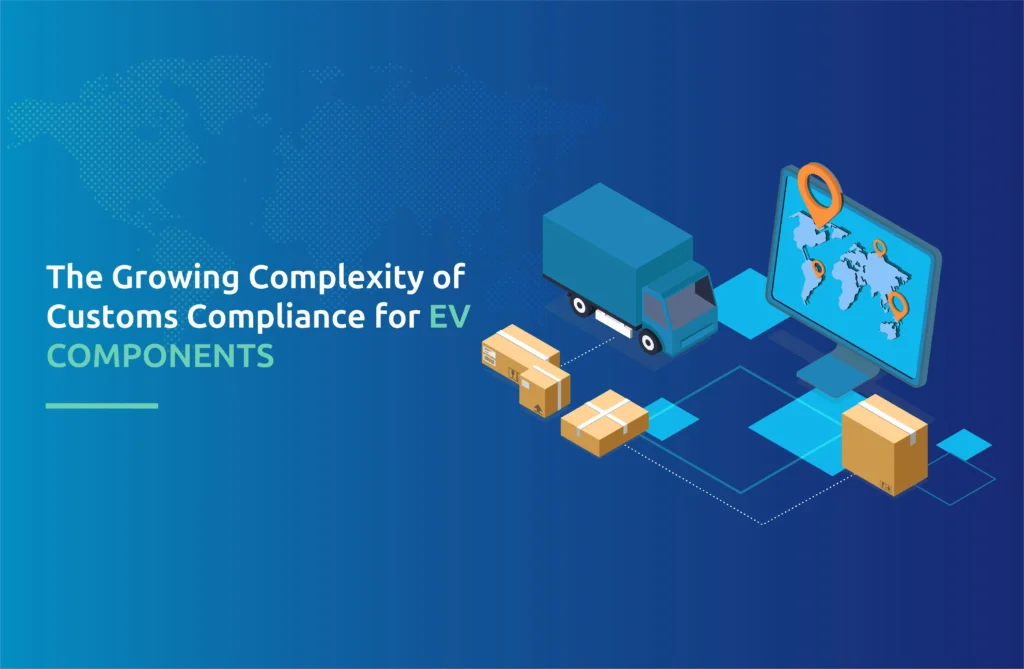
The high demand for electric vehicles (EVs) is increasing the international trade of batteries, motors, charging systems, & other EV components. However, exporting these parts is becoming more challenging as countries have different customs rules, import duties, safety standards, & documentation needs. Businesses must understand these rules before shipping EV components to avoid customs delays, extra costs, & compliance issues. Accurate planning, correct HS code classification, & correct shipping documents can help manufacturers & suppliers manage global shipments more easily.
Why Importing Electric Vehicle Components Is Becoming More Challenging
The electric vehicle industry is rapidly expanding globally because people seek eco-friendly alternatives to traditional transportation. EV component imports, which encompass batteries with motors and control systems, introduce their distinctive difficulties during the importation process. The import process becomes complicated and slow for businesses due to multiple regulatory obstacles, exacting compliance rules, and import barriers. The success of companies that handle aviation and automobile or IT and medical equipment depends on their ability to overcome present obstacles to maintain swift deliveries at acceptable costs. The complicated web of international trade laws becomes more difficult to handle for businesses when targeting electric vehicles as their specialized product. This article presents strategies to help businesses cross regulatory borders when importing electric vehicle components through optimized supply chain systems, international standard compliance, and appropriate partner selection for process streamlining.
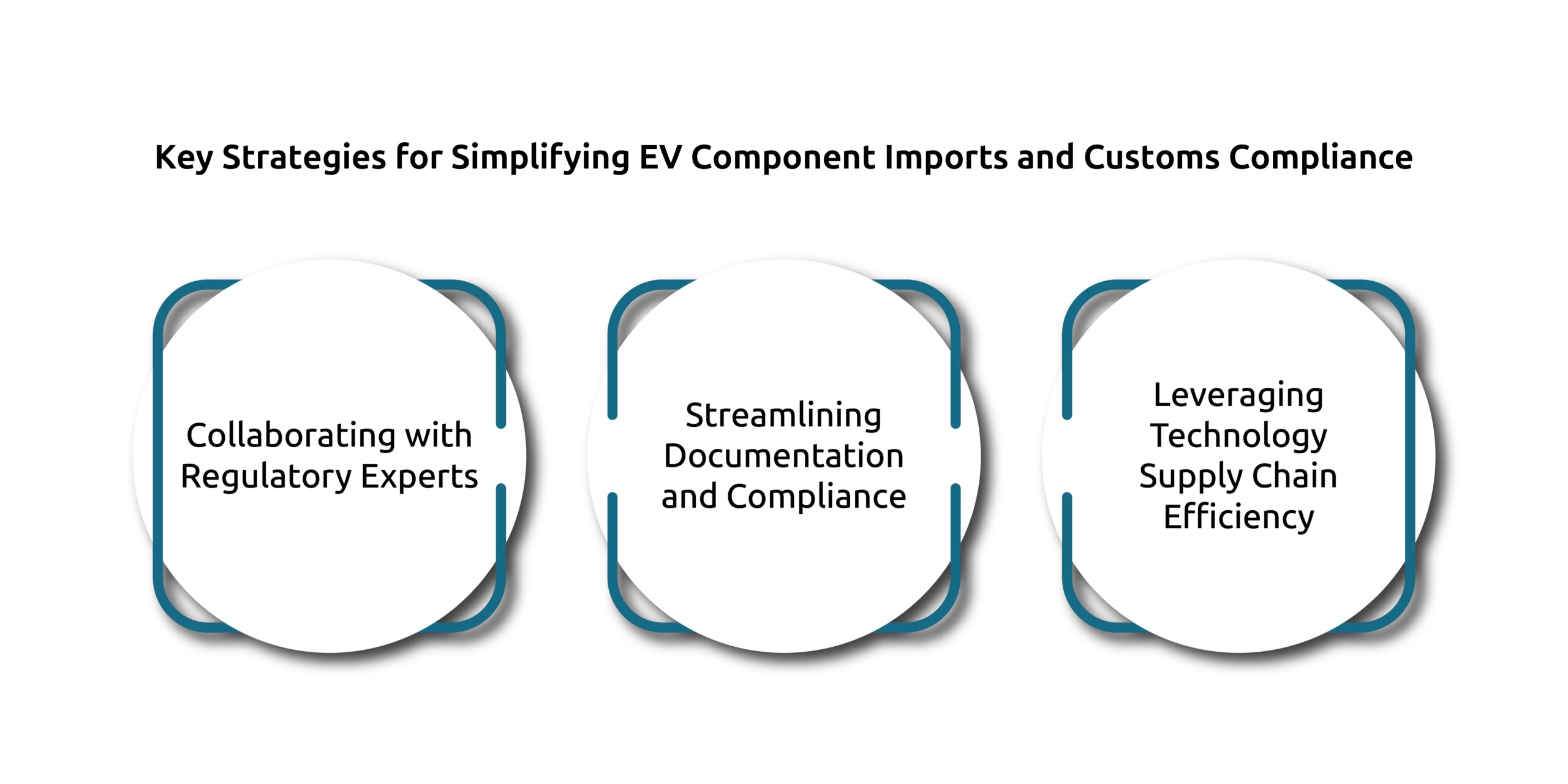
Key Strategies for Simplifying EV Component Imports and Customs Compliance
Collaborating with Regulatory Experts
The most useful technique to handle regulatory hurdles is connecting with specialist organizations with firsthand knowledge of your target market’s import regulations. Businesses should connect with regulatory experts who will deliver data about necessary compliance standards & provide knowledge of tariffs & useful documentation for seamless customs processes. Experts bring value to businesses that import aviation equipment, automobile components, IT/data centre equipment, & medical devices. Businesses that collaborate with regulatory experts obtain current information about trade policies, customs procedures, & safety standards. By developing this strategy, companies reduce risks that lead to delivery issues & financial penalties while ensuring a continuous import operation.
Streamlining Documentation and Compliance
The necessary approach also includes optimizing documentation procedures and fully observing all applicable regulatory mandates. The import process for electric vehicle components includes mandatory document submission consisting of invoices together with certificates of origin and bills of lading, and import licenses. The accuracy of documentation merged with its complete state plays a vital role in preventing customs delays. Companies should select warehouse management systems or enterprise resource planning systems to help them handle and track documentation. The systems demonstrate real time inventory and order visibility, facilitating tracking of shipment compliance status.
Leveraging Technology | Supply Chain Efficiency
Operational efficiency during importation processes becomes higher because technological solutions remove regulatory barriers. Companies can streamline customs work through automated systems and digital resources, which help manage inventory control and provide ongoing shipment monitoring information. Company operations benefit from track-and-trace system capabilities that enable real-time shipment tracking, therefore allowing for the monitoring of delays as well as regulatory compliance. Cloud based storage solutions provide secure access to necessary paperwork, which helps prevent errors and broken data during importation processes.
EV Battery Safety, Testing and Environmental Compliance Requirements
Businesses must confirm that their EV components meet environmental safety and trade regulations. The strict regulations focus primarily on batteries because they have an environmental impact. A country’s regulations demand that EV batteries entering for sale in their market need testing services and certification procedures first. Businesses must cooperate with local agencies and third-party testing laboratories so their components can pass safety inspections before sales. Countries have regulations about electric vehicle battery transportation and disposal procedures that impact the importation process.

Conclusion
A proactive, methodical approach to global trade compliance is used to navigate the ever-changing world of electric vehicle component imports. Regulatory agencies will keep improving safety, environmental, & tariff needs for high-voltage batteries, motors, & electronic control units as the need for sustainable mobility grows worldwide. Companies that use reactive shipping methods are more susceptible to supply chain delays, unforeseen demurrage charges, & customs holds. On the other hand, companies that establish strong compliance frameworks—by automating tracking, standardizing documentation, confirming battery safety certifications, & collaborating with knowledgeable regulatory experts turn cross-border logistics into a competitive advantage, guaranteeing continuous operations and long-term development in the international EV market.
Did you know?
Mexico has distinct advantages for automotive manufacturing and supply both in terms of geography and car sector’s history there. It obviously borders the US across which the majority of its automotive volumes are exchanged by both truck and rail, but also has well-developed port infrastructure for both inbound and outbound parts and finished vehicle shipments, both shortsea to the US and Canada, and for global overseas markets. That is supported by 13 different international free trade agreements, which is more than any other nation globally.
FAQ
What are the key customs compliance challenges when importing EV components?
Importing EV components involves complex Harmonized System (HS) code classification, fluctuating international tariffs, strict dangerous goods transport safety standards, and regional environmental compliance policies. Navigating these multi-layered trade barriers requires precise documentation to avoid port holds and costly demurrage fees.
Which safety standards and certifications apply to cross-border EV battery shipments?
Lithium-ion EV batteries are classified as dangerous goods and must undergo mandatory safety testing under the UN 38.3 standard—which tests for altitude, thermal extremes, vibration, shock, and short circuits—along with maintaining a valid UN38.3 Test Summary. Importers must also adhere to carrier-specific state of charge (SoC) rules, UN hazard packaging classifications , and target-market certifications (such as BIS or ARAI standards).
Why is proper HS code classification critical for EV parts?
The global tariff structure differentiates heavily between raw components, sub-assemblies, and fully built units. Misclassifying specialized components—such as electric motors, traction inverters, or high-voltage battery modules—can result in miscalculated import duties, severe financial penalties, or outright shipment rejection at customs checkpoints.
How can businesses minimize customs delays for EV components?
Companies can streamline cross-border shipments by deploying enterprise resource planning (ERP) or warehouse management systems for automated documentation, implementing real-time track-and-trace monitoring, maintaining a centralized cloud repository for mandatory compliance certificates, and partnering with regulatory trade specialists.
How do international trade agreements affect the importation of EV parts?
Free Trade Agreements (FTAs) and preferential trade rules offer significant duty reductions or exemptions on EV components when strict rules of origin are met. Importers who leverage regional trade frameworks (such as Mexico’s network of international FTAs) can lower their landed costs and establish competitive global supply chains.