Electric Vehicles in Logistics: Opportunities & Challenges

Electric vehicles are growing the logistics industry. As businesses mainly focus on reducing carbon use. Electric vehicles also improve efficiency. EV use is becoming mandatory for reduce pollution from fuels. From last-mile delivery to large-scale freight operations, electric vehicles are changing how goods move across the supply chain. Their ability to operate with lower noise, minimize fuel use, & have minimal environmental effect makes them especially valuable in regulated areas. Many companies are also using EVs with smart technologies. Companies use route optimization to save time, fuel & real-time tracking to improve delivery performance & minimize operational costs. What is an electric vehicle? An electric vehicle (EV) is a type of car powered by one or more electric motors for propulsion, rather than an internal combustion engine (ICE) that burns fossil fuels like petrol or diesel. There are several types of electric vehicles, such as battery (BEV), hybrid (HEV), plug-in hybrid (PHEV), and fuel cell (FCEV). Electric vehicles are used to minimize environmental impact & improve energy efficiency in transportation. They produce lower emissions compared to traditional vehicles, making them a cleaner alternative. With advancements in technology, EVs are becoming more reliable, offering better range and performance. They are increasingly being adopted across industries, including logistics & supply chain operations. Opportunities of Electric Vehicles in Logistics 1. Environmental impact One of the biggest advantages of electric vehicles is their ability to minimize carbon use. Logistics companies can mainly lower their environmental impact by transforming to electric vehicles, helping meet global sustainability goals. 2. Lower Operating Costs Electric vehicles have fewer moving parts compared to traditional vehicles, which minimizes management costs. Electricity is often cheaper than fuel, leading to long-term cost savings. 3. Government Incentives & Policies Many governments offer subsidies, tax benefits, & incentives to promote EV adoption. These initiatives make it easier for logistics companies to transition to electric fleets. 4. Improved Urban Delivery Efficiency Electric vehicles are best for last-mile delivery in cities. They are quieter, produce no tailpipe emissions, & are often allowed in low-emission zones, improving delivery efficiency. 5. Improve Brand Image Companies using EVs can position themselves as environmentally responsible. This improves brand reputation & attracts eco-conscious customers. Benefits of electric vehicles in logistics Developing electric vehicles into the supply chain provides many advantages. These range from using operational expenses to improving environmental usability & public health. Reduced emissions. Electric vehicles do not produce any greenhouse gases while operating, limiting the carbon use of logistics operations. Energy efficiency. Electric motors are more usable than fuel vehicles because they convert more battery energy into motion. Lower operating costs. EVs have fewer moving parts than ICE vehicles, cutting down on management costs. Electricity is typically cheaper than fossil fuels. Regulatory compliance. Many cities are developing low-emission zones & restrictions for polluting vehicles. EVs enable companies to deal with these regulations & avoid fines. Technological innovations. Developing EVs into the supply chain drives advancements in related technologies, such as managing, Vehicle tracking, & smart charging ports. Improved environmental health. Decreased petrol and diesel vehicle use has led to good air quality, which can positively affect public health, especially in densely populated urban areas. Improve your logistics operations with electric vehicles The logistics industry is facing a strong transformation with the incorporation of electric vehicles. Although there are some drawbacks, the benefits in terms of usability, reduced operational costs, & regulatory compliance make EVs an attractive option for businesses. With continuously improved charging infrastructure & battery technology, we’ll most likely see an increase in the development of EVs in logistics worldwide in the upcoming years. Challenges of Electric Vehicles in Logistics 1. Limited Charging Infrastructure One of the main problems to EV adoption is the lack of charging stations. This can cause delays & minimize operational flexibility. 2. High Initial Investment Electric vehicles often have a higher cost than traditional vehicles. Although operating costs are lower, the initial investment can be a challenge for many businesses. 3. Range Limitations Electric vehicles mainly have a limited driving range, which can be problematic for long-distance logistics operations. Frequent charging may disrupt delivery schedules. 4. Longer Charging Time Charging an electric vehicle takes longer than refueling a vehicle. This can affect delivery timelines & whole efficiency. 5. Battery Life & Replacement Costs A battery that decreases over time can minimize vehicle performance. Changing batteries can be costly, adding to long-term costs. Conclusion Electric vehicles play an important role in developing the logistics industry. They give many benefits, with usability, cost savings, & improve efficiency. Difficulties such as infrastructure, cost, & range limitations still need to be addressed. As technology advances & support systems grow, electric vehicles are being made to become a standard in logistics operations worldwide. Did you know? Zero emissions vehicles” (ZEV) sales shares of up to 60%, across different segments. The European Union’s CO2 standards for “heavy-duty vehicles” (HDVs) target a 90% CO2 emissions reduction by 2040. FAQ 1. What are electric vehicles in logistics? Electric vehicles in logistics are battery-powered transport solutions used to move goods, including delivery vans, trucks, and two-wheelers, offering a cleaner alternative to fuel-based vehicles. 2. What are the main benefits of electric vehicles in logistics? EVs provide several benefits, such as reduced carbon emissions, lower operating and maintenance costs, quieter operations, and improved efficiency in last-mile delivery. 3. What challenges do electric vehicles face in logistics? Key challenges include limited charging infrastructure, high initial investment, range limitations, longer charging times, and battery replacement costs. 4. Are electric vehicles suitable for long-distance logistics? Currently, EVs are more suitable for short to medium distances. However, advancements in battery technology are gradually making them more viable for long-haul logistics. 5. How are governments supporting EV adoption in logistics? Governments are promoting EV adoption through incentives, tax benefits, subsidies, and investments in charging infrastructure to encourage sustainable transportation.

Table of Contents

Electric vehicles are growing the logistics industry. As businesses mainly focus on reducing carbon use. Electric vehicles also improve efficiency. EV use is becoming mandatory for reduce pollution from fuels. From last-mile delivery to large-scale freight operations, electric vehicles are changing how goods move across the supply chain. Their ability to operate with lower noise, minimize fuel use, & have minimal environmental effect makes them especially valuable in regulated areas. Many companies are also using EVs with smart technologies. Companies use route optimization to save time, fuel & real-time tracking to improve delivery performance & minimize operational costs.


What is an electric vehicle?

An electric vehicle (EV) is a type of car powered by one or more electric motors for propulsion, rather than an internal combustion engine (ICE) that burns fossil fuels like petrol or diesel.

There are several types of electric vehicles, such as battery (BEV), hybrid (HEV), plug-in hybrid (PHEV), and fuel cell (FCEV).

Electric vehicles are used to minimize environmental impact & improve energy efficiency in transportation. They produce lower emissions compared to traditional vehicles, making them a cleaner alternative. With advancements in technology, EVs are becoming more reliable, offering better range and performance. They are increasingly being adopted across industries, including logistics & supply chain operations.


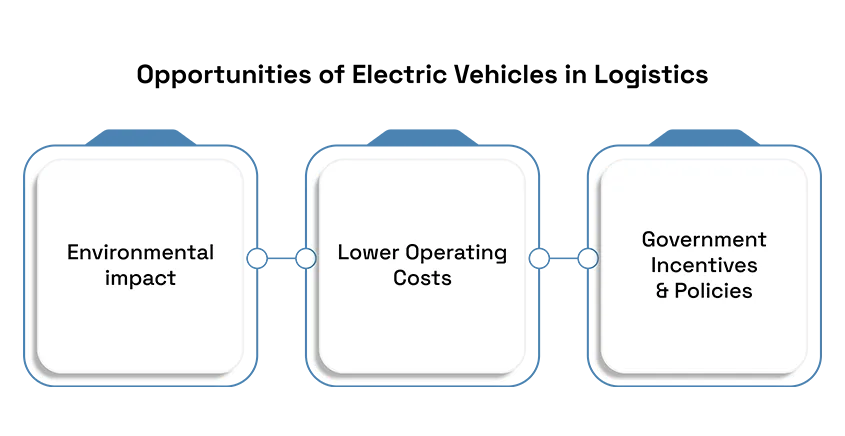
Opportunities of Electric Vehicles in Logistics

1. Environmental impact

One of the biggest advantages of electric vehicles is their ability to minimize carbon use. Logistics companies can mainly lower their environmental impact by transforming to electric vehicles, helping meet global sustainability goals.

2. Lower Operating Costs

Electric vehicles have fewer moving parts compared to traditional vehicles, which minimizes management costs. Electricity is often cheaper than fuel, leading to long-term cost savings.

3. Government Incentives & Policies

Many governments offer subsidies, tax benefits, & incentives to promote EV adoption. These initiatives make it easier for logistics companies to transition to electric fleets.

4. Improved Urban Delivery Efficiency

Electric vehicles are best for last-mile delivery in cities. They are quieter, produce no tailpipe emissions, & are often allowed in low-emission zones, improving delivery efficiency.

5. Improve Brand Image

Companies using EVs can position themselves as environmentally responsible. This improves brand reputation & attracts eco-conscious customers.

How are electric vehicles transforming the logistics industry?

Electric vehicles are transforming logistics by reducing fuel costs, lowering carbon emissions, and supporting cleaner last-mile delivery operations. Many logistics companies are adopting electric vans, trucks, and two-wheelers for urban deliveries where shorter routes and frequent stops make EVs highly efficient. They also help businesses meet sustainability goals and comply with growing environmental regulations.
 Electric vehicles are growing the logistics industry. As businesses mainly focus on reducing carbon use. Electric vehicles also improve efficiency. EV use is becoming mandatory for reduce pollution from fuels. From last-mile delivery to large-scale freight operations, electric vehicles are changing how goods move across the supply chain. Their ability to operate with lower noise, minimize fuel use, & have minimal environmental effect makes them especially valuable in regulated areas. Many companies are also using EVs with smart technologies. Companies use route optimization to save time, fuel & real-time tracking to improve delivery performance & minimize operational costs. What is an electric vehicle? An electric vehicle (EV) is a type of car powered by one or more electric motors for propulsion, rather than an internal combustion engine (ICE) that burns fossil fuels like petrol or diesel. There are several types of electric vehicles, such as battery (BEV), hybrid (HEV), plug-in hybrid (PHEV), and fuel cell (FCEV). Electric vehicles are used to minimize environmental impact & improve energy efficiency in transportation. They produce lower emissions compared to traditional vehicles, making them a cleaner alternative. With advancements in technology, EVs are becoming more reliable, offering better range and performance. They are increasingly being adopted across industries, including logistics & supply chain operations. Opportunities of Electric Vehicles in Logistics 1. Environmental impact One of the biggest advantages of electric vehicles is their ability to minimize carbon use. Logistics companies can mainly lower their environmental impact by transforming to electric vehicles, helping meet global sustainability goals. 2. Lower Operating Costs Electric vehicles have fewer moving parts compared to traditional vehicles, which minimizes management costs. Electricity is often cheaper than fuel, leading to long-term cost savings. 3. Government Incentives & Policies Many governments offer subsidies, tax benefits, & incentives to promote EV adoption. These initiatives make it easier for logistics companies to transition to electric fleets. 4. Improved Urban Delivery Efficiency Electric vehicles are best for last-mile delivery in cities. They are quieter, produce no tailpipe emissions, & are often allowed in low-emission zones, improving delivery efficiency. 5. Improve Brand Image Companies using EVs can position themselves as environmentally responsible. This improves brand reputation & attracts eco-conscious customers. Benefits of electric vehicles in logistics Developing electric vehicles into the supply chain provides many advantages. These range from using operational expenses to improving environmental usability & public health. Reduced emissions. Electric vehicles do not produce any greenhouse gases while operating, limiting the carbon use of logistics operations. Energy efficiency. Electric motors are more usable than fuel vehicles because they convert more battery energy into motion. Lower operating costs. EVs have fewer moving parts than ICE vehicles, cutting down on management costs. Electricity is typically cheaper than fossil fuels. Regulatory compliance. Many cities are developing low-emission zones & restrictions for polluting vehicles. EVs enable companies to deal with these regulations & avoid fines. Technological innovations. Developing EVs into the supply chain drives advancements in related technologies, such as managing, Vehicle tracking, & smart charging ports. Improved environmental health. Decreased petrol and diesel vehicle use has led to good air quality, which can positively affect public health, especially in densely populated urban areas. Improve your logistics operations with electric vehicles The logistics industry is facing a strong transformation with the incorporation of electric vehicles. Although there are some drawbacks, the benefits in terms of usability, reduced operational costs, & regulatory compliance make EVs an attractive option for businesses. With continuously improved charging infrastructure & battery technology, we’ll most likely see an increase in the development of EVs in logistics worldwide in the upcoming years. Challenges of Electric Vehicles in Logistics 1. Limited Charging Infrastructure One of the main problems to EV adoption is the lack of charging stations. This can cause delays & minimize operational flexibility. 2. High Initial Investment Electric vehicles often have a higher cost than traditional vehicles. Although operating costs are lower, the initial investment can be a challenge for many businesses. 3. Range Limitations Electric vehicles mainly have a limited driving range, which can be problematic for long-distance logistics operations. Frequent charging may disrupt delivery schedules. 4. Longer Charging Time Charging an electric vehicle takes longer than refueling a vehicle. This can affect delivery timelines & whole efficiency. 5. Battery Life & Replacement Costs A battery that decreases over time can minimize vehicle performance. Changing batteries can be costly, adding to long-term costs. Conclusion Electric vehicles play an important role in developing the logistics industry. They give many benefits, with usability, cost savings, & improve efficiency. Difficulties such as infrastructure, cost, & range limitations still need to be addressed. As technology advances & support systems grow, electric vehicles are being made to become a standard in logistics operations worldwide. Did you know? Zero emissions vehicles” (ZEV) sales shares of up to 60%, across different segments. The European Union’s CO2 standards for “heavy-duty vehicles” (HDVs) target a 90% CO2 emissions reduction by 2040. FAQ 1. What are electric vehicles in logistics? Electric vehicles in logistics are battery-powered transport solutions used to move goods, including delivery vans, trucks, and two-wheelers, offering a cleaner alternative to fuel-based vehicles. 2. What are the main benefits of electric vehicles in logistics? EVs provide several benefits, such as reduced carbon emissions, lower operating and maintenance costs, quieter operations, and improved efficiency in last-mile delivery. 3. What challenges do electric vehicles face in logistics? Key challenges include limited charging infrastructure, high initial investment, range limitations, longer charging times, and battery replacement costs. 4. Are electric vehicles suitable for long-distance logistics? Currently, EVs are more suitable for short to medium distances. However, advancements in battery technology are gradually making them more viable for long-haul logistics. 5. How are governments supporting EV adoption in logistics? Governments are promoting EV adoption through incentives, tax benefits, subsidies, and investments in charging infrastructure to encourage sustainable transportation.

Benefits of electric vehicles in logistics

Developing electric vehicles into the supply chain provides many advantages. These range from using operational expenses to improving environmental usability & public health.

Reduced emissions. Electric vehicles do not produce any greenhouse gases while operating, limiting the carbon use of logistics operations.

Energy efficiency. Electric motors are more usable than fuel vehicles because they convert more battery energy into motion.

Lower operating costs. EVs have fewer moving parts than ICE vehicles, cutting down on management costs. Electricity is typically cheaper than fossil fuels.

Regulatory compliance. Many cities are developing low-emission zones & restrictions for polluting vehicles. EVs enable companies to deal with these regulations & avoid fines.

Technological innovations. Developing EVs into the supply chain drives advancements in related technologies, such as managing, Vehicle tracking, & smart charging ports.

Improved environmental health. Decreased petrol and diesel vehicle use has led to good air quality, which can positively affect public health, especially in densely populated urban areas.


Improve your logistics operations with electric vehicles

The logistics industry is facing a strong transformation with the incorporation of electric vehicles. Although there are some drawbacks, the benefits in terms of usability, reduced operational costs, & regulatory compliance make EVs an attractive option for businesses. With continuously improved charging infrastructure & battery technology, we’ll most likely see an increase in the development of EVs in logistics worldwide in the upcoming years.

 Electric vehicles are growing the logistics industry. As businesses mainly focus on reducing carbon use. Electric vehicles also improve efficiency. EV use is becoming mandatory for reduce pollution from fuels. From last-mile delivery to large-scale freight operations, electric vehicles are changing how goods move across the supply chain. Their ability to operate with lower noise, minimize fuel use, & have minimal environmental effect makes them especially valuable in regulated areas. Many companies are also using EVs with smart technologies. Companies use route optimization to save time, fuel & real-time tracking to improve delivery performance & minimize operational costs. What is an electric vehicle? An electric vehicle (EV) is a type of car powered by one or more electric motors for propulsion, rather than an internal combustion engine (ICE) that burns fossil fuels like petrol or diesel. There are several types of electric vehicles, such as battery (BEV), hybrid (HEV), plug-in hybrid (PHEV), and fuel cell (FCEV). Electric vehicles are used to minimize environmental impact & improve energy efficiency in transportation. They produce lower emissions compared to traditional vehicles, making them a cleaner alternative. With advancements in technology, EVs are becoming more reliable, offering better range and performance. They are increasingly being adopted across industries, including logistics & supply chain operations. Opportunities of Electric Vehicles in Logistics 1. Environmental impact One of the biggest advantages of electric vehicles is their ability to minimize carbon use. Logistics companies can mainly lower their environmental impact by transforming to electric vehicles, helping meet global sustainability goals. 2. Lower Operating Costs Electric vehicles have fewer moving parts compared to traditional vehicles, which minimizes management costs. Electricity is often cheaper than fuel, leading to long-term cost savings. 3. Government Incentives & Policies Many governments offer subsidies, tax benefits, & incentives to promote EV adoption. These initiatives make it easier for logistics companies to transition to electric fleets. 4. Improved Urban Delivery Efficiency Electric vehicles are best for last-mile delivery in cities. They are quieter, produce no tailpipe emissions, & are often allowed in low-emission zones, improving delivery efficiency. 5. Improve Brand Image Companies using EVs can position themselves as environmentally responsible. This improves brand reputation & attracts eco-conscious customers. Benefits of electric vehicles in logistics Developing electric vehicles into the supply chain provides many advantages. These range from using operational expenses to improving environmental usability & public health. Reduced emissions. Electric vehicles do not produce any greenhouse gases while operating, limiting the carbon use of logistics operations. Energy efficiency. Electric motors are more usable than fuel vehicles because they convert more battery energy into motion. Lower operating costs. EVs have fewer moving parts than ICE vehicles, cutting down on management costs. Electricity is typically cheaper than fossil fuels. Regulatory compliance. Many cities are developing low-emission zones & restrictions for polluting vehicles. EVs enable companies to deal with these regulations & avoid fines. Technological innovations. Developing EVs into the supply chain drives advancements in related technologies, such as managing, Vehicle tracking, & smart charging ports. Improved environmental health. Decreased petrol and diesel vehicle use has led to good air quality, which can positively affect public health, especially in densely populated urban areas. Improve your logistics operations with electric vehicles The logistics industry is facing a strong transformation with the incorporation of electric vehicles. Although there are some drawbacks, the benefits in terms of usability, reduced operational costs, & regulatory compliance make EVs an attractive option for businesses. With continuously improved charging infrastructure & battery technology, we’ll most likely see an increase in the development of EVs in logistics worldwide in the upcoming years. Challenges of Electric Vehicles in Logistics 1. Limited Charging Infrastructure One of the main problems to EV adoption is the lack of charging stations. This can cause delays & minimize operational flexibility. 2. High Initial Investment Electric vehicles often have a higher cost than traditional vehicles. Although operating costs are lower, the initial investment can be a challenge for many businesses. 3. Range Limitations Electric vehicles mainly have a limited driving range, which can be problematic for long-distance logistics operations. Frequent charging may disrupt delivery schedules. 4. Longer Charging Time Charging an electric vehicle takes longer than refueling a vehicle. This can affect delivery timelines & whole efficiency. 5. Battery Life & Replacement Costs A battery that decreases over time can minimize vehicle performance. Changing batteries can be costly, adding to long-term costs. Conclusion Electric vehicles play an important role in developing the logistics industry. They give many benefits, with usability, cost savings, & improve efficiency. Difficulties such as infrastructure, cost, & range limitations still need to be addressed. As technology advances & support systems grow, electric vehicles are being made to become a standard in logistics operations worldwide. Did you know? Zero emissions vehicles” (ZEV) sales shares of up to 60%, across different segments. The European Union’s CO2 standards for “heavy-duty vehicles” (HDVs) target a 90% CO2 emissions reduction by 2040. FAQ 1. What are electric vehicles in logistics? Electric vehicles in logistics are battery-powered transport solutions used to move goods, including delivery vans, trucks, and two-wheelers, offering a cleaner alternative to fuel-based vehicles. 2. What are the main benefits of electric vehicles in logistics? EVs provide several benefits, such as reduced carbon emissions, lower operating and maintenance costs, quieter operations, and improved efficiency in last-mile delivery. 3. What challenges do electric vehicles face in logistics? Key challenges include limited charging infrastructure, high initial investment, range limitations, longer charging times, and battery replacement costs. 4. Are electric vehicles suitable for long-distance logistics? Currently, EVs are more suitable for short to medium distances. However, advancements in battery technology are gradually making them more viable for long-haul logistics. 5. How are governments supporting EV adoption in logistics? Governments are promoting EV adoption through incentives, tax benefits, subsidies, and investments in charging infrastructure to encourage sustainable transportation.


Challenges of Electric Vehicles in Logistics

1. Limited Charging Infrastructure

One of the main problems to EV adoption is the lack of charging stations. This can cause delays & minimize operational flexibility.

2. High Initial Investment

Electric vehicles often have a higher cost than traditional vehicles. Although operating costs are lower, the initial investment can be a challenge for many businesses.

3. Range Limitations

Electric vehicles mainly have a limited driving range, which can be problematic for long-distance logistics operations. Frequent charging may disrupt delivery schedules.

4. Longer Charging Time

Charging an electric vehicle takes longer than refueling a vehicle. This can affect delivery timelines & whole efficiency.

5. Battery Life & Replacement Costs

A battery that decreases over time can minimize vehicle performance. Changing batteries can be costly, adding to long-term costs.


Conclusion

Electric vehicles play an important role in developing the logistics industry. They give many benefits, with usability, cost savings, & improve efficiency. Difficulties such as infrastructure, cost, & range limitations still need to be addressed. As technology advances & support systems grow, electric vehicles are being made to become a standard in logistics operations worldwide.


Did you know?

Zero emissions vehicles” (ZEV) sales shares of up to 60%, across different segments. The European Union’s CO2 standards for “heavy-duty vehicles” (HDVs) target a 90% CO2 emissions reduction by 2040.


FAQ

1. What are electric vehicles in logistics?

Electric vehicles in logistics are battery-powered transport solutions used to move goods, including delivery vans, trucks, and two-wheelers, offering a cleaner alternative to fuel-based vehicles.

2. What are the main benefits of electric vehicles in logistics?

EVs provide several benefits, such as reduced carbon emissions, lower operating and maintenance costs, quieter operations, and improved efficiency in last-mile delivery.

3. What challenges do electric vehicles face in logistics?

Key challenges include limited charging infrastructure, high initial investment, range limitations, longer charging times, and battery replacement costs.

4. Are electric vehicles suitable for long-distance logistics?

Currently, EVs are more suitable for short to medium distances. However, advancements in battery technology are gradually making them more viable for long-haul logistics.

5. How are governments supporting EV adoption in logistics?

Governments are promoting EV adoption through incentives, tax benefits, subsidies, and investments in charging infrastructure to encourage sustainable transportation.

Share this Article

Facebook
X
WhatsApp
LinkedIn
Email
Telegram
Print

Know Your Import and Export Costs in 47 Seconds.
Ship With Confidence.

1000+ companies now know their exact duty, VAT, and IOR costs before they ship, not when customs holds their cargo hostage. Join them.

Related Articles

Introduction Telecom & network infrastructure projects are growing rapidly as businesses invest in digital change, cloud services, & advanced communication systems. These projects require the global movement of equipment such…

Introduction At its core, digital transformation is simply a company updating its technology, such as upgrading software, moving data to the cloud, or installing faster networks to run more easily…

Introduction Many technology companies are growing into new markets in order to reach more customers and offer IT & telecom equipment around the world. As global demand for technical goods…

Get a Quote