Introduction
Medical equipment is shipped from makers to clinics, hospitals, and other healthcare centers across the world due to the world medical device supply chain. Before reaching their customers, products including surgical tools, imaging equipment, patient monitoring systems, and diagnostic tools, typically travel across international borders. However, import laws for medical devices, approval of goods rules, and customs limits change by country. To avoid delays at customs and other import issues, companies must follow to these rules and produce the required documents. Companies may transport medical equipment across borders more easily with careful planning and medical device import compliance.
Understanding the Global Medical Device Supply Chain
Medical equipment is shipped from producers to hospitals, clinics, and healthcare centers across the world, by the global medical device supply chain. Surgical tools, imaging tools, diagnostic machines, and patient tracking are all made by medical device suppliers. Also, they will depend on multiple suppliers for the parts required to produce these devices. When the equipment is prepared, international medical equipment delivery is used to ship it to other countries. Suppliers and importers help with product delivery to its final locations and customs clearance.
Logistics for medical devices involve planning transport, creating shipping documents, and checking import rules. Companies can control the shipment of medical equipment and reduce down on delays with a smooth global medical supply chain. Also, fast and safe delivery of medical equipment to medical centers makes sure by careful planning.
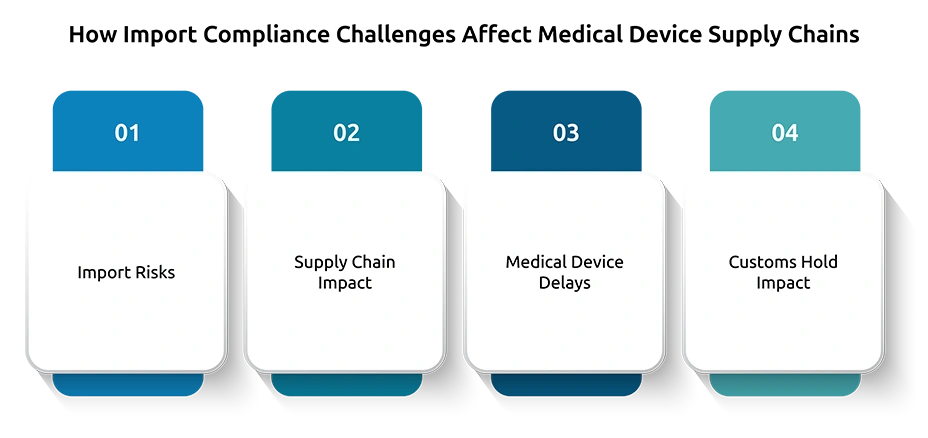
How Import Compliance Challenges Affect Medical Device Supply Chains
Difficulties with import compliance can affect the complete supply chain for medical devices. Companies can face extra storage costs, unexpected charges, and delayed delivery times if customs officials keep a shipment due to missing documents or approval checks. Delays in the delivery of medical equipment can also result from these issues, even when hospitals require important products for daily use.
Deliveries that are delayed can result in stock shortages and difficult medical equipment inventory control. For diagnostic devices, patient monitors, or other required equipment, hospitals may require waiting long. Changes to the medical device supply chain can affect medical services & increase company costs.
Companies must check import rules, prepare correct documents, and check product approvals before delivery to avoid these problems. Efficient planning reduces the difficulty face by healthcare logistics, handle costs, and improve risk management in the global supply chain.
Why Are Medical Device Import Compliance Requirements Becoming More Complex?
It can be challenging to import medical devices into other countries because every has its own rules. Before being imported, some devices can require product details, specific licenses, or safety approval. Companies stay updated about the current standards because these medical device import rules are ready to change.
Before products reach the country, customs officials can check product details, declared values, and proper documents. Delays and extra costs can cause from incorrect details or missing documents. Businesses must follow to international import compliance rules and understand local medical device rules and regulations in order to support cross-border medical equipment trade. Reducing issues and keeping smooth shipments are two benefits of proper medical device trade compliance.
Major Import Compliance Challenges in Global Medical Device Supply Chains
Medical equipment imports can be difficult due to the different rules in every country. Before being delivered, some products require clearance, an import license, or approvals. Companies need to review rules from the EU Medical Device Regulation (MDR) in Europe, CDSCO in India, & the FDA in the US.
Customs delays and incorrect duty calculates can result from choosing the incorrect HS code. Also, companies demands to build correct medical equipment import documents including packing lists, invoices, and required licenses. To improve traceability and follow with local safety rules, medical equipment may require specific labels and product identity details.
Shipments may be checked by customs officials, or if information is incorrect, they can request for more documents. Also, companies need to know what importers, customs brokers, and logistics companies do. Delays can be reduced & compliance problems can be avoid by checking medical device import rules and duties before shipment.

Conclusion: Building a Compliant and Reliable Medical Device Supply Chain
An efficient global medical device supply chain requires careful planning & review every time. Before shipping, companies should check product approvals, use the proper HS codes, and provide correct documents. Delivery issues, extra costs, and customs delays can be reduced by following to medical equipment import standards. Medical equipment can also be deliver at its location more easily if importers, customs brokers, & logistical companies work efficiently. To support medical device import compliance and avoid risks, companies should constantly check the current import regulations of the destination country before delivery.
Did you know
The medical equipment market size has grown strongly in recent years. It will grow from $791.33 billion in 2025 to $857.08 billion in 2026 at a compound annual growth rate (CAGR) of 8.3%.
FAQ
Why can the same medical device face different import rules in different countries?
Each country has its own rules for product approval, safety, labelling, and import licences. A device allowed in one country may need extra checks or approval before entering another.
What should businesses check before shipping medical devices to a new country?
They should check whether the device needs registration, an import licence, safety approval, special labelling, or other permits. They should also confirm customs requirements and the responsibilities of the importer.
How do temperature and handling requirements affect medical device shipping?
Some medical devices need controlled temperatures, protective packaging, or careful handling during transport. Businesses should confirm these needs before selecting a shipping method.
Why is shipment tracking important for medical device imports?
Shipment tracking helps businesses monitor delivery progress, identify delays, and update hospitals or distributors about expected arrival times. It also supports better inventory planning.
What happens if the imported medical device does not match its approved product details?
Authorities may request further information or hold the shipment while checking the difference. Businesses should ensure that the model, manufacturer, and product details match the relevant approval records.