Overview
In global trade, classification accuracy is not just an approval requirement; it is an economic strategy. One of the most neglected yet skilled parts of trade documentation is the last digit of an HS code. While businesses frequently focus on product value, origin, or international shipping terms, a single digit in categorization can change duty rates, tax dependability, and clearance schedule. This small numerical variation increases how customs officials explain goods under countries’ tariff laws and the HTS Harmonized Tariff Schedule. Organizations involved in logistics, international freight services, and cross-border supply chains know that the HS code is necessary to avoid issues, control landed fees, and confirm smooth customs clearance across regions.
What is the Harmonized System Code, and how does it change the duty Rate?
The HS code is a standardized numerical system used globally to classify traded goods. It is developed by the World Customs Organization and forms the support of customs tariffs, trade statistics, and regulatory controls.
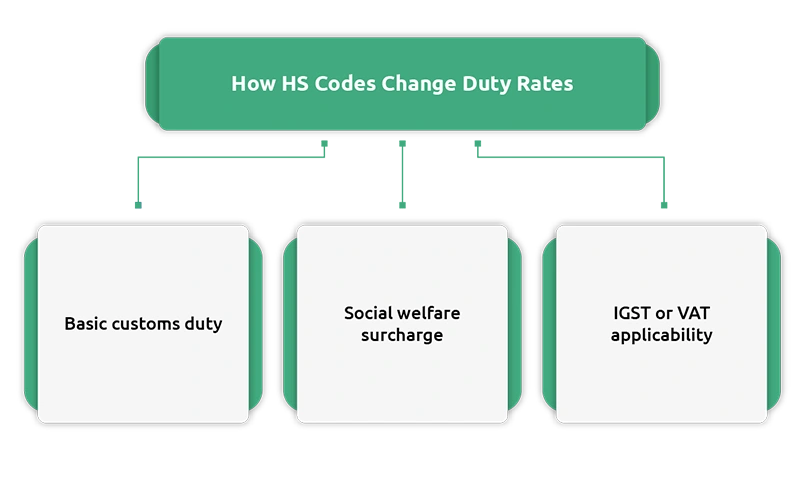
How HS Codes Change Duty Rates
Each HS code corresponds to a specific duty structure defined under national tariff laws such as the HTS Harmonized Tariff Schedule. Even a minor variation in classification can lead to changes in:
- Basic customs duty
- Social welfare surcharge
- IGST or VAT applicability
This is why exporters and importers working with international freight services must confirm correct classification.
How the Harmonized System Works
The Harmonized System operates through a classification structure:
- Six-Digit Global System
- First 2 digits – Chapter
- Next 2 digits – Heading
- Next 2 digits – Subheading
These six digits are globally standardized and used across countries.
Country-Specific Extensions
Beyond six digits, countries add their own digits to determine national duty rates, approval rules, and import conditions. This is where the last digit becomes necessary during trading.
Importance of the Last Digit of an HS Code in International Trade
The final digit frequently shows precise product differences, such as:
- Material composition
- End-use application
- Manufacturing process
Why It Matters for Importers and Exporters
A one-digit change can:
- Changes a product from a low-interest duty to a full duty
- Trigger additional documentation requirements
- Affect eligibility under specific international shipping terms
For businesses using Importer of Record Service or Exporter of Record Services, accurate HS classification protects against penalties and shipment delays.
Structure and Classification of Harmonized System Code
Understanding Product-Specific Classification
Customs authorities interpret HS codes based on:
- Product description
- Technical specifications
- Intended commercial use
For example, two electronic components may look similar but fall under different last-digit classifications, affecting duties and inspection guidelines in multi-modal logistics services.
Role in Supply Chain Planning
Correct classification supports smoother supply chain optimization, helping organizations to get approximate landed costs accurately and choose appropriate routing and logistics options.
Why HS Code Can Change Your Complete Duty Rate
Direct Impact on Landed Cost
An incorrect last digit can result in:
- Higher customs duty
- Rejected declarations
- Retroactive evaluation during audits
This directly affects pricing, profitability, and delivery responsibilities, mainly for businesses providing premium delivery service methods.
Agreement and Risk aspect
Misclassification is regarded as non-compliance, regardless of purpose. It can stop logistics operations, delay shipments, and increase inspections from customs officials. Even when operating under well-defined Incoterms, responsibility for accurate HS coding is still combined with the Importer or Exporter of Record services.
Conclusion
The “last digit” of an HS code is not a small technicality; it is a deciding factor in determining duty rates, agreement issues, and total import costs. In today’s complex trade environment, where customs clearance accuracy directly affects speed and cost, businesses cannot afford to overlook correct categorizations. Whether you depend on international freight services, systematic international shipping terms, or professional services, understanding how HS codes work down to the final digit improves smarter trade decisions, reduces risk, and increases long-term operational efficiency.
DID YOU KNOW?
The HS system is divided into 21 sections, which are further divided into 99 chapters. These 99 chapters of the HS system are further subdivided into 1,244 headings and 5,224 subheadings. Each item is assigned a six-digit code.
FAQs:
1. What is the last digit of an HS code?
The last digit of an HS code is part of a country-specific extension beyond the six-digit global system. It defines precise product classification used to determine national duty rates, taxes, and import regulations.
2. How can a one-digit change in an HS code affect customs duty?
A single-digit change can shift a product into a different tariff category, resulting in higher or lower customs duty, additional taxes, or extra compliance requirements.
3. Who is responsible for correct HS code classification?
The responsibility lies with the Importer or Exporter of Record, regardless of Incoterms or logistics service providers involved in the shipment.
4. What happens if an HS code is misclassified?
Misclassification may lead to penalties, shipment delays, reassessment of duties, audits, or even seizure of goods by customs authorities.
5. Why is HS code accuracy important in supply chain planning?
Accurate HS codes help businesses calculate landed costs correctly, avoid clearance delays, ensure compliance, and optimize international freight and logistics operations.