The Growing Need for Supply Chain Visibility in Multi-Country Deployments
In todays economy, businesses often send products, equipment and technology to many countries to grow, support projects and meet customer needs. Without a clear view of the whole supply chain, managing international operations can be tough. It can cause shipments to be delayed inventory to run compliance issues to arise and operational costs to increase. With real-time visibility organizations can keep track of goods check how suppliers are doing watch customs clearance processes and spot problems before they affect business. Goods and the supply chain are critical, to business operations and the supply chain and goods must be monitored closely for deploying across countries comes with its set of challenges. These challenges include regulations, documentation needs, transportation systems and trade policies. Organizations need to monitor goods and supply chain closely.
Industries such as IT and data centres, aviation, medical equipment, and automotive manufacturing rely on on-time deliveries and following rules to keep their operations running. When it comes to shipping servers to a data centre for example or sending aircraft parts to maintenance facilities medical devices to hospitals, companies need to know exactly where their shipments are and whats happening with them.
Understanding Supply Chain Visibility in Global Trade
Supply chain visibility is about being able to see what is happening with goods, inventory and information as they move through the supply chain. This means you can track things in time. In trade it is really important to have visibility. This helps to reduce delays and make sure everyone is working together. It also helps with following the rules for trading across borders. As supply chains get more complicated businesses need to know what is going on with their shipments, inventory and customs. They need to know when things will be delivered. The supply chain works better when everyone has the information. This helps businesses work well in countries and areas. Supply chain visibility is key, to making this happen.
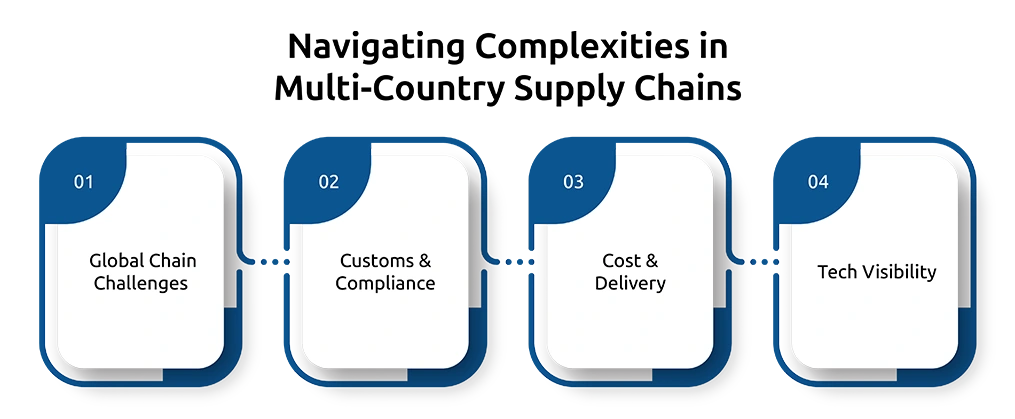
Navigating Complexities in Multi-Country Supply Chains
Managing supply chains in different countries is really tough. It can affect how well things run, how much things cost and when things get delivered. Companies have to deal with rules and regulations in each country which can be a lot to handle. They have to know all about customs and trade policies and what they need to import things and they have to make sure they are doing everything right all the time. Working with different companies that help get things from one place to another can also cause problems. It can be hard to communicate with all of them and keep track of where things are. Supply chains also need to make sure they have the amount of stuff in their warehouses and with their suppliers and in their distribution centers.
Accurate documentation is key to imports and it includes invoices, shipping declarations and product classifications. If you don’t get it right you risk customs delays and penalties to stay on track effective compliance management is crucial. It helps you follow trade laws, industry regulations and security standards as global supply chains grow complex organizations need to use technology to improve visibility. They must optimize their supply chains to overcome challenges and keep -border operations running smoothly.
How Real-Time Tracking Improves Multi-Country Supply Chain Performance
Businesses can keep track on shipments across global borders using real-time tracking. It improves supply chain visibility by showing the goods location, delivery status, & possible delays. Additionally, it helps companies in improving customs compliance, inventory control, & fast problem detection. Businesses can reduce delays, improve cross-border logistics, and maintain smooth global delivery with reliable updates. Additionally, it helps companies make decisions more quickly and inform customers about shipments. This improves global supply chain management and allows smooth cross-border operations.
The Future of Multi-Country Supply Chains
The future of supply chains that span across countries will be influenced by technology that uses artificial intelligence to make supply chains better. This technology helps with predicting and managing risks. Also gives a complete view of the entire supply chain. As global trade networks get more complicated companies are starting to use intelligence more often. They use it to look at lots of data about how they operate guess changes in demand make sure they have the amount of products in stock and plan transportation more effectively.
At the time these end-to-end visibility platforms give us real-time insights into every stage of the supply chain. They connect suppliers, freight providers, the warehouses, customs authorities and the customers through a digital ecosystem. This is really helpful for industries like IT, aviation, medical equipment and automotive manufacturing. These technologies help them make decisions faster follow the rules better deal with problems easily and deploy things more efficiently across many countries. The supply chain is a part of this and end-to-end visibility platforms are very important, for the supply chain.
Conclusion
Supply chain visibility is key to global deployments. It helps businesses track shipments manage stock and follow rules across countries. For industries such as IT, aviation, medical equipment, and automotive manufacturing, getting real-time updates helps risks make better decisions and speed up customs. By using the tech planning logistics carefully and following trade rules companies can improve their supply chains and run smoothly worldwide. As trade changes companies that focus on clear and transparent supply chains will handle problems better work faster and stay ahead of competitors. Supply chain visibility enables businesses to monitor shipments, manage inventory, and maintain compliance. Companies that invest in end-to-end visibility will be better equipped to navigate disruptions.
DID YOU KNOW
“Supply chain visibility (SCV) for multi-country deployments involves integrating global data streams like ERP, TMS, and WMS into a single digital twin or control tower. ”
FAQs
How do you track shipments when they switch between different international carriers?
We use a system that connects all the carriers together. It works with one reference number, like a Master Bill of Lading or container number.
What happens when data formats differ between countries?
Modern systems that help us see everything clearly use computers to make sure all the data looks the same. These systems take in types of data from around the world such as data from Electronic Data Interchange data in XML format or data from custom spreadsheets and they change it into one standard format that the main computer system can understand.
How does visibility help reduce customs clearance delays?
It helps us guess what will happen with customs by looking at invoices and shipment lists and comparing them to how busy the ports are right now. The system points out if something is missing on which stops shipments, from getting held up at international borders.
Who pays for and maintains the tracking hardware in global deployments?
It depends on the agreement. Usually the shipper or logistics provider owns the trackers. They attach them to pallets or containers at the origin country. Then they collect, recharge and redistribute them at the destination.
Can a visibility platform predict disruptions before they happen?
Yes it can. The platform uses data and AI to monitor things like weather, strikes and events. It alerts you if a route is in trouble. The platform watches data feeds, including severe weather patterns, port strikes and geopolitical events. It automatically alerts you if a scheduled multi-country route is, in the line of impact.