Understanding Customs Delays in International Shipping
Customs delays are a common issue in international logistics. When goods & items are moved across countries, they must go through customs clearance, where authorities verify documentation, assess applicable duties, and ensure compliance with regulatory requirements.
These delays can affect delivery timelines and disturb service, especially in industries like IT, aviation, medical, and automotive, where on-time delivery is very important. Having a clear understanding of customs processes helps businesses to handle shipments more easily.
Common Reasons Behind Customs Clearance Delays
One of the main reasons for delays is incorrect or incomplete paperwork. Missing invoices, unclear goods details, or errors in the HS code can slow down the whole process. Wrong classification under the HTS may also result in extra checks or changes in duties. In some cases, shipments need extra verification under the trade process, like the Generalized System of Preferences (GSP).
Confusion around Incoterms such as DAP (Delivered at Place) or DAPs can also cause delays if responsibilities between buyers and sellers are not clearly defined. Also, shipments related to regulated industries like medical equipment, aviation parts, and the automotive manufacturing supply chain usually go through stricter checks, making compliance even more important.
Impact of Customs Delays on Businesses and Supply Chains
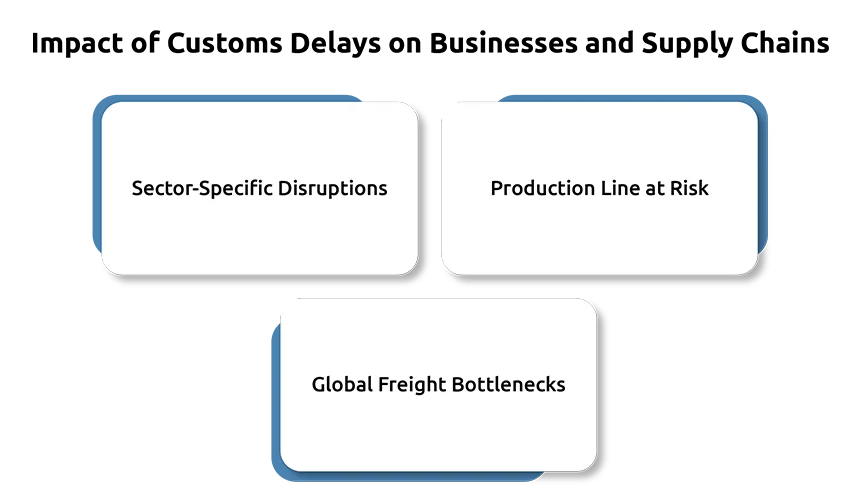
Customs delays can have a big impact on business. They can slow down the supply chain, delay production, & increase extra costs like storage and demurrage.
In industries such as aviation and medical, delays can disrupt critical operations and service continuity. In the IT sector, the late delivery of equipment can delay projects. In the automotive industry, even a small delay in receiving parts can stop the whole production line.
These delays also affect customer satisfaction, especially when businesses rely on global freight forwarding and cross-border shipping services to deliver on time.
Effective Strategies to Handle and Reduce Customs Delays
Minimizing customs delays starts with correct and complete paperwork. Every shipment should include proper invoices, packing lists, & correctly classified goods using the right HS code.
Working with experienced providers of international freight services and international logistics services helps to ensure smoother handling of shipments and following of rules.
Using Importer of Record & Exporter of Record services helps organizations to handle legal responsibilities more easily, especially when shipping to countries with strict import rules.
Technology also plays an important role. Using the best trade compliance software for import export rules which helps to automate tasks, reduce mistakes, & improve inventory and order management.
Working with experts who give customs compliance services makes sure that both import and export paper are handled properly, reducing the chances of delays.

How to Prevent Future Customs Delays for Smooth Shipping
To avoid these delays, it is important to plan early & stay careful. Businesses should keep up with changing rules and make sure all documents are ready before shipping. Clear communication of Incoterms like DAP helps to avoid confusion about responsibilities, duties, & delivery points. Proper planning of duties and taxes can also minimize the risk of shipments getting stuck at customs.
Selecting reliable partners for global freight forwarding and cross-border shipping services improves coordination and helps to solve problems faster. Planning after customs clearance is also important, because delivery time depends on local transport and how the goods are handled at the final destination.
By focusing on strong compliance practices and improving processes regularly, businesses can ensure smooth international shipping & reduce the chances of future delays.
Conclusion
Customs delays are a part of the international shipping process, but they can be handled with the right approach. Correct documents, strong compliance practices, & the use of expert IOR services which helps to minimize issues.
For organizations that are working in IT, aviation, medical, and automotive industries which have strong logistics & proper planning are important for smooth global operations. With the right support, customs clearance can become faster, more predictable, and easier to manage.
Did You Know?
Customs authorities may hold shipments longer if they are part of regulated industries like medical, aviation, or automotive, These goods often go through stricter checks to ensure safety and compliance with local laws.
FAQs
What is the most common reason for customs delays?
The most common reason is incorrect or incomplete documentation, such as missing invoices, wrong HS code, or unclear product details.
How can I reduce customs delays in international shipping?
You can reduce delays by preparing accurate documents, using correct product classification, and working with experts in customs clearance and international logistics.
What role do Incoterms like DAP play in customs clearance?
Incoterms like DAP help define responsibilities between the buyer and seller, which helps avoid confusion and reduces the chances of delays.
Do customs delays affect all industries the same way?
No, industries like medical, aviation, and automotive are more affected because their shipments usually need stricter checks and approvals.
Can technology help in avoiding customs delays?
Yes, using trade compliance software can help manage documents, reduce errors, and improve overall shipping efficiency.