
Sustainability makes a lot of difference to customers these days. People care about green products, & their concerns go beyond just the environment; they also focus on social & economic responsibility. There’s a growing interest among customers, who are now keen to know how & where their products are made.
Businesses are responding by making their supply chains more usable & responsible. They are selecting eco-friendly materials & working with ethical suppliers while also improving their production & transportation processes. Many companies now share clear & honest information about how their products are made & delivered. This not only supports sustainability but also helps build trust & stronger relationships with customers.
Easy Understanding of Sustainable Shipping
Definition & Key Concepts
Sustainable shipping is about meeting today’s freight & logistics demands without balancing the ability of future generations to meet their own needs. One thing you can easily think about is that it’s clearly connected to environmental concerns; it’s correct, but it doesn’t revolve only around it. Sustainable shipping encompasses 3 major elements we must look into:
Environmental:
Minimizing the environmental effect of global shipping is difficult for businesses seeking to be more usable & eco-friendly. By enhancing greener practices, companies can shrink their carbon use & support worldwide sustainability goals. This can be added with optimizing packaging, selecting sustainable shipping options, fine-tuning routes & using eco-friendly materials.
Social:
When it comes to global shipping, social responsibility can show up in different ways. It’s all about looking out for communities, ensuring fair labor practices, respecting human rights, caring for the environment, & promoting economic fairness. Companies in the shipping sector can embrace corporate social responsibility (CSR).
Economic:
In the current complete landscape, growing sustainable shipping goes beyond just lowering emissions—it’s a clever financial strategy. By developing easy technologies, optimizing their shipping paths, & investing in greener ships, businesses can reduce costs while staying compliant with stricter regulations.
Misconceptions vs. Reality
Sustainable shipping often mixes with “green” or “environmental” shipping. While both focus on minimizing ecological effect, sustainable shipping takes it further. For example, the United Nations’ Sustainable Development Goals (SDGs) encourage tackling social and economic issues alongside environmental goals.
By adopting a holistic strategy, shipping companies can avoid investing too narrowly in green solutions alone, ensuring a broader & more meaningful impact.
Sustainable Supply Chain Shipping Matters
80% of the world’s trade by volume is through the shipping industry, serving as the backbone of global trade. While shipping is pretty easy compared to other ways of getting things around, it still makes up about 2.1% of the world’s CO2 emissions, so it’s a big target for efforts to lower greenhouse gases.
Businesses often struggle with adopting sustainable practices because of their traditional B2B structures & the high costs involved. For example, switching to alternatives or putting money into zero-emission fleets can mean a big initial expense.
Even so, businesses must have a clear & progressive outlook on how long-term benefits—ranging from cost savings to navigating climate effects—far outweigh these difficulties.
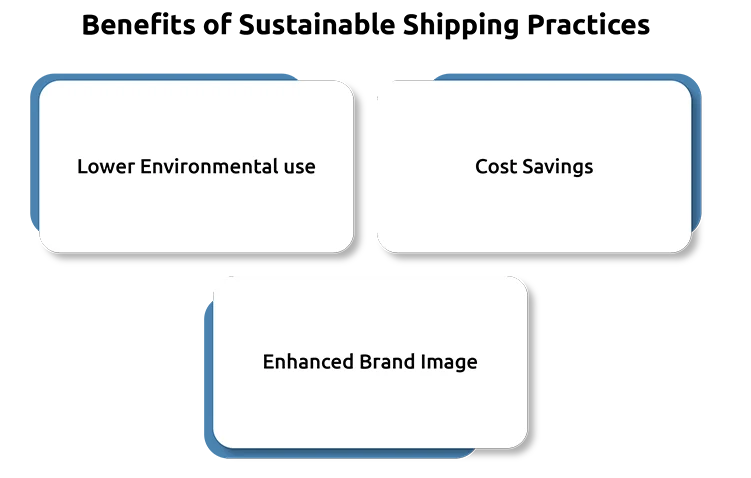
Benefits of Sustainable Shipping Practices
Developing sustainable methods isn’t just an ethical choice; it’s smart business. Here’s what businesses can gain:
Lower Environmental use: A reduction in greenhouse gases helps deal with climate regulations, while also protecting ecosystems.
Cost Savings: Practices such as route optimization & minimize packaging can lead to marked savings over time.
Enhanced Brand Image: Eco-conscious consumers are more likely to support businesses with strong sustainability commitments. As mentioned, there’s a growing demand for greener options among consumers. Regulatory Compliance: Preparing for stricter emissions standards & sustainability requirements is a forward-facing way to avoid future penalties.
The Three Pillars of Shipping Sustainability
Environmental Pillar
Focusing on minimizing carbon use, using alternatives, & ensuring a circular economy helps businesses meet environmental goals. Protecting biodiversity, both above & below water, is also critical to planet-first policies.
Social Pillar
Sustainability enhances fair labor practices & community welfare. This includes ensuring seafarers’ rights, promoting diversity in leadership, & addressing human rights issues, which align closely with shipping-related Sustainable Development Goals.
Economic Pillar
Profitability & sustainability are linked. Long-term financial health depends on adopting practices that resiliently combat social & environmental risks, whether through innovation, risk mitigation, or ethical labor practices.
By balancing these pillars, businesses can achieve the “triple bottom line,” creating value for people, the planet, & profit simultaneously.

Building a Sustainable Future
Conclusion
Sustainability is useful for businesses looking to grow in the modern world. From minimizing waste to promoting inclusive & ethical practices, shipping companies have the tools to make a meaningful impact today.
Sustainable supply chains & eco-friendly shipping are becoming very important for businesses today. By using minimum energy, reducing waste, & selecting greener ways to transport goods, companies can protect the environment & save money. It also helps them follow rules & meet customer expectations. In simple terms, going green not only helps the planet but also helps businesses grow & succeed in the long way.
Did you know?
According to reports by Forbes India, India is the third-largest emitter of greenhouse gases, pushing nearly 3 billion tonnes annually into the atmosphere as of mid-2024.2 Climate TRACE further reported that global greenhouse gas emissions in April 2025 totaled 5.16 billion tonnes of CO₂ equivalent, marking a 0.71% increase compared with April 2024.
FAQ
What is a sustainable supply chain?
A sustainable supply chain focuses on minimizing environmental impact while maintaining efficiency. It involves using eco-friendly materials, reducing carbon emissions, optimizing transportation, and ensuring ethical sourcing practices across all stages of production and distribution.
What is eco-friendly shipping?
Eco-friendly shipping refers to transportation methods that reduce environmental harm. This includes using low-emission vehicles, optimizing delivery routes, reducing packaging waste or renewable energy sources.
How can businesses make their supply chains more sustainable?
Businesses can improve sustainability by sourcing responsibly, reducing energy consumption, using recyclable packaging, optimizing logistics routes, and partnering with environmentally responsible suppliers and logistics providers.
What are the benefits of sustainable supply chains?
Sustainable supply chains help reduce operational costs, improve brand reputation, ensure regulatory compliance, and attract environmentally conscious customers while also contributing to long-term environmental protection.
Why is eco-friendly shipping important in global trade?
Eco-friendly shipping is important because it reduces carbon emissions, helps combat climate change, meets international environmental regulations, and supports the growing demand for sustainable business practices in global markets.