Introduction
In today’s interconnected business zone, effective trade processes are at the core of global economic growth. Organizations increasingly work across various regions, depending on smooth cross-border shipping to stay competitive. Yet, global trade frequently comes with challenges such as difficult documentation, customs delays, and changing approval requirements. This is where trade facilitation becomes necessary for simplifying customs procedures, confirming regulatory approval, and investing in effective systems. Trade facilitation reduces fees, streamlines transactions, and strengthens the overall performance of global supply chain services. From customs clearance support to freight forwarding services, all parts of international shipping solutions benefit from a simplified border process.
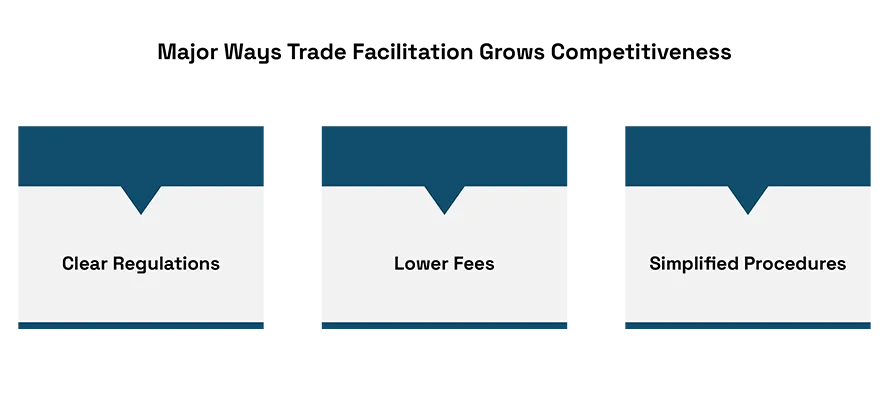
Major Ways Trade Facilitation Grows Competitiveness
Trade facilitation directly affects the competitiveness of organizations in many ways. First, faster customs clearance and regulatory import management lower fees for importers and exporters alike. The use of standardized categorizations, such as the HS code, confirms that goods are correctly identified and duties are applied fairly. This reduces the chance of disputes or penalties, creating a more expected trading environment.
Second, improved trade processes support comprehensive import-export support. When exporters can depend on clear international export regulations, they move goods faster and meet schedules with fewer disruptions. Also, importers using special solutions such as Importer of Record Services can guide documentation requirements more efficiently. Together, these improvements grow to stronger customer trust, better delivery performance, and greater visibility across the supply chain.
Finally, simplified procedures increase the role of freight forwarding services and customs brokerage, both of which work as a connection between organizations and the border officials. By cutting unwanted delays at checkpoints, organizations gain quick shipping, cost efficiency, and overall dependability in global transactions.
Why Trade Facilitation and Global Supply Chains?
Global supply chains depend massively on work across different countries, making trade facilitation a crucial enabler. Without proper systems in place, businesses face uncertainty in delivery schedules, agreement challenges, and changing costs. Trade facilitation provides the ability to predict and clear confirmation that even difficult arrangements, such as DDP shipping under specific Incoterms, run smoothly.
Officials also support global competitiveness through tariff systems such as the Generalized System of Preferences (GSP), which reduces taxes for some goods. When combined with effective customs processes, grow global trade flows that support both small and big organizations. Also, valuable solutions such as Exporter of Record services and export customs brokerage make it easier for organizations to expand into new markets without facing working hurdles.
Trade Facilitation Rules for Promoting Global Supply Chains
To support competitiveness, trade facilitation depends on systematic rules and strong procedures. Some of the most impactful steps include:
- Simplified documentation based on hts harmonized tariff schedule and classification systems.
- Simplified customs clearance support that reduces delays at borders.
- Clarity through Incoterms and Delivery Duty Paid logistics to clarify buyer-vendor responsibilities.
- Integration of customs brokerage and forwarders to provide consistent compliance and tracking.
- Regulatory import management systems that support accountability and reduce risks.
These measures confirm that organizations can depend on global shipping solutions that are quicker, safer, and more predictable, helping organizations smoothly combine into global supply chains.
Increasing Trade Facilitation Improvements
While progress has been made, continuous improvement is necessary to keep pace with the developing business requirements. Countries investing in digital platforms for customs clearance support and e-documentation systems are already ahead in competitiveness.
Businesses can accelerate adoption by partnering with suppliers providing comprehensive import-export support, freight forwarding services, and global supply chain services equipped with live tracking and approval checks. Advanced customs brokerage organizations now combine technology with professionals to help organizations guide developing international export regulations effectively.
Conclusion
Trade facilitation is no longer just a competitive advantage; it is necessary for businesses and nations engaging in global trade. From reducing restrictions to meeting regulatory demands, trade facilitation increases trust, predictability, and speed in supply chain operations. In case of customs clearance support, freight forwarding services, or export customs brokerage, every element of the trading ecosystem gains efficiency when processes are simplified. As supply chains expand and become more difficult, businesses that hold simplified procedures and governments that invest in effective border guidelines will lead in global market competitiveness.
Digital tools and collaborative trade frameworks further strengthen these efforts by improving transparency and coordination across borders. Technology-driven facilitation helps reduce compliance risks while accelerating cargo movement. Together, these advancements create a more resilient and efficient global trading environment.
DID YOU KNOW?
Europe will provide 1.8B Euro to create a secure and competitive supply chain for vehicle raw materials to support the growth of the European automotive industry.
FAQs:
Q1. Why is trade facilitation critical for cross-border commerce?
Trade facilitation minimizes administrative barriers and procedural delays at borders, enabling smoother movement of goods and improving reliability in international supply chains.
Q2. How does trade facilitation support small and medium-sized enterprises (SMEs)?
Simplified customs procedures, reduced paperwork, and transparent regulations lower entry barriers for SMEs, allowing them to participate more easily in global trade.
Q3. How do harmonized customs procedures benefit international traders?
Harmonized procedures create consistency across borders, reducing compliance risks, preventing misinterpretation of regulations, and speeding up customs approvals.
Q4. What impact does trade facilitation have on logistics costs?
Efficient border processes reduce storage fees, demurrage charges, and unnecessary inspections, leading to lower overall logistics and operational costs.
Q5. How does trade facilitation improve supply chain resilience?
By streamlining processes and increasing transparency, trade facilitation helps businesses respond quickly to disruptions, regulatory changes, and shifting market conditions.