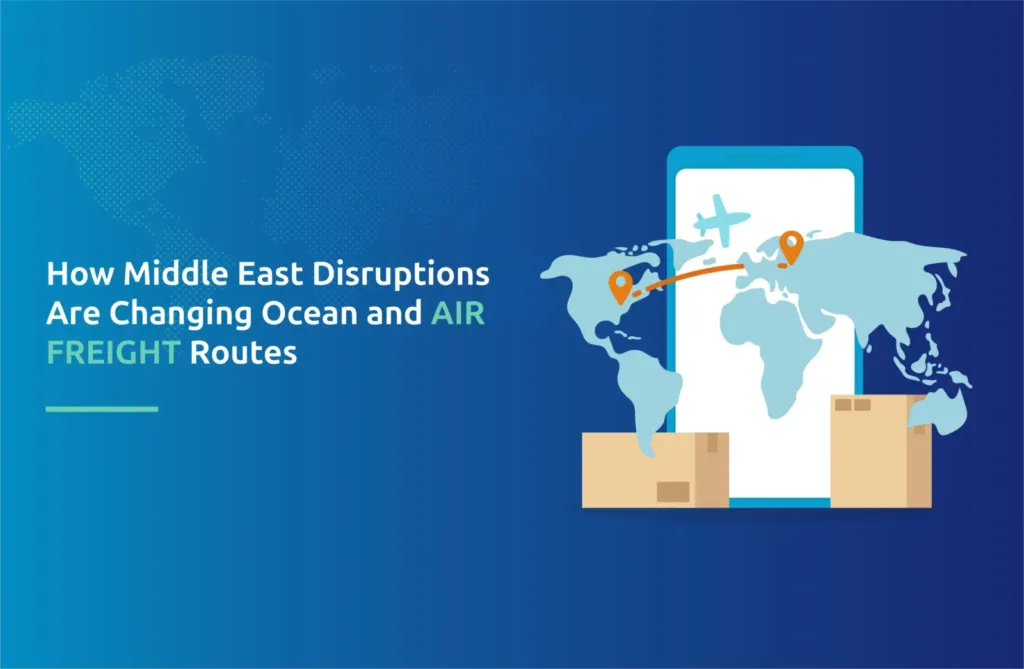
The way organizations ship goods between North America, Asia, Europe, the Gulf, and Africa is changing as a result of supply chain issues in the Middle East. Ocean carriers are rerouting around the Red Sea, Bab el-Mandeb, and the Strait of Hormuz, while airlines are rethinking flight paths and capacity because of airspace limits.
For shipping machinery, electronics, spare parts, equipment, and other time-sensitive goods, these changes may affect delivery schedules, freight costs, available capacity, and transit time.
Additionally, things are mainly changing. While some maritime companies continue to employ longer routes across Africa, others have begun returning certain services via the Suez Canal. Similar to this, air cargo networks are functioning with changing timetables and rules.
Why Middle East Disruptions Are Affecting Global Freight
The Middle East is the meeting point of several significant transportation lines.
The Suez Canal offers a quicker marine route between Asia and Europe by joining the Mediterranean with the Red Sea. The Bab el-Mandeb Strait connects the Red Sea with the Gulf of Aden, while the Strait of Hormuz provides an important gateway between the Persian Gulf & the Arabian Sea.
When security conditions change around these chokepoints, carriers may need to change routes, suspend bookings or use similar ports and transport modes.
Gulf Cargo Is Also Moving Through Alternative Routes
The Strait of Hormuz situation creates another challenge for cargo moving into and out of Gulf markets.
Recent logistics updates show restrictions and operational constraints affecting several Gulf destinations. Maersk, for example, has used alternatives including Khor Fakkan, Fujairah, Salalah and landbridge connections for certain cargo flows, depending on cargo type and destination.
Expeditors also reported that Gulf ports remained operational but constrained, with some congestion and changes to available routing options. Khor Fakkan and Fujairah have been used as alternatives for certain shipments when normal Gulf connections are restricted.
For businesses, this means the nearest port is not necessarily the most practical port. The final route may involve an alternative seaport, transshipment point, truck movement or inland connection.
What These Changes Mean for Freight Costs
Route changes can increase logistics costs in several ways.
A longer ocean route can require more fuel and vessel time. Additional transshipment can create handling charges, while alternative ports can increase inland transportation costs.
Air freight can face similar pressure when capacity becomes limited. If companies compete for fewer available flights, rates may increase. Additional handling, alternative connections and longer routing can also affect the final landed cost.
Marine insurance and risk-related charges can also become important considerations when shipping through affected regions.
Recent reporting has found higher shipping costs and longer transit times on some Gulf trade lanes, with companies turning to smaller ports and alternative transport options as normal routes become more difficult.
Why Businesses Need More Flexible Freight Planning
The current environment makes fixed routing assumptions harder to maintain.
A company planning an international shipment should consider more than the standard origin-to-destination route. It may need alternative ports, carriers, airports, inland routes and delivery schedules.
For technology companies, data center operators and equipment suppliers, this is particularly relevant because shipments may include servers, GPUs, networking equipment, storage systems, replacement parts and other high-value cargo.
A delay of several days can affect an installation schedule, maintenance activity or equipment replacement plan.
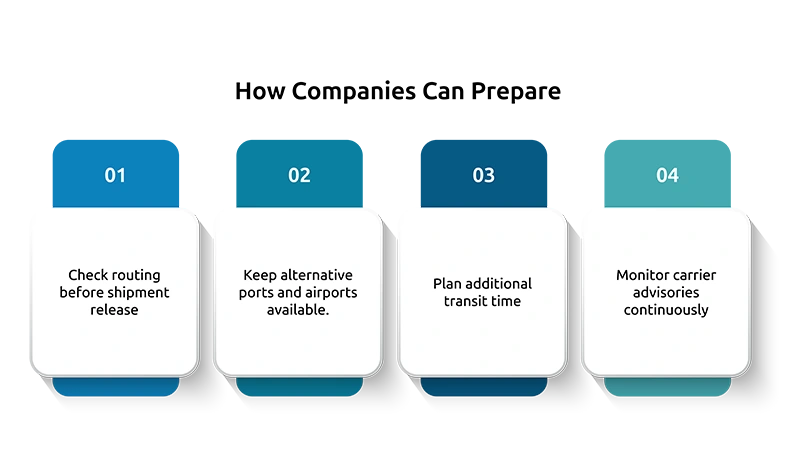
How Companies Can Prepare
Businesses can reduce the impact of changing freight routes by building flexibility into their logistics planning.
First, check routing before shipment release. The route available when a quotation is prepared may change before the cargo departs.
Second, keep alternative ports and airports available. For Gulf shipments, options such as Khor Fakkan, Fujairah or other regional gateways may be relevant depending on the cargo and current carrier acceptance.
Third, plan additional transit time. Do not build critical installation or project deadlines around the fastest advertised transit time when the route is subject to disruption.
Fourth, review cargo documentation and import requirements early. When a shipment moves through an alternative gateway, customs procedures, transit documentation, delivery arrangements and importer responsibilities may need to be reviewed.
Finally, monitor carrier advisories continuously. Current Middle East routing decisions can change quickly as security conditions and regulatory restrictions develop.
The Bigger Shift in Global Logistics
The Middle East disruptions are showing why global freight networks cannot depend on a single transport corridor.
Ocean carriers are balancing Suez and Cape of Good Hope options. Gulf cargo is being redirected through alternative ports and land connections. In order to support airspace constraints, air cargo companies are updating flight networks and schedules.
Finding the shortest path is not the only goal for businesses shipping commercial equipment abroad. The goal is to find a practical route that takes into account the end delivery location, cargo characteristics, travel time, security circumstances, carrier availability, and customs procedures.
Businesses that consider these aspects before to shipping can make more informed choices regarding air, ocean, and multimodal freight options as conditions continue to evolve.
Conclusion
Middle East disruptions are creating a more dynamic freight environment across both ocean and air transportation. Suez, Red Sea and Gulf routes are being reviewed continuously, while alternative ports, Cape routes, landbridges and air connections are being used where required.
For complex shipments, including technology and business equipment, One Union Solutions can help businesses assess import requirements, transportation options and destination-side logistics before cargo moves.
Did you know?
Maersk released its September 2026 market update for India, Middle East and Africa, highlighting ongoing Middle East disruptions affecting shipping services and routing options.
FAQs
How are Middle East disruptions affecting ocean freight?
Carriers are using different routing strategies depending on security conditions. Some services continue to use the Suez Canal, while others may travel around the Cape of Good Hope or use alternative regional ports.
Are ocean shipments taking longer because of the disruptions?
Some shipments can take longer when they are diverted around Africa or require additional transshipment or inland transportation. Actual transit time depends on the carrier, route, origin and destination.
How is air freight affected by Middle East disruptions?
Airlines may change flight paths, reduce frequencies or suspend selected services because of airspace restrictions and security considerations. This can affect available cargo capacity and transit schedules.
Can businesses use alternative ports?
Yes. Depending on the destination, cargo type and carrier acceptance, alternative gateways such as Khor Fakkan, Fujairah or other regional ports may be considered. These options can require additional inland transportation or handling.
What should businesses do before shipping during regional disruptions?
Companies should confirm the current carrier route, available capacity, port or airport status, customs requirements, expected transit time and alternative routing options before releasing cargo.