Introduction
As some cargo services return to the Suez Canal in 2026 after using the longer Cape of Good Hope path, shipping between Asia and Europe is again facing changes. Red Sea safety risks continue, but the Suez route may reduce sailing routes and transit times. Businesses shipping cargo between Asia and Europe must keep track on shipping timings, transit times, freight costs, and ship capacity because routes may change again.
Why Suez Shipping Is Changing Again
After using the longer Cape of Good Hope path during the Red Sea period, many maritime companies are slowly returning to the Suez Canal in 2026. Ships can reduce a shipping distance and transit time by using the Suez route, which provides a shorter route between Asia and Europe.
Because there are still risks related to Red Sea shipping, the change is happening slowly. Shipping companies are watching security conditions in the region and may change routes if the situation becomes worse. Some services are already using Suez again, while others continue to sail around Africa.
This shows that shipping routes between Asia and Europe can keep changing for companies. Before planning shipments, companies that transport cargo should check the most current carrier plans, transit times, and available capacity.
Which Asia–Europe Shipping Services Are Returning to Suez?
After using the longer Cape of Good Hope route, a majority of Asia-Europe maritime companies are increasing returning to the Suez Canal in 2026. AE11 and AE12 support trade between Asia and the Mediterranean, while AE5 serves trade from Asia to Northern Europe under the Gemini Integration. The ME2 service connects India with Europe. These changes are part of the wider Suez Canal route changes taking place in September 2026.
The return to Suez can shorten the sailing distance compared with Cape of Good Hope shipping. This may also help improve transit times and vessel use on some container shipping routes. However, Red Sea shipping risks are still being monitored, so carriers may change services again if conditions in the region change.
What the Return to Suez Means for Transit Times
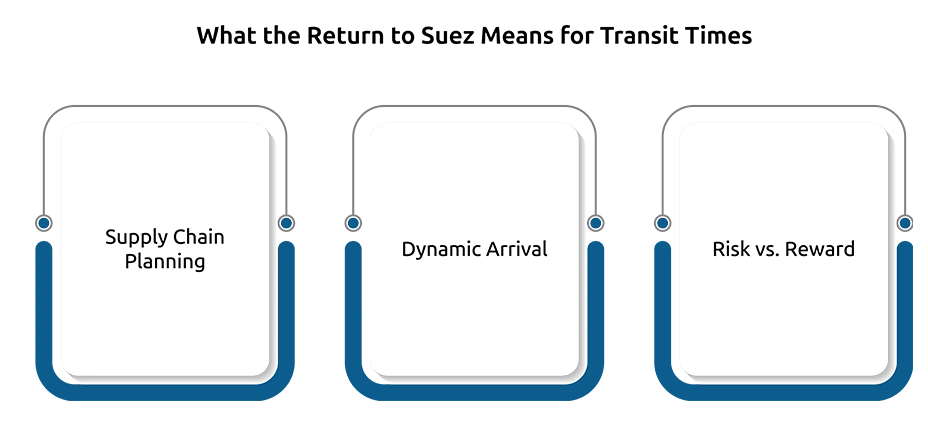
The return to the Suez Canal can reduce the sailing distance between Asia and Europe compared with the longer Cape of Good Hope route. This may shorten the Asia-Europe transit time and Suez shipping transit time on services using the canal. These changes can be used by companies to more carefully plan production, delivery, and stock.
However, port delays, ship schedules, weather, and route changes can all affect the actual time of a maritime freight delivery. During a shipment’s transit, the projected arrival time that is shown at the time of booking may also change. Businesses should therefore follow shipping schedule changes and regular carrier updates when making supply chain planning decisions.
How Suez Route Changes Can Affect Freight Costs
The cost of shipping goods between Asia and Europe may change if the Cape of Good Hope route replaces with the Suez Canal. The shorter Suez route may reduce sailing days and fuel use on some services. As more vessels return to Suez, available capacity can also change, which may affect Asia-Europe freight rates and ocean freight rates.
However, lower sailing distance does not always mean lower Suez shipping costs. Fuel prices, port charges, shipping surcharges, insurance and market demand can all affect the final price. War risk insurance may also remain an important cost while Red Sea risks continue.
Freight prices can also be different between Northern Europe and Mediterranean routes. Businesses should therefore check current carrier quotes, route details and extra charges before booking cargo. This helps with better freight cost planning and avoids relying on older rates.
What This Means for Businesses Shipping from Asia to Europe
Companies may be affected by changes in the Asia-Europe shipping route in a variety of methods. When providers change between routes through the Suez Canal and the Cape of Good Hope, companies should check their shipping plans, delivery dates, and logistics plans.
Retail and Consumer Goods
Retail businesses depend on regular stock arrivals. Products may arrive at warehouses and retail locations at different times due to changes in ocean freight delivery times. When shipment plans change, companies may need to change order dates and inventory levels.
Technology and Data Center Equipment
Servers, GPUs, networking equipment and other large technology shipments need careful planning. Businesses should match shipping schedules with customs clearance, delivery appointments and site readiness. A change in the vessel arrival date can affect installation plans.
Industrial Equipment
Industrial equipment is often linked to a project schedule. Longer or changing Asia-Europe transit times can affect when equipment reaches the worksite. Businesses should allow enough time for ocean transport, customs and final delivery.
Automotive and Manufacturing
Manufacturers may depend on regular parts and equipment from Asia. Changes in ship schedules or port connections can affect the movement of these goods. Reviewing supply chain planning and shipment schedules can help businesses prepare for possible delays.
Time-Sensitive Cargo
For cargo with strict delivery dates, businesses may compare ocean freight, air freight and alternative shipping routes. The right option depends on the cargo, delivery deadline, cost and current route conditions.
Conclusion – What the Return to Suez Means for Asia–Europe Trade
In 2026, more Asia-Europe shipping services are starting to use the Suez Canal again instead of the longer Cape of Good Hope route. This can reduce sailing distance and vessel time on some services. More available capacity may also affect Asia-Europe freight rates and vessel availability. However, Red Sea shipping risks are still present, so routes can change again. Businesses should keep their shipping, inventory and delivery planning flexible and check carrier updates before moving cargo.
Did You Know
Suez Canal traffic increased in August 2026, with 1,358 vessels transiting the waterway carrying a combined net tonnage of 68.3 million tonnes and generating $567.1m in revenues.
FAQ
Why should businesses compare Suez and Cape routes?
The two routes can have different transit times, costs and capacity conditions. Comparing them helps businesses choose a shipping plan based on their delivery needs.
How can Suez changes affect data center equipment shipments?
Customs clearance, delivery times, and sites installation plans for servers, GPUs, & other large equipment can all be affected by changes in shipping arrival times.
Why are some Asia-Europe shipping services returning to the Suez Canal in 2026?
Some services are returning because the Suez route is shorter than the Cape of Good Hope route. Carriers are making these changes while continuing to watch Red Sea conditions.
Will the return to Suez reduce Asia-Europe shipping time?
It can reduce sailing time on services using Suez because ships travel a shorter distance. Actual transit time can still change because of port and operational delays.
Can carriers change back to the Cape of Good Hope route?
Yes. If Red Sea security risks increase, carriers may change their routes again. Businesses should check the latest service information before shipping.