Navigating the New Era of Global Trade Compliance
International trade is becoming increasingly complex as businesses expand across multiple markets and navigate a growing web of regulations, tariffs, sanctions, and customs requirements. Importers and exporters must comply with diverse country-specific rules, manage accurate HS code classifications, adhere to changing Incoterms, and ensure seamless customs clearance processes. When we think about supply chains we see that they are all linked together. If there is a mistake, with following the rules it can cause a lot of problems. The shipment of goods can be delayed.
Modern trade operations are really moving fast. Businesses need to keep up. Companies that deal with things like computer systems, aviation, medical equipment, and the automotive industry have a lot of paperwork to handle. This paperwork needs to be checked all the time to make sure everything is okay. That is where trade compliance automation that uses Artificial Intelligence is making a difference. Artificial Intelligence helps organizations look at documents automatically watch for changes in rules in time make sure things are classified correctly and find problems before they happen. This means companies can work better avoid problems, with trade and make their global supply chains stronger. Trade compliance automation that uses Artificial Intelligence is helping businesses in a way.
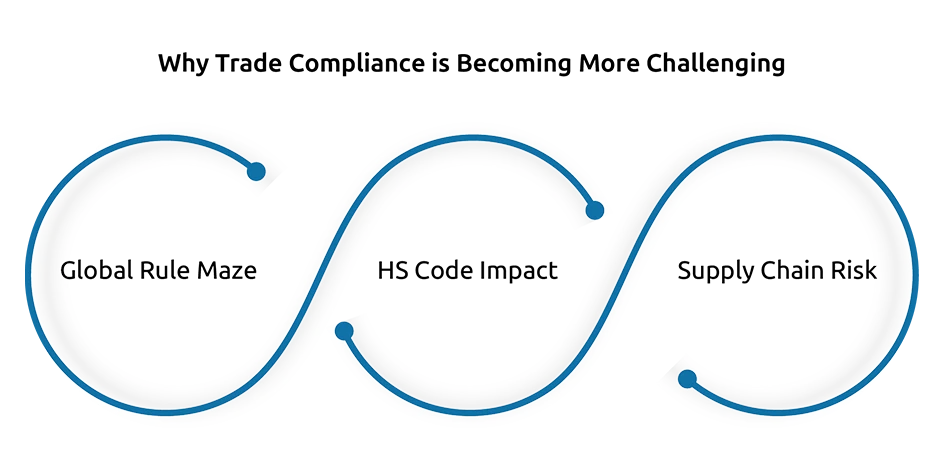
Why Trade Compliance is Becoming More Challenging
Trade compliance is really complicated these days. They are working in many different countries. This means they have to deal with a lot of rules and regulations. Companies have to keep an eye on what’s happening with regulations all around the world. They have to know about trade sanctions and the rules for importing and exporting things in each country. They also have to make sure they are using the HS code for each product. This can affect how much duty companies have to pay and what their tariff obligations are. This makes it even harder for companies to make sure they are doing everything correctly
Managing Incoterms, like DAP and other delivery arrangements is a challenge. It adds complexity by defining who is responsible who takes the risks and who pays for what between trading partners. Global supply chains and changing regulations make it hard for businesses to stay compliant using manual processes. They have to handle Incoterms and delivery arrangements to avoid problems.
AI-Powered Trade Compliance: Enhancing Accuracy and Efficiency Across Global Operations
Artificial Intelligence is changing the way we do trade compliance automation. It is replacing the way of doing things by hand, which was prone to mistakes with new solutions that use data to make decisions. These new Artificial Intelligence systems can look at documents like invoices and customs declarations in time. This means they can automate a lot of the paperwork, which reduces the amount of work people have to do. Artificial Intelligence also helps businesses figure out the codes to use for tariffs. It does this by looking at the Harmonized Tariff Schedule and helping companies assign the HS codes. Customs clearance is made easier with the help of computers that check everything. These computers look at the paperwork to make sure it is correct. They also check to see if the rules and laws for trade are being followed.
Key Areas Where AI Delivers Measurable Trade Compliance Results
Artificial Intelligence is changing the way trade compliance works by automating steps in the global supply chain in Customs Clearance AI helps companies check documents classify products correctly using HS codes and find compliance problems before shipments get to customs, which reduces delays and penalties. AI makes Inventory and Order Management better by looking at demand and shipment information to make stock levels right and improve how things run. When it comes to Export Control Screening AI does automated checks against lists of parties, sanctions databases and changing regulations making sure cross-border transactions follow the rules. AI helps with freight documents like invoices and packing lists. It does this by processing them. This means there are mistakes when people do it by hand. So shipments get done faster. AI also looks at things like where something comes from and shipping papers.

Conclusion
The future of trade is all about businesses that can adjust fast to new rules while keeping things running smoothly. AI-powered trade compliance automation is not a nice to have anymore. Its becoming a must-have for companies doing international trade, customs and cross-border business. AI is changing how companies handle compliance. Global trade is getting more complex. When we talk about industries like IT, aviation, medical equipment and automotive manufacturing, using automation is a great way to reduce risk. It also helps to make documentation a lot easier. Ensures that things run smoothly around the world. As trade rules keep changing companies that use the compliance technologies now will have a better chance of doing well in the long run. They will be able to grow in a way feel confident, about following the rules and have long-term success when selling to other countries.
DID YOU KNOW
“Proper product classification is imperative in determining what tariffs, taxes, and duties on imports and exports are to be applied for, and it is necessary to ensure that the goods fulfill the standards and regulations different countries have.”
FAQs
What is trade compliance automation?
Trade compliance automation is when you use computers and special programs to make it easier to follow all the rules when you do business with countries. It helps companies take care of things like paperwork for customs figuring out what kind of product something is, calculating taxes on imports checking if they can do business with people and getting products cleared through customs.
How does AI improve trade compliance management?
Artificial Intelligence improves trade compliance management by doing the work for us like going through a lot of trade data to find any potential problems. It checks all the paperwork to make sure everything is okay and gives us updates on the rules and regulations all the time.
Why is accurate HS code classification important in international trade?
Getting the HS code classification right is really important because it decides how much duty and tax we have to pay on the things we import and export. If we get it wrong it can cause a lot of trouble like delays, at customs, fines.
Can AI help with Importer of Record (IOR) and Exporter of Record (EOR) services?
Yes. Yes artificial intelligence can help with Importer of Record Service and Exporter of Record Services. It can verify documentation. It can also monitor requirements. Additionally it screens restricted parties. The goal is to ensure shipments comply, with import and export regulations of the destination country before goods are transported.
What features should businesses look for in trade compliance software?
The goal is to ensure shipments comply, with import and export regulations of the destination country before goods are transported. These include automated HS code classification. Ideally it would integrate with inventory and order management.