Overview
Artificial Intelligence (AI) is quickly changing transportation and logistics, creating an advanced, faster, and more flexible supply chain. In India, where growing trade demand, expanding infrastructure, and cross-border trade are changing mobility, AI is becoming the support of future logistics work. Predictive analytics to automated decision-making, AI helps organizations manage difficult freight shipments, reduce working risks, and improve delivery accuracy. Modern logistics requires various regulatory and working stages, such as Incoterms, HS code categorizations, the HTS Harmonized Tariff Schedule, and customs approval requirements. AI platforms can analyze trade data in real time, supporting businesses with customs clearance, shipment tracking, and approval validation. As global trade systems such as the generalized system of preferences (GSP) continue to change, AI confirms organizations continue to work with developing guidelines while maintaining efficiency.
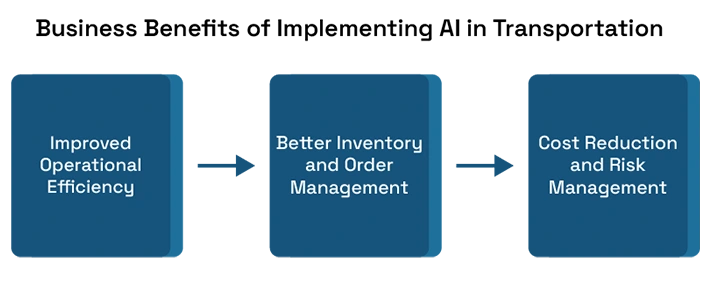
Business Benefits of Implementing AI in Transportation
AI adoption provides huge advantages across the transportation trade and supply chain optimization strategies.
Improved Operational Efficiency
AI automates route planning, load optimization, and demand evaluation. Logistics providers using AI can reduce fuel consumption, duty disruptions, and improve delivery schedules. This directly improves International freight services and reduces shipping delays.
Increased Trade Approval and Documentation
Managing cross-border shipments requires correct documentation. AI tools help categorize goods using the correct HS code, validate shipping terms such as DAP and DAPs, and automate approval checks. Businesses frequently ask, can a customs broker handle both import and export documentation? AI-supported systems help brokers and logistics experts manage both processes with some errors.
Better Inventory and Order Management
Through predictive analytics, AI improves inventory and order management by evaluating demand patterns and identifying storage shortages before they get in the supply chain. Warehouses become advanced, allowing automated payments and improving work between suppliers and distributors.
Cost Reduction and Risk Management
AI detects problems such as shipment delays, temperature changes, or incorrect declarations of goods. This reduces penalties and improves work between the Importer of record Service and the exporter of record services, confirming shipments follow trade regulations.
Why Transportation & Logistics Requires Specialized AI Professionals
AI implementation is not just about software usage; it requires skilled professionals who understand logistics workflows and global trade compliance.
Understanding Industry Complexity
Transportation involves multiple customers such as freight forwarders, customs brokers, exporters, and importers. Professionals must understand questions like whether a freight forwarder can be an exporter of record and how responsibilities change under different Incoterms agreements.
Using AI with Approval Systems
AI experts trained in logistics can combine automation tools with the best trade compliance software for import export rules. This confirms shipment data aligns with tariff schedules, regulatory requirements, and documentation standards.
How does AI change the Future of Transportation?
AI allows for maintenance for vehicles, autonomous tracking, and smart cargo tracking through IoT usage in shipments. Real-time data allows logistics organizations to respond quickly to problems, improving delivery dependability. In India’s expanding logistics ecosystem, AI also supports multimodal transportation, helping businesses ship goods smoothly across road, rail, air, and sea.
Common Mistakes to Avoid in AI Usage for Transportation
Implementing Technology Without Strategy
Many organizations use AI tools without aligning them with working goals. AI should increase Supply chain optimization rather than difficult processes.
Ignoring Data Quality
AI systems depend heavily on correct shipment data. Incorrect tariff categorizations, incomplete documentation, or outdated compliance information can reduce effectiveness and increase approval risks.
Underestimating Human Expertise
Automation cannot replace domain knowledge. Skilled logistics professionals are still necessary for handling difficult regulatory issues, managing Customs clearance, and coordinating Importer of record Service responsibilities.
Lack of Integration Across Systems
AI solutions must connect with freight management, warehouse platforms, and trade approval systems. Without integration, businesses fail to gain full visibility across International freight services operations.

Conclusion
Artificial Intelligence is changing transportation and logistics by increasing efficiency and clarity in global trade. As India advances toward technology in logistics systems, AI will play a vital role in allowing faster trade and flexible supply chains. Organizations that combine AI innovation with strong logistics expertise, including proper use of Incoterms, tariff categorizations, and approval systems, will gain a competitive advantage in global markets.
DID YOU KNOW?
The company said trucks are driving almost one out of every three miles empty, causing more than $1 trillion in logistics losses each year.
FAQs:
1. How will AI take over transportation?
AI will not completely replace transportation systems but will automate repetitive and data-heavy processes. It improves route optimization, predictive maintenance, autonomous tracking, and demand forecasting, allowing faster and safer logistics operations while humans manage strategic decisions.
2. What are the negatives of AI in transportation?
Some challenges include high implementation costs, dependency on accurate data, cybersecurity risks, workforce skill gaps, and integration issues with legacy logistics systems. Poor data quality can also lead to incorrect operational decisions.
3. What is the future of AI in logistics?
The future of AI in logistics includes autonomous freight monitoring, smart warehouses, real-time compliance validation, AI-powered demand forecasting, and fully connected multimodal transportation networks supported by IoT and advanced analytics.
4. What are the 7 C’s of logistics?
The 7 C’s of logistics focus on delivering such as Correct Product, Correct Quantity, Correct Condition, Correct Place, Correct Time, Correct Customer, Correct Cost.
5. What is one key benefit of AI in logistics?
One major benefit is operational efficiency. AI analyzes large datasets to optimize routes, reduce fuel consumption, minimize delays, and improve delivery accuracy across the supply chain.