
Insight
The global ports and airports play a significant role in shipping aircraft, car parts, medical devices, and information technology/data center equipment. `The blog discusses the role of AI and automation in transforming the way imports and exports are conducted, particularly in terms of the methods used to transport high-value and complex equipment by aircraft, which is the primary mode of transportation.
Role of AI in Simplifying Import-Export Operations
Intelligent supply chain management is led by AI, which reduces minor mistakes and manual work. Automated customs clearance is used to expedite the validation of the documents and controls. Predictive analytics is an AI-based system that predicts the change in demand & optimizes the inventory of critical equipment. These technologies enable the real-time tracking of shipments with improved accuracy, enhanced decision-making, and reduced costs. Repetitive errors in export-import documentation are resolved by AI-powered automated documentation, thereby enabling hassle-free, port-to-port shipment of sensitive aviation or medical equipment.

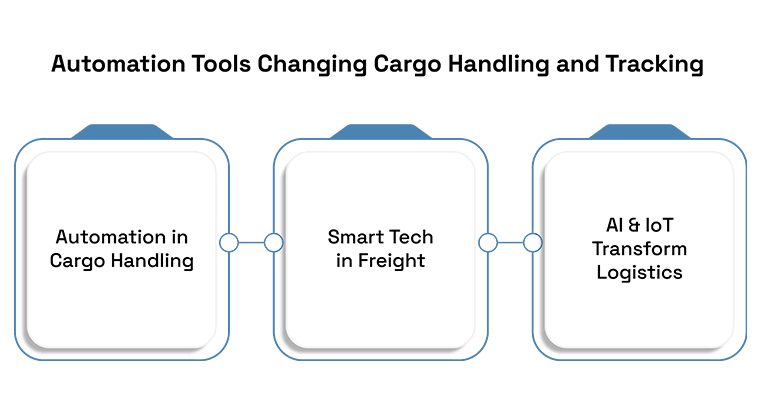
Automation Tools Changing Cargo Handling and Tracking
IoT-based warehouse systems and robotics are disrupting modern cargo handling by automating tasks such as picking, packing, & high-value equipment. AI-driven transportation management systems improve air freight routing based on factors like weather conditions, traffic conditions, etc. Sensitive components in the air-freight supply chain can be ensured to be delivered on time and in optimal condition.
Reducing Costs and Errors with Smart Technologies
Automation reduces the cost of labour and reduces costly errors in the import-export processes. AI fraud detection ensures trade finance and avoids compliance risks. Smart technologies reduce operational risks and enhance the efficiency of handling cargo. By automating the routine steps, businesses save on freight forwarding and customs broker costs, so port-to-port shipping can be more reliable and lower cost for high-tech equipment. AI-driven systems also help to calculate the volumetric weight correctly to optimize freight expenses and ensure compliance with regulations.
Navigating Compliance and Regulations through Smart Solutions
Trade compliance automation ensures the change in regulations and complex documentation. AI-powered regulatory technology (RegTech); AI RegTech is used to simplify the customs clearance process, import-export documentation management. These digital customs solutions help in reducing delays and penalties by ensuring that shipments are made in compliance with standards such as delivered duty paid (DDP) incoterms. Intelligent systems make it easier to handle the responsibilities of importer of record (IOR) and exporter of record (EOR), which are essential for managing high-value shipments of aviation, healthcare, and IT equipment for which compliance is important.
The Future of Trade
Digital transformation in import-export is guaranteed to bring faster, more secure international trade. AI tools will further optimize freight forwarding logistics & warehouse management, providing real-time shipment tracking. Difficulty in implementing advanced technology, including training employees and integrating legacy systems, remains a significant issue. But the advantages of operational efficiency, error reduction, and cost savings put firms in a position to succeed in changing trade environments. Automated solutions will continue to make port-to-port shipping competitive and flexible in the face of significant global market changes.
Market Research Snapshot
Recent data indicate that air freight handling for aviation, automobile, healthcare, and IT equipment is growing faster, thanks to AI-enabled tools that can enhance inventory management of these goods, customs clearance, and freight forwarding services. Automation reduces the amount of paper required for manual work by more than 70%, making cross-border shipments significantly faster, especially in large airport hubs that serve these industries.
Industry Research and Insights on AI in Global Trade
Industry research shows that artificial intelligence and automation are rapidly transforming the import-export ecosystem by improving visibility, efficiency, and compliance across international supply chains. Logistics studies highlight that AI-driven freight forwarding platforms, predictive analytics, and automated customs documentation are helping businesses reduce shipment delays and operational costs. Companies that transport aviation equipment, automobile components, healthcare devices, and IT/data center infrastructure increasingly rely on intelligent logistics systems to improve cargo tracking, documentation accuracy, and regulatory compliance. As global trade volumes continue to grow, research also indicates that organizations investing in AI-powered supply chain technologies benefit from faster decision-making, improved port-to-port shipment coordination, and more reliable cross-border logistics operations.
Conclusion
Navigating the future of import-export requires smart and tech-driven solutions. Efficient port-to-port freight forwarding, expertise of customs broker, and advanced warehousing ensure perfect delivery of aviation, automobile, healthcare, & IT equipment. We at One Union Solutions leverage AI and automation in order to streamline operations, reduce risks, and increase efficiency in trade. By embracing these innovations, we help our clients to stay ahead in a fast-changing global market.
Did You Know?
The market for AI in logistics alone is expected to reach $26.3 billion by 2025, rising to nearly $708 billion by 2034, a notable indicator of the efficiency gains that AI & automation are offering in the movement of complex equipment sectors.
FAQ’s
How is the way AI automate import export customs clearance?
Automation of AI ensures checking of documents and compliance, as well as customs filing, which helps to eliminate errors and accelerate the clearance of specialized equipment.
How can post-packaged equipment be better handled through automation?
Picking, packing, and real-time inventory tracking are automated and use robotics and IoT systems as well as Artificial Intelligence to secure sensitive products in warehouses.
What is the value of predictive analytics to trade operations?
AI predicts the demand of products and supply chain shocks that can be used to plan inventory and shipment of high-value cargo better.
Is it possible to lower the cost of freight forwarding with the help of AI?
It reduces labor and manual processing, increases the accuracy of volumetric weight calculations, and reduces compliance fines, yes.
What are the difficulties associated with the implementation of AI in import-export?
Some of the challenges will involve training personnel, implementing new systems, and security of data, yet the gains of efficiency with the investment will be worth it.