Introduction
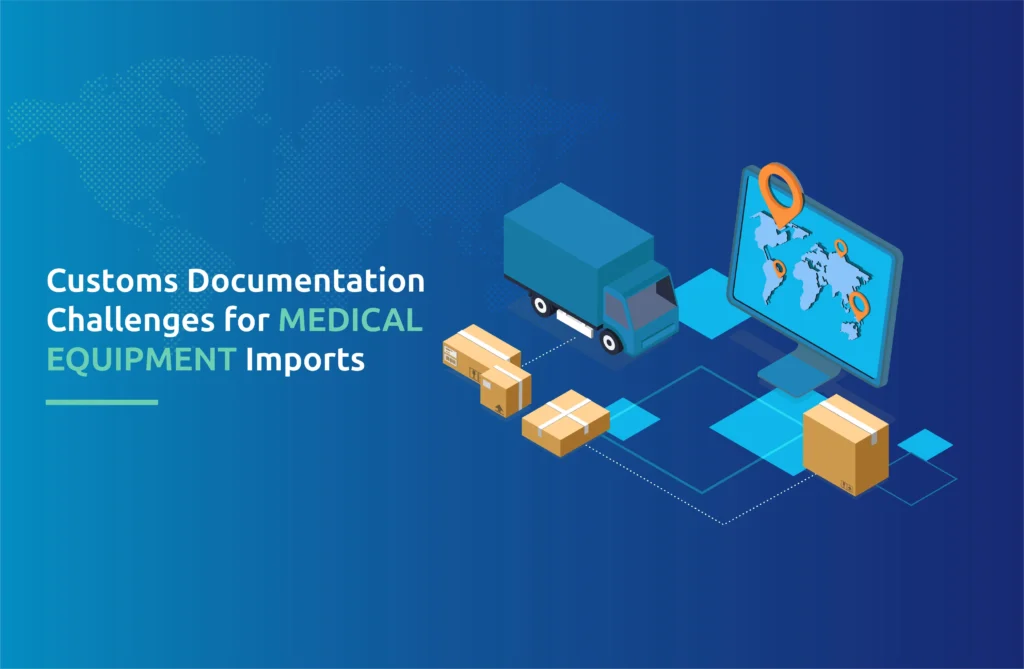
Medical equipment imports into India need to be correctly documented and checked by regulatory checks. To make sure the equipment fulfills the required requirements, importers must follow to CDSCO and Indian Customs rules. Import licenses, commercial invoices, packing lists, and Bills of Entry this are documents that are required. Customs delays may result from missing documents, incorrect product details, or incorrect HS codes. So, checking all customs documents before shipment helps importers in avoid problems and allow the smooth import of medical equipment.
Understanding Customs Documentation for Medical Equipment Imports
Important documents required to import medical equipment into India are provided in the customs document. Customs officials can check the product details, value, amount, and shipment goal with the help of these documents. The Medical equipment Rules, 2017 handle the safety and legal demands for medical equipment, and the Customs Act, 1962 sets the rules for importing goods. Also Indian Customs checks the import documents and reviews the shipment, CDSCO checks the proper medical device rules. The Bill of Entry, the proper CDSCO import license, the commercial invoice, and the packing list are important documents. Reducing customs queries and avoid delays can be done by keep these documents correct and complete.
Essential Documents Required for Medical Equipment Imports in India
For customs clearance, a number of important documents must be provided with medical equipment imports into India. The product name, quantity, price, and seller and buyer details are shown on a commercial invoice. The amount of packages, weight, and size of the goods are all given on a packing list. The Bill of Entry provides details about the imported equipment, including its value and HS code. Shipment and delivery details are provided by an Air Waybill or Bill of Lading. A CDSCO import license, such as Form MD-15, can also be required, depending on the goods & import category. As product labels and technical documents explain the features, model number, & specific use of the equipment, a Certificate of Origin shows country of origin. More certificates or official licenses may also be required for some medical devices. Customs checks and delays can be avoid by keep these import documents for medical equipment ready.
Common Customs Documentation Challenges Faced by Medical Equipment Importers
Importers of medical equipment usually face delays at customs due to incomplete or incorrect documents. Incomplete approval & a missing CDSCO import license can cause problems during the import process. To avoid these problems, importers must check the required documents before shipment.
Customs officials may also have problems if product names, quantities, or model numbers change between invoices, packing lists, & licenses. Product classification and customs taxes may be affected by using the incorrect HS code. As a result, every product detail should be similar across the shipment documents.
Different problems can happen from incorrect certificates, missing producer details, and incorrect product values. Mistakes in labels, such as missing product details or incorrect details, may result in more checks by customs officials.
Customs clearance for medical equipment may take longer as a result of these document issues. Before shipment, importers can avoid mistakes and reduce delays by checking invoices, licenses, product details, and required documents.
Customs Valuation and Invoice-Related Documentation Issues
Importing medical equipment into India requires a large amount of customs value. Indian Customs calculates the correct taxes and customs charge by checking the equipment declared value. The product price, payment, quantity, and seller details should all be correct on the commercial invoice. Customs officials may request more details if the invoice has an incorrect value or missing details.
Also, importers are required by relevant rules to give correct details related to freight charges, insurance, and other costs that may be part of the customs value. More documents may be required for shipments including related companies, rebates, or special costs in order to verify the actual value and explain the deal.
Customs officials can ask queries if there are differences between the invoice, payment records, and other shipping documents. As a result, importers should check the invoice value and prepare all required documents. During the customs clearance process for medical equipment, correct customs review helps avoid needless inquiries.
How Importer of Record (IOR) Services Support Medical Equipment Imports
When companies do not have own legal company in the country of destination, an Importer of Record (IOR) helps them with handling medical equipment imports. Product details, HS codes, customs value, and required import documents are all checked by IOR services. Also, they help working with importers, manufacturers, and customs brokers in order to reduce frequent document errors and keep documents ready.
IOR services, however, don’t have charge of CDSCO import licenses, product permits, or customs broker duties. They make it simple for companies to handle import documents and follow to current customs rules.
Conclusion
Smooth imports of medical equipment into India depend on proper customs documents. Importers must declare correct product values, use the proper HS codes, follow to CDSCO rules, and keep every required document on demand. Shipment delays and customs checks may result from incomplete or incorrect data. Checking product details, licenses, and invoices before delivery helps avoid common mistakes. Companies may handle medical equipment customs clearance more quickly and reduce down on needless delays with proper import planning and document support.
Did You Know
The India medical devices market size is expected to increase from USD 18.3 billion in 2026 to USD 19.73 billion in 2027 and reach USD 28.46 billion by 2032, growing at a CAGR of 7.6% over 2027-2032.
FAQ
Why do medical equipment shipments face customs delays in India?
Shipments may be delayed due to missing CDSCO licences, incorrect HS codes, mismatched model numbers, wrong invoice values, or incomplete product details.
What happens if the product details on the invoice do not match the import licence?
Customs or regulatory authorities may ask for clarification or supporting documents. This can delay the import process until the differences are resolved.
Why is customs valuation important when importing medical equipment?
Customs valuation helps determine the value used to calculate import duties and taxes. Incorrect values or missing supporting documents may lead to further checks.
Are technical documents required for medical equipment imports?
Yes, technical documents such as product catalogues, specifications, model details, and intended-use information may be required to support product identification and regulatory checks.
Can an Importer of Record help with medical equipment customs documentation?
Yes, an IOR can help review import details, check required documents, and coordinate with manufacturers and customs brokers. However, it does not replace CDSCO licences or product approvals.