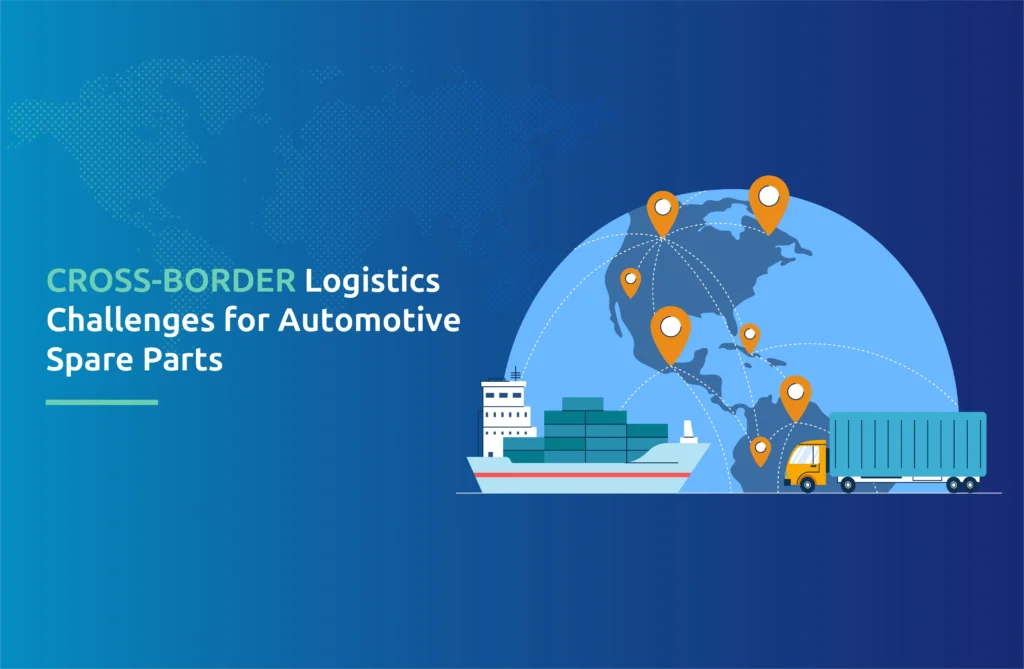
Understanding Cross-Border Logistics for Automotive Spare Parts
Automobile spare parts are important parts of vehicle manufacturing, maintenance, and repair. Producers require parts like brake parts, sensors, electronic parts, & pistons from global suppliers. The cross-border transport of this parts is important part of the automobile supply chain network in the world.
Also, international shipping can be difficult, require customs clearance, import duties, shipping documents, & shipping delays. Cross-border logistics can help companies receive automotive spare parts on time by having travels on time to avoid production delays and vehicle downtime.
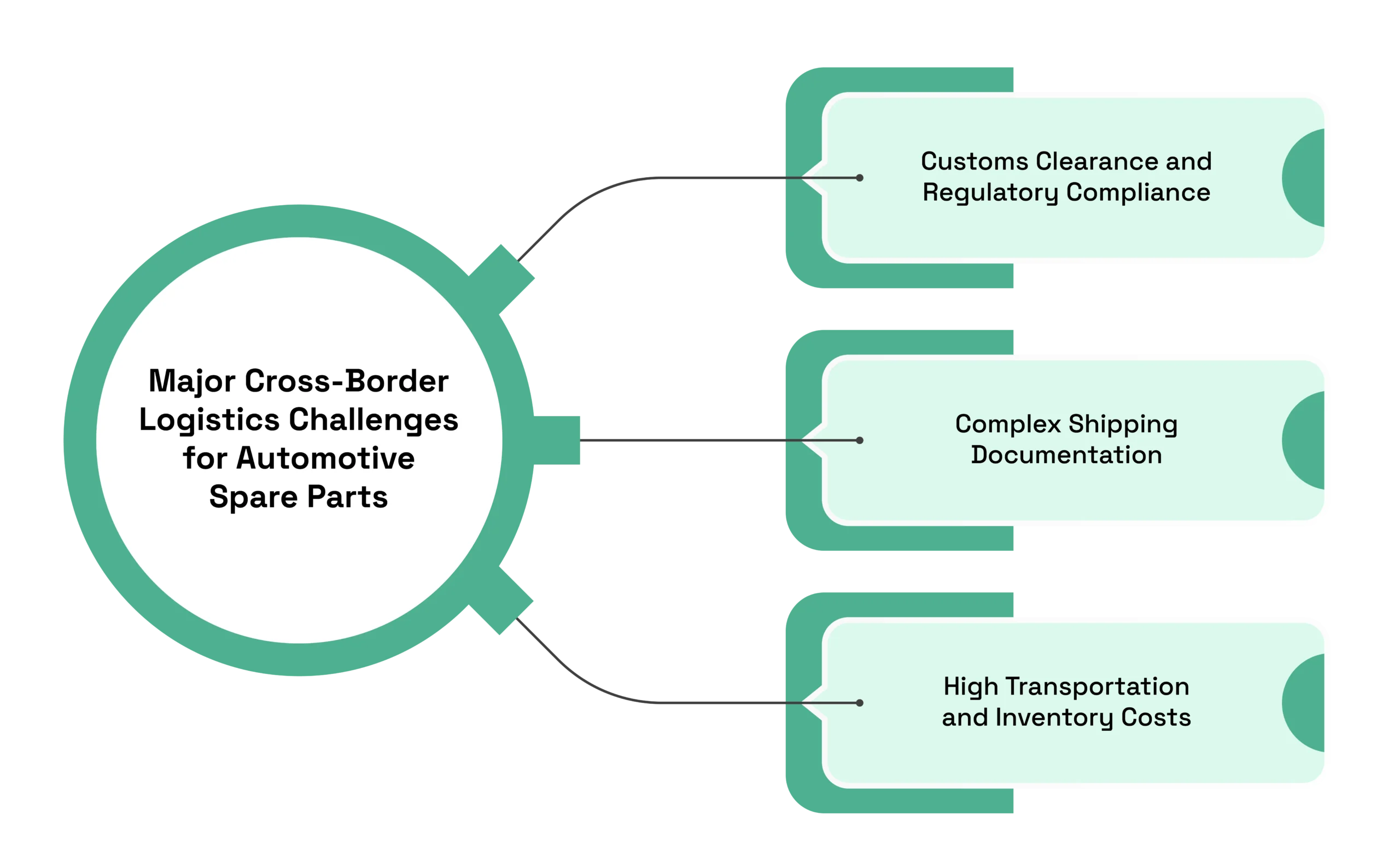
Major Cross-Border Logistics Challenges for Automotive Spare Parts
Shipping automotive spare parts between countries face multiple challenges. Companies to avoid shipping costs, delivery times, and shipping papers and customs rules. A slight delay can affect vehicle production, repairs, and availability of spare parts. Some of the major challenges in cross-border automotive logistics are explained below.
Customs Clearance and Regulatory Compliance
All countries have different customs and import rules of spare parts. They also classify parts and identify HS codes to determine import duties and taxes. Import licenses, customs documents, product certificates, etc. depend on the destination country and product. Missing or incorrect information could delay customs clearance and plan delivery on time.
Complex Shipping Documentation
Auto Parts War: commercial invoice, air waybill, bill of lading, packing list, certificate of value, certificate of origin, etc. nature, quantity, origin of goods, etc. Customs queries and extra checks can delay shipment can be caused by incomplete or incorrect documentation.
Transportation Delays and Supply Chain Disruptions
In the automotive industry spare parts are shipped to different countries. Possible causes for late delivery times include border delays, bad weather, lack of transport capacity, or congested ports. Political tension and trade rules can also improve global shipments. These delays can create problems for manufacturers that depend on just-in-time (JIT) delivery to keep production running.
High Transportation and Inventory Costs
Rates that make you save on costs as well as spent handling for the shippers import and export your car parts in so. Shipping costs here are made up of freight as well as customs and storage costs and fuel. Companies may also need to hold more spare parts in stock to avoid stock-out.Fast supply chain from the automotive supply chain and transportation and inventory payments.
Managing Different Types of Automotive Spare Parts
Automotive spare parts come in different sizes, weights, and types. Engines and transmissions can be heavy parts requiring special handling, and sensitive parts, including sensors and electronic parts, need to be packaged properly. Even electric vehicle batteries need to be safely shipped. Choosing the right packaging, storage, and transportation methods helps prevent damage during international shipping.
Limited Shipment Visibility and Tracking
It’s difficult to trace auto parts between nations. Shipments may pass through multiple suppliers, freight-forwarders, customs brokers, and distribution centers. So if we don’t update the shipment everytime, then it goes to some companies, and they don’t even know where and when the shipment is going. Shipment tracking and digital logistics in real-time have better visibility, track the delivery, and handle the delays better.
How Customs Regulations Affect International Automotive Parts Shipments
Each country has its own customs rules for importing car spare parts. Therefore, companies must be familiar with these rules to avoid additional costs and delays of shipment. Some things such as safety equipment, electronics, and car batteries are going to have to pass some specific certifications or approvals.
Customs officials use HS codes to identify products and to decide rates on imports. The duty rates also vary by the country of origin. Some trade agreements offer lower duties for eligible products, supported by a valid Certificate of Origin.
Insights will also be necessary in business for an accurate invoice and product values for calculating the customs duty. Keeping up with changing import rules and tariffs helps companies manage costs and move automotive spare parts across borders smoothly.
Importance of Efficient Spare Parts Logistics for Automotive Businesses
Logistics of car spare parts allows for efficient operations in car companies. The instant delivery of critical parts means no delays in building cars and reduced car downtime. It also ensures that the parts that the customers ask for are available in the distributors and repair centers.
Inventory management can assist companies to know when to order and avoid overstock. Proper planning concerning transportation and delivery can also help overseas supplier orders. Improved coordination between manufacturers, suppliers, and distributors improves the movement of spare parts in different markets.
Thus, with efficient cross-border logistics, automotive companies can assure on-time repair services, on-time meeting of customer’s needs, and on-time shipment of spare parts without interruptions.

Conclusion
Therefore, cross-border logistics are important of the supply chain of automotive spare parts in the world. Challenges, such as customs problems, shipping delays, & high shipping cost, can affect the business and the availability of spare parts. These issues can be identify by proper documents, low-cost logistics, and cargo tracking. Also, proper inventory planning helps make sure that the needed parts are available when needed. However, automotive spare parts logistics help efficiency for the operation at industry, repair on time, and customers from another market.
Did you know
The automotive parts cycle package market size has grown strongly in recent years. It will grow from $263.85 billion in 2025 to $278.45 billion in 2026 at a compound annual growth rate (CAGR) of 5.5%.
FAQ
Why do automotive spare parts shipments face delays at international borders?
Automotive spare parts shipments may face delays due to incorrect documents, customs inspections, wrong HS codes, or missing import approvals. Port congestion and border checks can also affect delivery times.
What challenges arise when shipping electric vehicle spare parts across borders?
EV spare parts, especially lithium-ion batteries, have specific safety and transportation requirements. Businesses must follow applicable packaging, handling, labelling, and shipping rules.
Why is shipment tracking important for international automotive parts logistics?
Shipment tracking helps businesses know where their spare parts are during transportation. It also helps them identify delays, update distributors, and plan deliveries more effectively.
How do international trade agreements help automotive spare parts importers?
Trade agreements may offer lower import duties on eligible automotive components. Importers must meet the rules of origin and provide the required documents to receive these benefits.
How can businesses manage urgent automotive spare parts shipments?
Businesses can plan emergency shipments using suitable air freight services, keep essential parts in regional warehouses, and prepare customs documents in advance.