Overview
Warehousing is no longer just about storing goods, it has become a major hub that connects global trade, digital technology, and working ability. As import–export businesses grow across IT, aviation, medical, and automotive industries, packaging and logistics organizations are mostly changing toward warehouse automation to manage growing shipment sizes, strong approval requirements, and quicker delivery expectations. Modern global trade requires difficult processes such as customs clearance, international freight services, and correct documentation connected to HS code categorizations and the HTS Harmonized Tariff Schedule. Manual warehouse work is frequently a problem to keep storage with these demands. Automation allows businesses to simplify inventory managing while supporting supply chain optimization and regulatory accuracy without slowing trade.
What is Warehouse Automation?
Warehouse automation shows the use of technology, software, and robotic systems to perform warehouse tasks with minimal human work. These systems manages works such as inventory tracking, picking, packing, sorting, labeling, and shipment preparation. Automation combined closely with inventory and order management platforms, allowing organizations to track stock shipments in real time. Organizations working in import-export trades, this combination confirms that shipment data aligns with Incoterms requirements such as DAP and DAPs while maintaining correct trade documentation. Instead of depending completely on manual labor, automated warehouses use quick workflows to work packaging, storage, and dispatch operations. This is specifically important when businesses work as exporter of record services or importer of record service providers, where accuracy and approval directly affect shipment clearance schedules.
How Warehouse Automation transform Efficiency and Productivity in Logistics
Automation changes logistics work by reducing delays, errors, and improving tracking across the supply chain. Packaging and logistics organizations managing high-value goods mainly in aviation components, medical equipment, automotive parts, and IT hardware benefit hugely from automated accuracy. Automated systems create warehouse works with transportation planning and international freight services, confirming shipments are prepared according to regulatory and trade requirements. Questions such as “can a freight forwarder be an exporter of record” or “can a customs broker handle both import and export documentation” frequently depend on correct working supply chain, and automation helps maintain this clarity. Real-time data tracking also supports trade approval by combining with the best trade compliance software for import export rules. This confirms that documentation, tariff categorizations, and shipment declarations remain continuous in the logistics process.
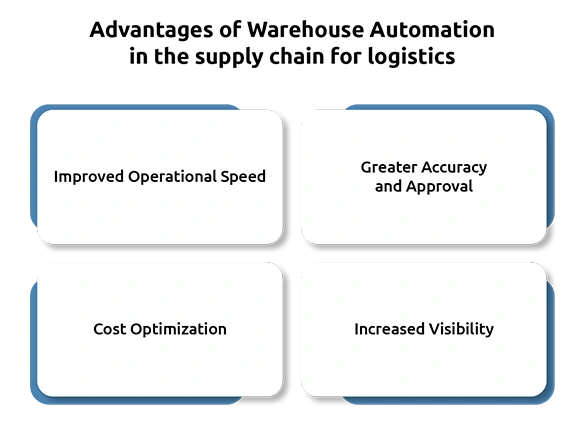
Advantages of Warehouse Automation in the supply chain for logistics
Improved Operational Speed
Automated picking and sorting systems mostly reduce processing time, allowing faster shipment preparation and improved delivery.
Greater Accuracy and Approval
Automation minimizes human problems in labeling, documentation, and classification, which is necessary when handling customs clearance procedures combined with HS codes and regulatory checks.
Cost Optimization
While automation requires initial fees, organizations reduce long-term labor costs, stop shipment delays, and avoid penalties related to incorrect documentation.
Increased Visibility
Warehouse management systems provide live tracking of goods, improving work between suppliers, freight partners, and approval teams.
Major Components of Warehouse Automation In Logistics
Warehouse automation combines various technologies working to create a connected ecosystem.
Automated Storage and Retrieval Systems (AS/RS)
These systems automatically store and retrieve goods, maximizing storage utilization while reducing manual work.
Robotics and Smart Conveyors
Robotic arms and conveyor chains growing packaging work and help logistics teams manage high shipment sizes effectively.
Warehouse Management Software
A WMS combining inventory and order management with trade processes, confirming work between warehouse and global shipping requirements.
AI and Data Analytics
Artificial intelligence analyzes trade data to predict demand patterns, storage layouts, and improve supply chain optimization.
Approval and Documentation Integration
Automation platforms increasingly connect with approval systems to manage documentation related to Incoterms, tariff schedules, and international trade requirements, helping import-export organizations maintain working accuracy.

Conclusion
Warehouse automation is changing how packaging and logistics companies work in today’s global trade environment. Organizations work in IT, aviation, medical, and automotive sectors, automation delivers more than efficiency; it provides dependability, approval, and flexibility. As global trade grows more difficult, automated warehouses help organizations manage documentation, simplify customs clearance, and maintain accuracy across importer and exporter responsibilities. Combining advanced technology with logistics processes, organizations can build flexible works of supporting modern global trade demands while creating for the future of smart supply chains.
DID YOU KNOW?
We plan to further automate our network and, as a result, we expect to increase the percentage of US volume processed through automated facilities to 68% by the end of the year, up from 66.5% by the end of 2025.
FAQs:
1. How is automation used in warehousing storage?
Automation in warehousing storage uses technologies such as Automated Storage and Retrieval Systems (AS/RS), robotics, and warehouse management software to store, locate, and move goods efficiently.
2. What is the process of automated packaging?
Automated packaging involves machines and robotic systems that handle product sorting, packing, labeling, sealing, and shipment preparation. Sensors and software ensure correct packaging sizes, barcode labeling, and documentation alignment, reducing human errors and speeding up dispatch operations.
3. How to make a warehouse automated in 2026?
To automate a warehouse in 2026, businesses typically such as Implement a Warehouse Management System (WMS), Introduce robotics for picking and sorting, Use AI-based demand forecasting, Deploy smart conveyors and automated storage systems, Integrate trade compliance and documentation platforms.
4. What is modern packaging in logistics?
Modern packaging in logistics refers to technology-driven packaging processes designed for protection, tracking, and efficiency. It includes smart labeling, temperature-controlled packaging, automated packing systems, and sustainable materials.
5. How is AI changing warehousing?
Artificial Intelligence improves warehousing by predicting demand, optimizing storage layouts, automating inventory tracking, and reducing operational delays. AI also enhances through data analytics, helping logistics companies improve supply chain planning and maintain compliance accuracy.