
Overview
Global aviation trade is going into uncertainty of tariffs and trade tensions, beginning to change aircraft pricing and international buying decisions. Aircraft manufacturing has traditionally benefited from a generalized system of preferences (GSP)and open trade because production depends on multinational partnerships, long-term trade agreements, and highly specialized suppliers, such as the exporter of record services and the importer of record services. Also, recent tariff trade discussions between major economies are beginning to change export pricing systems. Industry analysts warn that tariffs applied directly or indirectly to aerospace components can hugely grow aircraft costs. Even small percentage increases translate into millions of dollars because a single trade of aircraft can cost between $90 million and $400 million, depending on International freight services. As trade policies improve with new Incoterms, buyers worldwide may face higher investment costs, delayed procurement decisions, and renegotiated agreements.
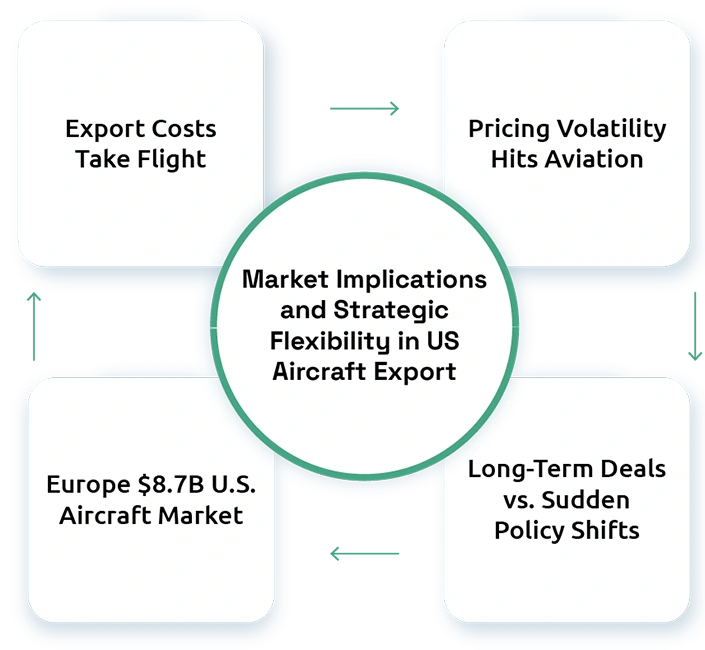
Market Implications and Strategic Flexibility in US Aircraft Export
Tariffs introduce pricing volatility that affects both manufacturers and aircraft customers. When governments impose duties on aerospace goods, it affects advanced components, and production expenses rise quickly in global trade. Manufacturers frequently send these costs to international buyers, increasing export prices.
The United States remains one of the world’s largest aircraft exporters, with companies like Boeing depending on overseas markets. Europe alone traded for over $8.7 billion in aircraft-related revenue for U.S. manufacturers in 2024, highlighting how dependent exports are on stable trade.
Mainly, exporters are now looking for flexible pricing methods and regional partnerships to reduce issues of tariff changes. Also, aviation agreements take years of time period, meaning sudden policy changes cannot be easily added because customs brokers handle both import and export documentation. This reduces short-term flexibility compared with other industries.
How Will These Tariffs Affect Global Exporters of Aircraft
Tariffs rarely impact one country alone in this situation. Aviation works as an interconnected global ecosystem where parts cross borders multiple times before final assembly. When tariffs increase costs in one region, competing exporters’ global expertise changes the effects on supply chain optimization.
European manufacturers have warned that tariff changes could create a “lose-lose” situation, raising aircraft prices with inventory and order management.
Real-world examples already show the impact of tariffs. In 2025, India paused the buying of additional aircraft after prices saw nearly 50%, partly changed by tariff-related cost pressures and broader trade policy changes.
How Will Tariffs Impact US Aircraft Manufacturing?
Higher tariffs change manufacturing in many ways:
- Increased cost of imported components and goods
- Pressure on profit margins for exporters
- Reduced competitiveness against manufacturers working in tariff-friendly markets
- Possible slowdown in production expansion plans
Aircraft production requires thousands of globally required parts with the HS code and the HTS Harmonized Tariff Schedule. One large aircraft may include over a million individual components, making it highly sensitive to cost increases across multiple suppliers.
Why is the Aviation Sector Uniquely Unsafe to US Tariffs?
Unlike many industries, aviation cannot easily localize production. Aircraft are built through international organizations involving engineering, avionics, engines, and advanced materials sourced globally.
Key reasons aviation is highly vulnerable include:
- Long development cycles lasting 10–20 years
- Fixed pricing agreements signed years before delivery
- Dependence on multinational suppliers
- Limited alternative sourcing for certified components
Trade experts increasingly describe aviation as a “North Atlantic ecosystem,” where American and European organizations supply each other hugely before tariffs. Tariffs imposed on one side frequently rebound onto local manufacturers. Recent trade discussions also show aviation industry mainly appearing on manufacturing tariff lists worth billions of euros, underscoring its major importance in global trade.

Conclusion
Tariffs are changing the economics of aircraft exports at a time when global air travel demand is recovering strongly. Growing duties increase manufacturing costs, changing export prices, and making long-term trade decisions for airlines and governments. While demand for new aircraft trade remains strong, tariff changes could slow trade growth, redirect buyers toward different suppliers, or delay aircraft trade. Also, they look to raise costs across the complete ecosystem, from manufacturers and exporters to airlines and passengers. If tariff tensions continue, higher prices for U.S. aircraft exports are becoming a long-term trade issue.
DID YOU KNOW?
The US tariffs threaten an industry that helps reduce the US trade deficit by more than $100 billion annually.
FAQs:
1. How do tariffs affect aircraft export prices?
Tariffs increase the cost of aerospace components and imported materials, which raises manufacturing expenses and ultimately increases aircraft export prices for international buyers.
2. Why is the aviation industry highly sensitive to tariffs?
Aircraft production depends on global suppliers and long-term contracts, making it difficult to quickly adjust sourcing or pricing when tariffs change.
3. Do tariffs impact airline purchasing decisions?
Yes, higher aircraft costs frequently lead airlines to delay purchases, renegotiate agreements, or consider alternative manufacturers.
4. How do global supply chains change aircraft manufacturing costs?
Aircraft parts cross multiple borders during production, so tariffs at any stage can increase growing costs throughout the supply chain.
5. Can tariffs slow global aviation trade growth?
Tariffs can create pricing uncertainty, reduce competitiveness, and delay procurement, which may slow aircraft trade despite strong travel demand.