Overview
Since the USA sanctions were imposed after the 2022 Ukraine conflict, Russia’s aviation industry has seen various restrictions on accessing aircraft components. Major manufacturers such as Airbus and Boeing stopped direct deliveries, maintenance support, and technical services to Russia after the sanctions. Also, a major investigation by the Yle press release revealed that Russia still managed to import more than 1 billion euros worth of aircraft spare parts between 2022 and 2024 through an indirect trade supply chain.
This shows how AI logistics systems, difficult supply chains, and defects in global trade approval allowed sanctioned goods to ship across borders. While sanctions targeted direct exports, indirect buying through brokers changes global aviation logistics and compliance tracking.
How Russia gets spare parts for Airbus and Boeing aircraft despite sanctions
Despite export bans from the European Union and the United States, Russia built a network of more than 360 intermediary companies operating across multiple countries. Investigators identified approximately 4,000 shipments containing aviation components routed through third-party markets.
Many shipments were categorized using specific HS code classifications and routed under alternative trade descriptions within the HTS harmonized tariff Schedule, allowing exporters to avoid scrutiny during customs clearance. In many cases, transactions used Incoterms such as DAP or DDP, changing responsibility between buyers and logistics brokers.
This system depends massively on international freight services, exporter of record services, and importer of record services arrangements. Questions like “can a freight forwarder be an exporter of record?” became central, as intermediaries legally handled documentation while goods completely reached Russian airlines.
Industry experts note that supply chain optimization tools and inventory and order management platforms helped identify unrecognizable purchasing patterns by splitting orders into smaller shipments.
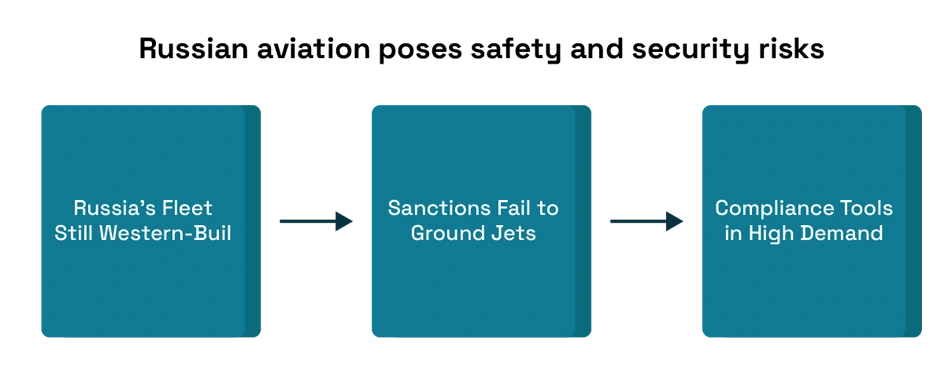
Russian aviation poses safety and security risks
Sanctions were calculated to ground large parts of Russia’s Western-built fast-moving, yet approximately two-thirds of Russia’s 1,100+ aircraft remain Airbus and Boeing models, responsible for nearly 90% of local passenger traffic in airlines.
The continued operation of these aircraft raises safety problems. Without authorized manufacturer support, airlines increasingly depend on reused parts, reverse engineering, or uncertified replacements. Aviation analysts warn that maintenance conducted without licensing verification may compromise aircraft dependability.
The use of gray-market components also introduces dual-use concerns, as some imported avionics and radar systems could possibly have military applications. This has increased scrutiny among regulators and increased demand for the best trade compliance software for import export rules to track unauthorized transfers.
Key Details of the Investigation
- €600 million worth of Airbus components and €400 million in Boeing parts entered Russia.
- Around one-third of shipments were routed through broker hubs.
- Critical goods included engines, onboard computers, sensors, and navigation systems.
- Russian airlines such as the Aeroflot division were among the recipients.
These findings also raised working questions, including whether a customs broker can handle both import and export documentation when transactions cross multiple customs officials.
How the UAE grows as a key hub in Russia’s sanctions network
The investigation identified the United Arab Emirates, specifically Dubai, as a central logistics hub, simplifying aircraft part shipments. Nearly 100 UAE-based organizations worked in supplying components, responsible for roughly one-third of deliveries. The UAE’s advanced logistics infrastructure, flexible re-export guidelines, and strong aviation trade ecosystem allowed shipments to be shipped through staged trades. Goods were frequently imported legally into intermediary markets and then re-exported under revised documentation systems. International freight services working under complex Incoterms arrangements allowed sellers to claim approval while buyers redirected cargo shipping. Although manufacturers insist they follow sanctions rules, once parts enter global distribution channels, tracking becomes difficult during delivery. Trade analysts note that systems originally designed to support trade simplification, including schemes changed by the generalized system of preferences (GSP), can unintentionally create gaps between sanctions avoidance networks.

Conclusion
The €1 billion aircraft spare-parts investigation shows how globalization and logistics difficulties can undermine even strong sanctions authorities. Russia’s ability to maintain its aviation industry shows the flexibility and vulnerability of modern supply chains. Governments and logistics providers, the case underscores the growing importance of advanced clearance tracking, clear exporter of record services, and stronger customs data sharing. As aviation safety and geopolitical tensions intersect, improving trade guidelines and supply chain visibility will remain important to stop future sanctions cheating.
DID YOU KNOW?
According to The Guardian, Russia has retained around 500 aircraft worth 10 billion euros ($11.7 billion). Many of these aircraft now rely on these diverted parts to remain operational.
FAQs:
1. How did Russia continue receiving aircraft spare parts after sanctions?
Russia depends on broker companies across multiple countries that purchased aviation components legally and then re-exported them through indirect supply chains. Smaller shipments, alternative product classifications, and difficult logistics documentation reduced risks.
2. Why are indirect trade routes difficult for regulators to track?
Indirect routes involve multiple brokers, freight forwarders, and changing exporter/importer responsibilities under Incoterms. Once goods enter global distribution channels, tracing the end user becomes mainly more difficult.
3. What safety risks arise from using gray-market aircraft components?
Uncertified or reused parts may lack manufacturer verification, increasing risks related to maintenance quality, aircraft reliability, and long-term operational safety, mainly without authorized technical support.
4. Why did the United Arab Emirates, especially Dubai, become a major logistics hub?
Its strong re-export ecosystem, advanced freight shipping, and flexible trade procedures allowed goods to be legally imported and later redistributed under revised documentation, making it a key transit point.
5. Which airlines were connected to receiving imported aircraft components?
Investigations indicated that Russian carriers, including divisions connected to Aeroflot, were among the recipients of parts routed through intermediary supply networks.