Introduction
In the aviation industry, shipping aircraft engines and critical parts is one of the most demanding logistics tasks. These parts are not only mainly high in value but also highly sensitive to damage, delays, and regulatory non-compliance. Even a small issue in handling or documentation can lead to grounded aircraft, financial losses, and safety risks. As global aviation expands, the required for special aerospace logistics, supported by compliant international freight services and advanced supply chain management, has become necessary to confirm unwanted work across borders.
Confirming Safe and Effective Aircraft Spares Shipments: Major Factors to Consider
Safe and efficient aircraft spares shipments require various planning, accurate handling, and regulatory expertise. Aircraft components are frequently shipped across various countries, making customs clearance, import duties and tariffs, and import export documentation necessary for shipment success. Logistics providers must align shipments with Incoterms such as DAP or Delivered Duty Paid service to define requirements and risk clearly. Also, real-time shipment tracking plays an important role in tracking high-value cargo, confirming visibility and rapid response to unwanted disruptions. Without proper supply chain optimization, even the most urgent Aircraft on Ground shipments can face costly delays.
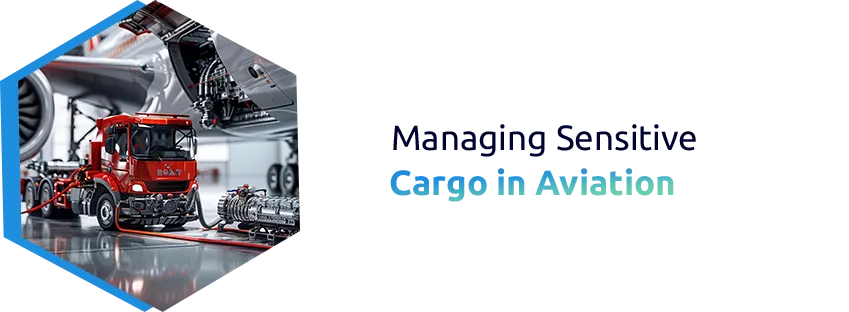
Why Aircraft Engine Transportation Is So Complex
Aircraft engine transportation is difficult due to the combination of size, weight, sensitivity, and strong agreement requirements. Engines require custom cradles, vibration-controlled transportation, and climate-protected environments during shipping and warehousing. International shipments must include with HS code and HTS Harmonized Tariff Schedule classifications to avoid misdeclaration penalties. Also, changing customs regulations across regions means that improper management of customs clearance or incorrect documentation can stop shipments completely. This difficulty demands logistics partners with expertise in international freight services and aviation-related transportation and warehousing solutions.
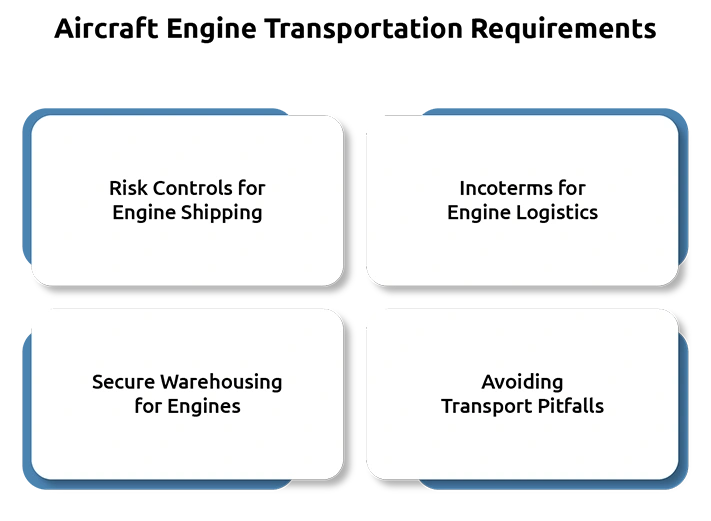
Aircraft Engine Transportation Requirements
Transporting aircraft engines requires special packaging, certified crate equipment, and secure warehousing solutions for import and export goods. Temperature control, shock monitoring, and strict handling guidelines are non-negotiable to preserve component unity. Importer of Record services are frequently required to manage agreements when the good lacks local registration, confirming smooth customs clearance and regulatory guidelines. Also, selecting the right Incoterms, such as DAPs or Delivered Duty Paid service, helps reduce risk and simplify requirements across the supply chain. Effective transportation and warehousing services ensure engines ship smoothly from the origin to the final location.
How Are Aircraft Critical Parts Transported?
Aircraft necessary parts are shipped using a combination of air freight, dedicated ground transport, and secure warehousing simplifies designed for aerospace cargo. Time-critical shipments frequently depend on expedited international freight services supported by last-mile delivery services to confirm quick placement at maintenance, repair, and overhaul (MRO) systems. All around shipping, real-time shipment tracking provides complete transparency, reducing unwanted costs and improving decision-making during shipping. Proper documentation, correct HS code classification, and confirmation of import duties and tariffs requirements confirm these sensitive parts clear borders without delay or risk.
Know More on Aviation and Aerospace Logistics at One Union Solutions
One Union Solutions specializes in managing high-value aviation cargo through a customized logistics approach that is tailored to aircraft engines and critical parts. Having expertise in supply chain management, customs clearance, IOR services, and global transportation and warehousing, the company supports smooth cross-border shipments. Their combined approach provides live cargo shipment tracking, import-export documentation, and enhanced supply chain processes, reducing maintenance and operational risks for aviation customers worldwide.
Conclusion
Handling aircraft engines and critical aerospace parts requires more than conventional logistics; it demands accuracy, agreement, and industry-specific expertise. From right HS code categorizations and Incoterms alignment to advanced warehousing solutions and international freight services, every step must be carefully managed. Using effective supply chain optimization, real-time shipment tracking, and dependable last-mile delivery services, aviation companies can confirm safe, timely, and complete logistics of their most valuable equipment. Partnering with experienced aerospace logistics providers is necessary to have working continuity in a highly regulated global aviation environment.
DID YOU KNOW?
According to the Market Outlook 2025-2044, the active commercial aircraft fleet will reach nearly 50,000 aircraft by 2044, compared to over 27,000 aircraft in 2024, representing a 1.8-fold increase. The cargo aircraft fleet is also projected to grow significantly, from 2,375 aircraft in 2024 to 3,975 aircraft by 2044, an increase of approximately 67%.
FAQs
Why is aircraft engine transportation considered high-risk?
Aircraft engines are extremely high in value, heavy, and sensitive to shock, vibration, and temperature changes. Even minor handling errors or documentation issues can cause delays, financial loss, or grounded aircraft.
What logistics services are required for aircraft engine shipping?
Aircraft engine shipping requires specialized packaging, certified crates, temperature control, shock monitoring, secure warehousing, customs clearance, and compliant international freight services.
How do Incoterms impact aircraft spares shipments?
Incoterms like DAP and Delivered Duty Paid (DDP) define responsibility, cost, and risk between shippers and receivers. Choosing the right Incoterm helps avoid customs delays and unexpected costs.
Why are HS codes and customs documentation important in aviation logistics?
Correct HS code classification and accurate import-export documentation prevent customs holds, penalties, and shipment delays, ensuring smooth cross-border movement of aircraft parts.
How does real-time shipment tracking improve aerospace logistics?
Real-time shipment tracking provides visibility for high-value cargo, enables faster response to disruptions, reduces risk, and ensures timely delivery to MRO facilities or airports.