Introduction
The aviation industry works under some of the most stringent safety and agreement requirements in the world. Every aircraft part, from engines and avionics to fasteners, must be fully traceable throughout its entire shipping process. End-to-end traceability of aviation components using IoT, RFID, and blockchain has emerged as a novel approach to ensure clarity, authenticity, and regulatory compliance. By combining digital tracking technologies with permanent data records, aviation organizations can hugely reduce risk, stop bogus parts, and improve operational efficiency across global supply chains.
How the Technologies Work Together in End-to-End Traceability of Aviation Components
IoT, RFID, and blockchain work as an integrated ecosystem that delivers real-time visibility and permanent records for aircraft parts. RFID tags are attached to parts to store unique identification details such as HS Code, manufacturing data, and maintenance history. IoT sensors continuously capture condition data such as temperature, vibration, and usage hours during transportation and warehousing. Blockchain works as a secure support, recording every transaction and shipment from production to installation, confirming that data cannot be changed. This system supports agreement with global trade systems, such as HS code categorization, HTS Harmonized Tariff Schedule requirements, and Incoterms, while simplifying import export documentation across international freight services.

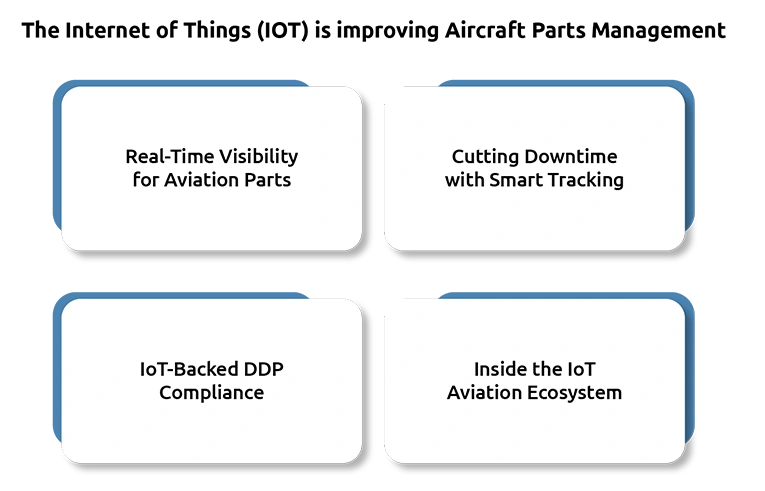
The Internet of Things (IOT) is improving Aircraft Parts Management.
IoT has changed how aviation components are tracked and managed throughout their shipment. IoT-allowed devices, organizations gain real-time shipment tracking across transportation and warehousing stages, reducing uncertainty and improving supply chain optimization. Sensors help to know delays, damage, or inconsistencies during last-mile delivery services, confirming parts arrive in good condition. This level of visibility supports Delivered Duty Paid service methods by providing correct data for customs clearance, import duties and tariffs, and agreement verification. As aviation supply chains become more difficult, IoT allows proactive decision-making and reduces downtime caused by missing or delayed components.
Role of IoT in Real-Time Monitoring
The Internet of Things (IoT) enables real-time tracking and monitoring of aircraft parts through connected sensors. These sensors can capture critical data such as location, temperature, humidity, vibration, and usage cycles.
IoT devices attached to high-value components like engines or avionics systems provide continuous data during transit and operation. This helps airlines and maintenance teams proactively identify issues, optimize maintenance schedules, and reduce downtime.
Blockchain Technology-Based System to Enhance Aircraft Parts Traceability
It introduces a secure, decentralized register that strengthens aircraft parts traceability. Every event manufacturing, inspection, shipment, maintenance, and replacement, is permanently recorded, creating a single source of truth accessible to authorized customers. This transparency reduces fraud, reduces unauthorized risks, and simplifies audits required by aviation authorities. Blockchain also simplifies IOR services by confirming accurate documentation for customs clearance and regulatory approvals. By combining traceability data with harmonized tariff schedules and import regulations, aviation companies can grow cross-border shipments while maintaining full agreement.
How Traceable Aircraft Parts Reduce Risk, Maintenance, and Non-Compliance
End-to-end traceability hugely lowers working risk by confirming that only certified, conforming components are installed on aircraft. Real-time visibility into part location and condition reduces unwanted delays and supports effective transportation and warehousing planning. When maintenance teams can instantly verify part history, they avoid grounding aircraft due to documentation gaps or agreement issues. Traceability also supports supply chain management and warehousing plans by improving inventory levels and reducing excess stock. By automating agreement checks for customs clearance, import duties, and international trade requirements, organizations minimize regulatory penalties and operational disruptions.
How One Union Solutions Gives You End-to-End Traceability of Aviation Components
One Union Solutions delivers a comprehensive traceability framework that integrates IoT, RFID, and blockchain technologies into aviation supply chains. Their platform supports smooth work across warehousing solutions for import and export goods, international freight services, and Delivered Duty Paid service methods. With advanced tracking and documentation capabilities, we confirm accurate import export documentation, effective IOR services, and smooth customs clearance across global trades. By providing visibility across the transportation and warehousing chain, the company allows aviation clients to maintain agreements, improve efficiency, and increase supply chain dependability.
Conclusion
End-to-end traceability of aviation components using IoT, RFID, and blockchain is no longer optional; it is necessary for safety, approval, and operational excellence. These technologies combined deliver real-time visibility, permanent records, and smooth regulatory work across global aviation supply chains. By using an advanced traceability approach, aviation organizations can reduce risk, reduce inefficiencies, and confirm agreement with international trade requirements. As the industry continues to develop, technology-related traceability will remain an important foundation for safer, smarter, and clearer aviation operations.
DID YOU KNOW?
This system, which uses blockchain technology, can bring about significant changes in the market for buying and selling aircraft spare parts, where most transactions still take place offline. “Boeing has added over $1 billion worth of surplus aircraft spare parts to GoDirect Trade,” they say.
FAQs:
What is end-to-end traceability in the aviation industry?
End-to-end traceability in aviation refers to tracking aircraft components from manufacturing to installation and maintenance, ensuring authenticity, safety, and regulatory compliance throughout the supply chain.
How do IoT and RFID help in aircraft parts tracking?
RFID provides unique identification for each part, while IoT sensors capture real-time data such as location, temperature, and usage, improving visibility and reducing supply chain risks.
Why is blockchain important for aviation component traceability?
Blockchain creates a secure and tamper-proof record of every transaction and movement, helping prevent counterfeit parts, simplify audits, and ensure compliance with aviation regulations.
How does traceability reduce maintenance delays and non-compliance?
With instant access to part history and condition data, maintenance teams can verify components quickly, avoid documentation gaps, and prevent aircraft grounding due to compliance issues.
How does end-to-end traceability support global trade and customs clearance?
Traceability systems align with HS codes, HTS requirements, Incoterms, and import-export documentation, enabling smoother customs clearance and efficient international freight operations.