The fast growth of artificial intelligence (AI) is changing industries worldwide, driving an unprecedented demand for high-performance computing networks. As organizations invest mainly in AI training, inference, & large-scale data processing, the development of AI data centers has become a strategic priority. Devloping AI networks across many countries involves far more than shipping servers & networking equipment. Organizations must navigate difficult international logistics, customs laws, import compliance, taxation, supply chain issues, & varying country-specific needs while ensuring important hardware reaches its destination safely & on time.
Understanding the Rise of AI Data Centers
A facility that contains mainly IT infrastructure needed to develop, implement, & provide AI applications and services is known as an AI data center. It has updated compute, network, & storage architectures & energy & cooling capabilities to handle AI workloads.
While traditional data centers contain many of the same components as an AI data center, their computing power & other IT infrastructure capabilities vary greatly. Organizations that want to capitalize on the benefits of AI technology would benefit from access to the necessary AI infrastructure.
There are many routes to this access, & most businesses will not need to build their own AI data centers from the ground up, a monumental undertaking. Options such as hybrid cloud & colocation have lowered the issue to entry so that organizations of all sizes can reap the value of AI.
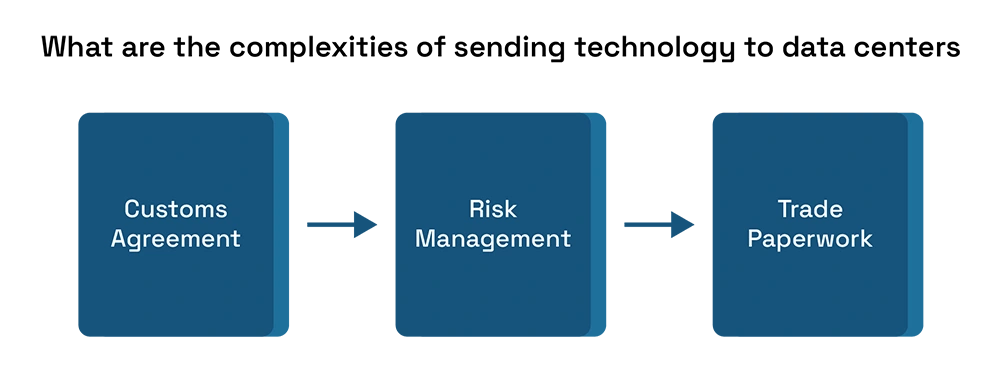
What are the complexities of sending technology to data centers?
Transporting IT equipment to data centers involves significant challenges:
Customs agreement: Each country imposes its own tariff structure, requiring correct HS code classification and sometimes import export registration.
Risk management: IT equipment is high-value and sensitive. Many organizations choose a Delivery Duty Paid service for maximum security.
Trade paperwork: From invoices to export register documentation, missing or inaccurate forms can cause costly delays.
Specialized logistics: Data center hardware cannot be treated like regular cargo. It requires trusted global supply chain services and tailored handling.
Taxation problems: Failure to apply correct rates under the HTS harmonized tariff schedule or claim eligible benefits under trade agreements can increase costs.
Because of these complexities, organizations frequently struggle to manage shipments independently and look for expert solutions.
Understanding Global IT Hardware Shipping and Trade Compliance
Businesses send IT hardware to data centers to confirm scalability, efficiency, and agreement with global digital systems. High-performance servers & networking systems in data centers cannot provide the uptime & speed that industries demand. The development of technology is also supported by international trade facilitation measures such as the Generalized System of Preferences, which minimize tariffs on qualifying shipments. To confirm efficiency, organizations mainly depend on freight forwarding services & complete import-export support.

Conclusion
Transporting data center equipment need careful handling, correct documentation, & a thorough comprehension of global customs laws. Global operators must deal with problems pertaining to HS code categorization, import tariffs, product compliance, & shipment coordination as demand for AI networks, cloud computing, & high-performance hardware keeps growing. Organizations may handle customs needs, handle import cost, & minimize the chance of secure delays by connecting with knowledgeable freight forwarding & Importer of Record (IOR) service providers. Organizations can facilitate simpler equipment deliveries & manage the development of their data center managing projects by anticipating destination-specific laws prior to dispatch.
Did you know?
Over 80% of global trade by volume is carried by sea, facilitating the movement of goods across vast oceans and connecting continents. As the maritime industry faces increasing pressure to optimise operations, reduce costs, and minimise its environmental impact, technological advancements are paving the way for significant improvements.
FAQ
What are the main customs challenges in data center equipment shipping?
The main challenges include correct HS code classification, import duties and taxes, product compliance requirements, incomplete documentation, and country-specific customs regulations.
What documents are required to ship data center equipment internationally?
Common documents include a commercial invoice, packing list, bill of lading or air waybill, and customs declaration. Depending on the destination and equipment type, additional permits, certificates, or technical documents may be required.
How can businesses reduce customs delays when importing data center hardware?
Businesses can reduce avoidable delays by verifying import requirements before dispatch, preparing accurate shipping documents, confirming product classifications, and checking whether specific permits or approvals are necessary.
How do DDP shipping and IOR services help with data center equipment imports?
DDP shipping defines the seller’s responsibility for arranging delivery with applicable import duties and taxes paid, subject to the agreed terms and local rules. An Importer of Record (IOR) manages the formal importer role where legally permitted and helps address applicable customs compliance obligations. These services have different responsibilities and are not interchangeable.
Why is HS code classification important when shipping data center equipment?
HS code classification helps customs authorities identify products and determine applicable duties, taxes, and regulatory requirements. Accurate classification of servers, GPUs, networking equipment, and other hardware can help businesses avoid incorrect declarations and potential customs delays.