Introduction
In 2026, careful planning will be required for the cross-border transportation of costly IT equipment. Data center equipment, servers, GPUs, and networking devices are costly and require careful handling when being delivered. Cross-border logistics can be difficult because every country has its own import rules, tariffs, & customs laws. Delays and extra costs may result from missing documents or incorrect product details. To avoid theft or damage to costly equipment, security is also important. To keep projects on time, businesses must carefully calculate delivery times & select the best shipping method. Companies can control risks, ship equipment safely, and keep a smooth technology supply chain with the help of effective international IT logistics.
What Makes High-Value IT Equipment Different from Regular Cargo?
Because high-value IT equipment is costly, sensitive, and usually important for day-to-day company tasks, it requires more care than normal cargo. In data centers, it includes servers, GPUs, AI accelerators, storage systems, routers, switches, firewalls, server racks, UPS systems, and cooling devices. Static electricity, moisture, vibration, & shocks may all damage these goods while they are being moved. Company projects may be delayed and costly to replace broken equipment. Shipping sensitive electronics requires careful delivery planning, safe handling, secure transit, & proper packaging.
Before shipping, companies must also check the equipment’s size, weight, and handling requirements. For safe transportation, some things need specific lifting equipment and proper vehicles. Shipping data center equipment also depends on timely delivery, proper documents, and customs inspections. Extra costs and delays can be avoided with careful planning. Reliable, secure IT hardware shipping helps companies in securing their equipment & transporting it across global borders.
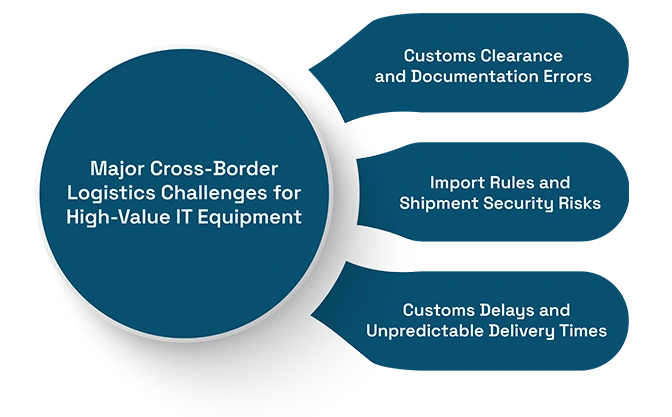
Major Cross-Border Logistics Challenges for High-Value IT Equipment
Customs Clearance and Documentation Errors
Correct legal documents, such as the packing list and commercial invoice, is required when shipping IT equipment globally. The equipment being delivered must also match the HS code. Delays and extra costs may result from missing documents or incorrect details. By checking every document and the HS code classification for electronics before to shipping, companies may help with the clearance of IT equipment through customs. Problems can be reduced with proper foreign shipping documentation.
Import Rules and Shipment Security Risks
For the import of IT equipment, every country has its own regulations. Depending on the product and location, servers, networking equipment, and AI chips may require extra permissions or export authorization. Because of their high cost, these goods may also be at risk for theft. Before shipping IT equipment, companies must check import compliance regulations and follow to technology trade compliance standards. Equipment loss and damage can be avoided by using safe storage, secure shipping, and routine IT shipment tracking.
Customs Delays and Unpredictable Delivery Times
Customs checks, missing documents, port congestion, or shipping problems can all cause shipments to arrive late. These delays may have a affect on new equipment and data center installations. Companies should plan properly for customs checks and prepare documents in advance. Effective planning improves the handling of international freight transit times and helps reduce cross-border shipping delays.
High Freight Costs and Unexpected Import Charges
Transportation costs, handling fees, storage costs, import tariffs, and taxes can all be connected with shipping IT equipment internationally. Costs can also increase due to urgent deliveries. Before shipping, companies should consider their options and look into possible costs. Companies may better handle their budgets by being aware of foreign freight costs & the cost of transporting IT equipment. Another way to avoid unexpected costs is to check the total landing cost of IT hardware.
Complex Final-Mile Delivery and Site Requirements
Planning is required when delivering IT equipment to an office or data center. Large server racks may require special delivery arrangements, proper vehicles, & lifting equipment. Before shipping, companies should verify equipment sizes, delivery times, and site access. Planning properly for the delivery of data center equipment may help avoid issues at the destination. When these services are planned, white glove IT logistics can also help with equipment setup and internal delivery.
How to Overcome Cross-Border Logistics Challenges
Before shipment of IT equipment across borders, companies can avoid shipping issues by preparing before and checking every stage. Verify the product details, a value, country of origin, HS code, & required permits before shipment. Document errors and customs delays can be avoided with the use of a customs compliance checklist. Consider cost, delivery time, and equipment size while choosing the proper mode of shipping. Companies can choose the best choice for their shipment with the help of good international freight planning. To avoid theft or damage to equipment, use safe transport & proper packaging. Secure IT equipment transfer can also be supported by shipment tracking and insurance.
Verify site access, unloading capacity, and delivery timings in order to plan delivery in advance. Verify who handles final delivery, duties, taxes, customs declarations, and transportation. Delays and unforeseen costs are reduced by these international logistics solutions.

Conclusion: Building a Safer Cross-Border IT Supply Chain
High-value IT equipment must be carefully & carefully shipped across international borders. Companies should check shipping rates, complete the required customs documents, protect equipment throughout transit, and plan on-time delivery. Reducing delays, damage, and unexpected costs can be done by choosing the correct logistics partner. Companies may more easily handle their global IT supply chain and transport IT equipment safely with the help of cross-border logistics solutions & careful preparation.
Did you know
The data center information technology (it) equipment market size has grown strongly in recent years. It will grow from $148.13 billion in 2025 to $161.87 billion in 2026 at a compound annual growth rate (CAGR) of 9.3%.
FAQ
What documents are needed to ship servers and GPUs across borders?
A commercial invoice, packing list, shipping documents, & the correct HS code are typically required by companies. Permits or specific approval may also be required for certain products.
How can businesses estimate the full cost of importing IT equipment?
Add freight costs, insurance, handling, taxes, customs charges, storage, & final delivery costs. The product and the country of origin decide the exact fees.
How can businesses track high-value IT shipments across borders?
They can work with logistics companies that provide transparent visibility from shipment to delivery, use shipment tracking, & ask for frequent transport updates.
How can businesses handle urgent replacement servers across borders?
Prepare the required documents, check import and export rules, & choose a suitable fast shipping service. Confirming delivery arrangements early can help reduce delays.
How can companies manage cross-border shipping for multiple data center locations?
They should plan each destination’s import rules, delivery dates, transport needs, & local requirements in advance. A shared shipment schedule helps teams track deliveries and manage each location more easily.