Insight
Port congestion happens when a port imports a large amount of ships and containers and is not able to handle them properly. Shipping delays, cargo waiting, and congestion at container ports may come from this. Cargo may take longer to go from the ship to the next level of delivery when ports get too congested.
Global shipping costs may also increase as a result of port congestion. Companies may be required to pay extra storage, delays, holding, and processing costs when goods remains at a port for a long period of time. Inventory and delivery times may be affected by delays. As a result, importers should check the complete landed cost rather than just the ocean freight cost. This includes freight, port costs, taxes and customs charges, storage, and other costs related to shipping the goods.
What Is Port Congestion?
Port congestion happens if a port has more vehicles, ships, or cargo than it can handle effectively. Ports may be at risk in 2026 as a result of congested shipping routes & changes in cargo movement. Ships and containers may have to delay when port capacity is limited. Congestion at container ports shows that there are a lot of containers required to be moved, unloaded, or picked up. When waiting for a place to land at congested seaports, ships may create ship lines. A large container backlog can also make it harder for terminals to move cargo.
The shipping process can be affected by port delays in different ways. Trucks could be delayed before collecting up cargo, ships should wait longer for space, and containers might take longer to move through the terminal. Customs checks and cargo release can also take longer when ports are very busy. These cargo handling delays can slow down the movement of goods.
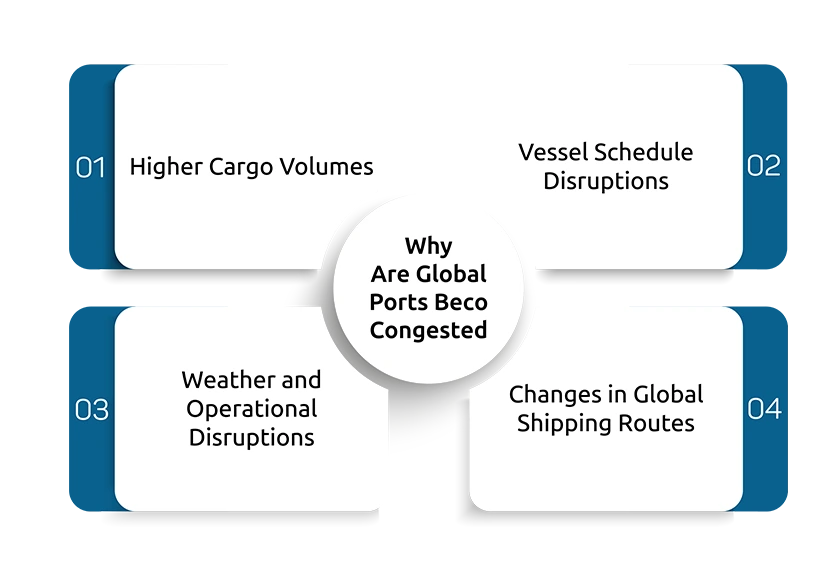
Why Are Global Ports Becoming Congested?
Global ports become congested when too much cargo arrives or when normal port work is affected. When ports have limited space, workers, or equipment, cargo can take longer to move.
Higher Cargo Volumes
When imports and exports increase, more containers arrive at ports. This can put pressure on port capacity and container handling capacity. If terminals cannot move the extra containers quickly, cargo can start to build up.
Vessel Schedule Disruptions
Ships do not always arrive at ports according to their original schedules. Delays or route changes can cause several ships to arrive close together. This is called vessel bunching and can make it harder for terminals to handle all the ships on time.
Weather and Operational Disruptions
Bad weather, accidents, or temporary terminal closures can slow port work. When normal work stops, ships and containers may have to wait. This can create terminal congestion when operations start again.
Changes in Global Shipping Routes
Shipping route disruptions can cause vessels to use different routes or ports. If many ships are sent to the same alternative port, that port may become busy. This can reduce available space and create global trade disruptions across connected shipping routes.
How Does Port Congestion Increase Shipping Costs?
Port congestion can increase shipping costs because ships and containers spend more time waiting. These delays can add extra costs for carriers and importers. Long vessel waits can increase vessel waiting costs and may lead to shipping surcharges. Containers kept at the port for too long can create container storage fees and demurrage charges. Late container returns may also result in detention charges.
Congestion can reduce container availability and increase truck waiting and port handling charges. When shipping space becomes limited, it can also lead to freight rate increases. These extra costs can increase the overall cost of moving goods. Importers should therefore check all possible port-related charges before shipping.

Which Types of Cargo Are Most Affected by Port Congestion?
Some cargo is especially sensitive to port congestion because it is required for projects, setups, or quick deliveries. Delays can affect the planned work. IT and telecom equipment, data center equipment, servers and storage, GPUs and AI infrastructure, and network equipment can face problems when delivery is delayed. Medical equipment, automotive parts, and industrial equipment may also be affected.
Oversized and heavy cargo may need special handling and transport. Time-sensitive shipments can face bigger problems because even a short delay can affect the delivery schedule.
Conclusion – How Port Congestion Affects Global Shipping Costs
Movement of ships, containers, and cargo can be delayed by port congestion. Due to storage, taxation, delay, handling, and increased freight costs, these delays may increase the cost of global shipments. Before shipping, importers should verify the complete landed cost and prepare for possible delays. Proper customs documents and careful shipment planning may help reduce extra costs and delays.
Did You Know
While March volumes increased 5.8% month-on-month, they fell 2.4% year-on-year, suggesting early disruption to established shipping routes.
FAQ
How does port congestion affect the cost of importing goods?
Port congestion can increase the cost of handling, storage, storage, holding, & shipping. Also, it could result to increased freight costs.
Why are oversized shipments difficult during port congestion?
Heavy and large cargo may require specific handling processes, trucks, storage spaces, & cranes. These tools may be difficult to manage due to congestion.
Can better shipment planning reduce congestion-related costs?
Reducing unwanted delays and extra costs can be done by planning delivery times, checking port rules, preparing documents, and planning shipments in early.
Why is container availability important during port congestion?
When containers are stuck at busy ports, fewer containers may be available for new shipments. This can make shipment planning more difficult.
Can port congestion create problems for high-value equipment?
Yes. Delays can affect the planned movement and storage of high-value equipment such as servers, GPUs, telecom systems, and industrial equipment.