Container Capacity Is Tightening Ahead of Q4
Global container shipping enters Q4 with tighter capacity on some major trade lanes. While the market is not short of containers overall, blank services , changing carrier schedules, port congestion and higher demand can mean less space is available on individual routes. That can make it more difficult for shippers to secure their preferred sailing or keep to planned delivery dates. Conditions can also shift quickly during peak season, making early planning all the more essential. For global shippers, the focus should be on verifying route-based capacity rather than depending on overall market conditions. Reviewing bookings, alternative service & delivery requirements ahead of Q4 can help organization prepare for changes in available shipping space.
Why Q4 Can Create Capacity Pressure
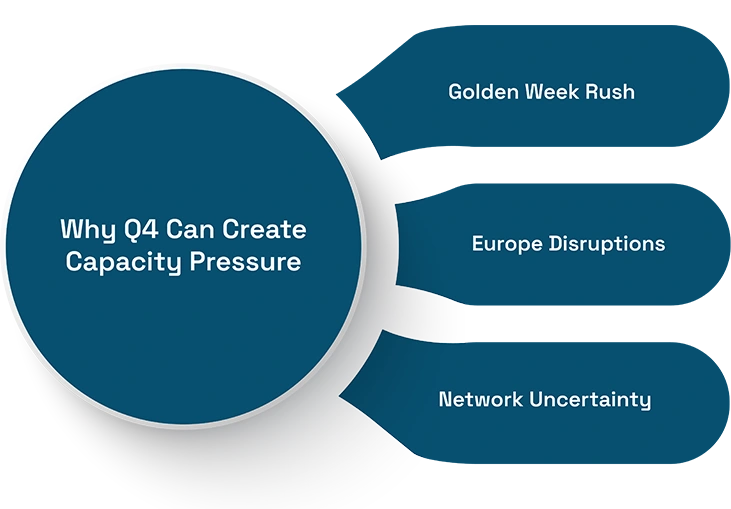
Q4 shipping pressure usually develops through a combination of demand, carrier network management and operational disruption rather than one single event. The period around China’s Golden Week can create a concentrated shipping window as exporters move cargo before factories and logistics operations slow for the holiday. Drewry reported that carriers were increasing blank sailings as Golden Week approached, while Xeneta said shippers were rushing cargo out of Asia ahead of the holiday and expected another freight-rate push around the beginning of October. These movements can reduce the number of usable sailings even when total vessel capacity remains substantial.
Geopolitical and routing conditions are another factor for Q4 planning. Drewry reported that Suez Canal transits were increasing, but continued security concerns in the Red Sea remained an uncertainty for the Asia–Europe network. Panama Canal capacity also remained constrained, while European labour disruptions and low Rhine water levels were affecting parts of the supply chain. These conditions matter because nominal vessel capacity does not always translate into predictable container availability at the origin and destination ports. A vessel may exist on the network, but schedule changes, route diversions, port delays or missed connections can still affect the shipper’s actual booking options.
Book Critical Q4 Containers Earlier
Shippers should identify cargo that cannot tolerate a missed sailing and secure those bookings before the Q4 peak develops further. This is particularly relevant for technology equipment, data-centre components, automotive parts, medical equipment and other business-critical shipments where a delayed container can affect installation, production or customer delivery schedules. Booking early does not guarantee a particular transit time, but it gives the shipper more opportunity to compare sailing options and react if a carrier changes its schedule. Current market data supports this approach, with carriers actively managing capacity through blank sailings on major routes.
The booking process should also include a realistic cargo-ready date. A container cannot use a sailing simply because space appears available in the carrier schedule if the goods, export documents or pickup arrangements are not ready in time. Shippers should align factory completion, inland transport, export clearance, terminal cut-off and vessel departure rather than treating the ocean booking as an isolated step. This becomes more important when ports are experiencing congestion or schedules are changing. Flexibility around the sailing date can help, but critical cargo should have a defined latest departure date and a backup option before Q4 volume increases.
Build Route and Carrier Alternatives
Relying on one carrier, one port or one sailing creates additional exposure when capacity becomes uneven. A better Q4 preparation process is to review alternative routings before they are needed. Depending on the origin and destination, that could mean comparing different gateway ports, transshipment options, carrier services or inland connections. The alternative does not necessarily need to be cheaper; its value may come from having another workable route when the primary service is cancelled, delayed or fully booked. This is particularly relevant when a route is affected by regional congestion or changing cargo deployment.
Route diversification should be based on the full transit chain rather than the ocean leg alone. A different port may offer more vessel choices but create longer inland transport, additional handling or different customs requirements. But a cargo transfer service can offer booking availability but adds another connection point where delays can occur. Shippers should therefore look at the entire journey, including origin pickup, export clearance, ocean transit, transshipment, destination handling, customs clearance and final delivery. This gives buying teams a more realistic view of whether increased capacity actually improves the shipment plan.
Plan Customs & Documentation Before Cargo Ships
Confirm invoices, packing lists, HS classification, customs data, approvals and importer details before Q4 cargo moves. For technology, telecom , medical device or automotive equipment, review any required approvals, licences and technical documents before dispatch. If the organization cannot be the importer, arrange proper importer of record or customs routing in advance. Getting these checks done early can help avoid customs holds, missed delivery dates and storage costs.
Use a Q4 Shipping Plan rather of Last-Minute Booking
A clear Q4 transport plan should cover cargo readiness, booking dates, available routes customs requirements and final delivery deadlines. Shippers should identify priority containers early and keep alternative routes or ports ready if port blank sailings affect the main option. Early planning also provides time to compare carrier schedules & resolve documentation or customs issues before dispatch. Because capacity and rates can vary by trade lane, Q4 planning should be based on the specific route, cargo and delivery deadline rather than a single global market assumption.
Conclusion
Q4 shipping requires planning beyond simply booking container space. Before demand hits its peak, shippers should think about capacity , booking schedules, alternative routes , customs details and delivery deadlines. Planning ahead provides logistics teams the opportunity to explore options, prepare documentation & react to shift in port delay scheduling. A shipment-by-shipment plan can help companies better handles Q4 freight and avoid last-minute delays and cost.
Did You Know?
Global goods trade reached about $13.7 trillion in H1 2026, up 12.5% year on year. Rising trade volumes can increase demand for shipping capacity on key routes.
Frequently Asked Questions
Why is container capacity tightening before Q4?
Capacity is being affected by blank sailings, changing carrier deployments, congestion, holiday-related demand and disruptions on important trade routes. The effect varies significantly by corridor.
Should shippers book containers earlier for Q4?
For time-critical cargo, earlier booking can offer more sailing & carrier options before capacity becomes limited. The appropriate booking window rely on the origin, destination, cargo-ready date and required delivery date.
Will container freight rates increase in Q4?
Rates are moving differently across individual trade lanes. September 2026 data showed higher pacific routes rates while some Asia–Europe rates were declining , so shippers should monitor their specific route rather than depend on a global average.
How can companies handles Q4 shipping capacity risk?
Organizations can review alternative carriers & ports , confirm cargo-ready dates, establish backup routings, monitor rate changes and develop realistic delivery buffers for critical shipments.
What should shippers check before releasing Q4 cargo?
They have to confirm the booking, export documents, HS classification, importer & customs-declarant setup, required permits, destination requirements and final delivery plan before shipment moves.