International shipping schedules are subject to sudden changes, & one of the main causes of goods not shipping according to plan is blank sailings. When a sea-based company skips a port on a planned route or cancels a scheduled transit, it is known as a blank sailing. Cargo reservations, delivery management, stock handling, & shipping costs may be impacted if the ship does not perform that specific function as planned.
Blank sailings can pose problems for importers and exporters along the supply chain. Organizations may minimize delays and improve foreign shipments by knowing why they occur and how to be ready for them.
What Is a Blank Sailing?
A scheduled vessel voyage that is canceled, skipped, or deleted from a specific route is known as a “blank sailing.” It may entail leaving out a port call or a whole sailing from the ship’s itinerary.
When shipping lines need to manage vessel timetables, respond to decreased demand, alter capacity, or handle operational difficulties, they may announce blank sailings. A number of sailings may occasionally be canceled over time.
Containers that were scheduled to travel on that vessel may be rolled to another sailing in the event that a sailing is canceled. Businesses waiting for their cargo may experience uncertainty and longer travel times as a result.
Why Are Shipping Lines Using Blank Sailings?
Carriers may lower or modify their scheduled capacity for several reasons.
A shift in the demand for cargo is one frequent cause. Instead of operating vessels with much reduced utilization, carriers may decide to eliminate some sailings when shipping volumes fall on a specific trade path.
Operational issues may also be a factor. Schedules may be impacted by weather, labor issues, equipment shortages, busy port issues, ships delays, & routing changes.
Network management is an additional factor. To balance their networks and increase vessel usage, shipping lines may temporarily change capacity or combine services.
The practical impact of a blank sailing—cargo may have to wait for another available vessel—may be more significant to importers and exporters than the rationale behind it.
How Blank Sailings Affect Importers
Importers can face several problems when a planned sailing is cancelled.
Longer Delivery Times
A delay is mainly the most noticeable effect. Cargo may be shipped to the next available ship if it misses its first sailing. The shipment timetable may be extended by some days or more, depending on the route & available capacity.
Organizations that import machinery, electronics, equipment, components, or other items necessary for continuous operations may find this mainly challenging.
Higher Logistics Costs
Additional transportation expenses may arise from a blank sailing. For urgent items, businesses may need to think about other sailings, various ports, inland transportation, storage, or expedited transportation.
Depending on the state of the market, freight rates may also alter as capacity becomes more limited.
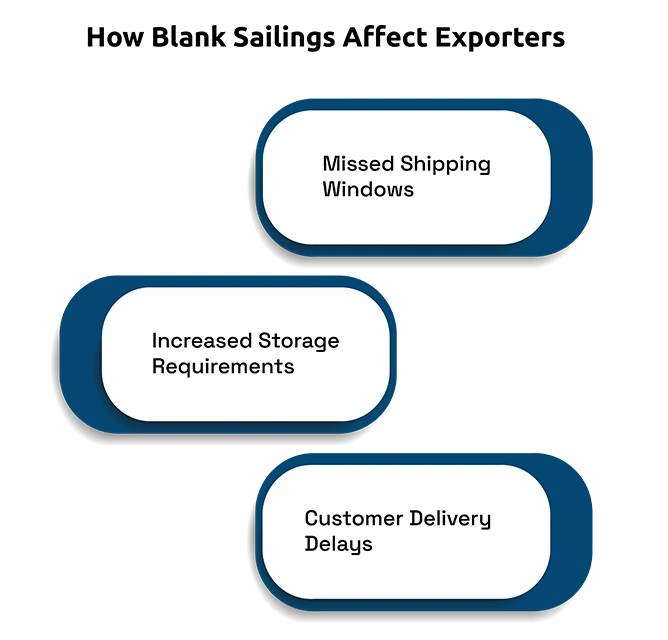
How Blank Sailings Affect Exporters
Exporters can also face disruptions when carriers cancel scheduled services.
Missed Shipping Windows
It is possible for an exporter to have items prepared for shipment but no vessel available on the scheduled date. Delivery commitments, warehousing space, and production timelines may all be impacted.
Increased Storage Requirements
Exporters may have to store goods in storage longer if cargo cannot depart on time. The total cost of the cargo may go up if there are additional storage fees.
Customer Delivery Delays
International purchasers typically organize their business around predetermined delivery dates. The anticipated arrival date may be delayed due to a canceled sailing, and the exporter may need to provide an updated schedule.
These delays may put further operational and commercial strain on companies with tight delivery obligations.
Blank Sailings Can Affect Freight Rates
A commerce lane’s available vessel capacity may be decreased by blank sailings. Freight rates may rise as capacity becomes more limited while cargo demand stays constant or rises.
But the outcome isn’t always the same. Cargo demand, available ship storage capacity, fuel prices, port circumstances, seasonal trends, and broader market disruptions are some of the variables that affect freight rates.
As a result, businesses shouldn’t expect that every blank voyage would result in higher freight costs.
How Importers and Exporters Can Prepare
Businesses cannot prevent a carrier from cancelling a sailing, but they can reduce the impact through better planning.
Build Some Schedule Flexibility
Avoid planning every shipment around the exact minimum transit time. Adding reasonable buffer time can help businesses manage unexpected schedule changes.
Monitor Carrier Schedules
Regularly checking carrier updates can help companies identify cancelled sailings before they become a major problem. Freight forwarders can also provide information about alternative sailings and routing options.
Plan Documentation Early
Customs and shipping documentation should be prepared well before cargo is ready to move. Having documents in order makes it easier to transfer a booking to another sailing when necessary.

Conclusion
A useful component of modern ocean freight managing is blank sailings. For both importers & exporters, they may have an effect on shipment timetables, inventory levels, storage needs, ship storage capacity, & logistics costs.
Avoiding depending on a single fixed shipping plan is the greatest method to handle their influence. When a trip is canceled, enterprises can react with the support of early documentation, flexible routing, suitable inventory buffers, and regular schedule managing.
Oraginazation that include flexibility into their logistics handling will be better equipped to manage sudden changes in ocean freight schedules as global shipping networks continue to develop.
Did you know?
Congestion at China’s largest container ports has disrupted vessel schedules and added to the pressure facing importers ahead of the country’s Golden Week holiday.
FAQs
What does blank sailing mean in shipping?
A blank sailing occurs when a scheduled vessel voyage is cancelled or a planned port call is skipped.
Why do carriers cancel sailings?
Carriers may cancel sailings because of changes in demand, vessel utilization, operational disruptions, port conditions, or network adjustments.
Do blank sailings increase freight rates?
They can put upward pressure on freight rates by reducing available capacity, but the actual impact depends on market demand and other shipping conditions.
What happens to cargo during a blank sailing?
Cargo may be rolled to another scheduled sailing. This can result in a later departure and arrival date.
How can importers and exporters reduce the impact?
Businesses can monitor carrier schedules, maintain suitable inventory buffers, consider alternative routes, and prepare shipping documentation early.