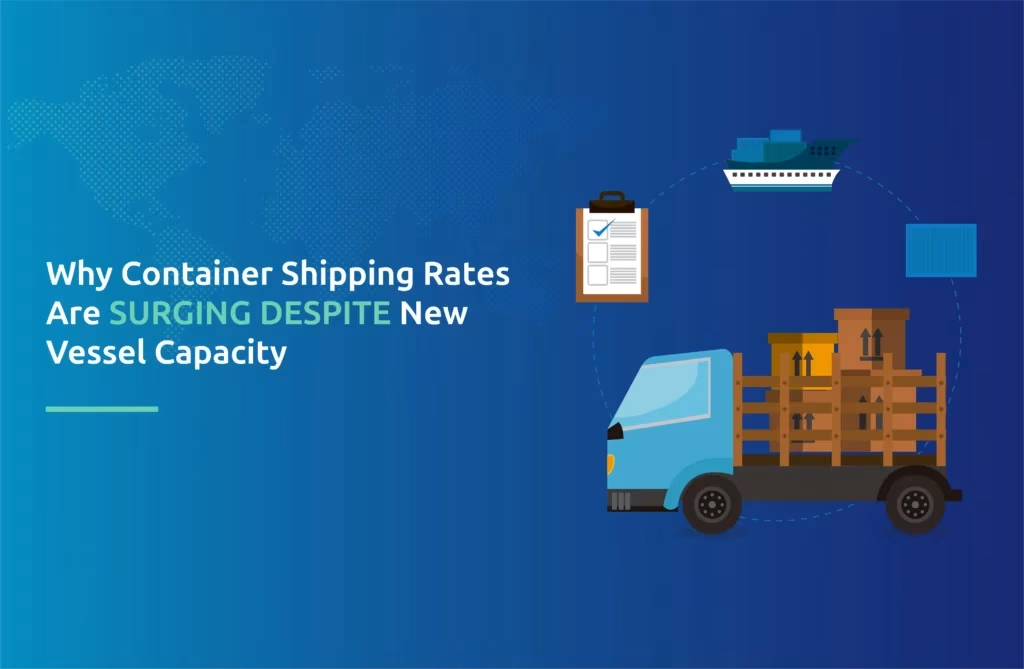
Container shipping costs have been rising even as shipping lines continue to add new vessels to their fleets. This is important to explain. More ships should normally mean more available space and lower freight costs.
However, the number of vessels operating globally is not the only factor that affects container freight rates. The final price that shippers pay can be affected by a number of factors, added with variations in sailing patterns, busy ports, equipment shortages, fuel prices, route issues, and sudden changes in cargo demand.
Organizations that transport machinery, equipment, electronics, or other commercial goods abroad may find it easier to plan and budget for shipments if they are aware of these aspects.
More Ships Do Not Always Mean More Available Capacity
Although the number of containers in the world has increased dramatically, not all trade lanes with high demand can accommodate new vessel capacity.
Demand, profitability, port circumstances, and network scheduling are the factors that shipping lines use to choose where vessels operate. As a result, a ship added to the world’s fleet may boost capacity on one route while having minimal immediate impact on another.
When the market shifts, carriers may also cut back on or modify sailings. This may restrict shippers’ access to capacity even if the fleet as a whole expands.
This is one of the reasons that the space available on a specific route and worldwide vessel capacity should not be equated.
Route Disruptions Are Changing Global Shipping Patterns
One of the primary factors affecting container shipping has been the interruption of traditional trade routes.
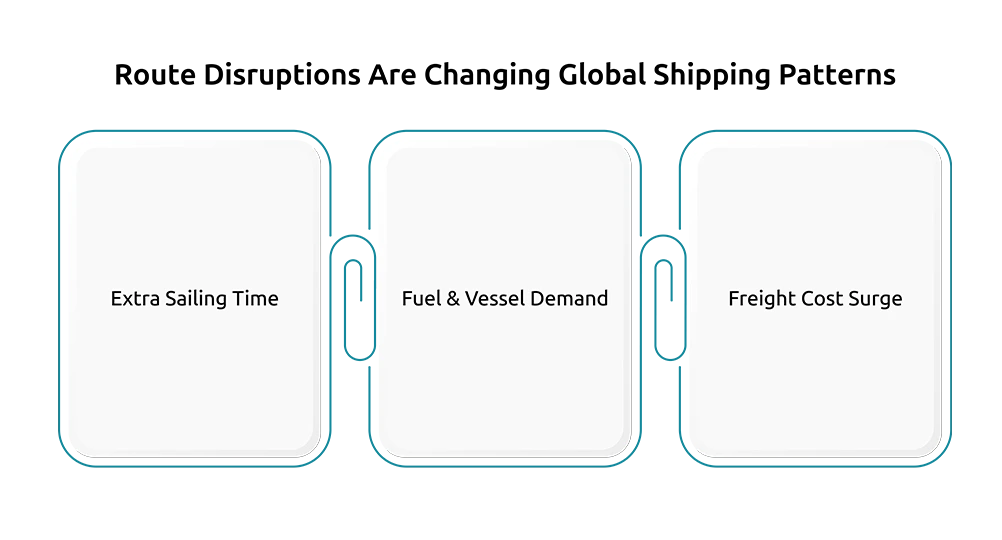
Many carriers are rerouting their ships around the Cape of Good Hope rather than the Suez Canal due to safety worries in the Red Sea. In order to handle service frequency, longer passages necessitate more sailing time, fuel, &vessels.
A shipping network’s effective capacity may decrease when ships spend more days at sea. To run the same weekly service, carriers might require additional vessels.
This may result in increased freight costs, longer transit times, and unpredictable delivery dates for shippers.
Strong Demand Can Absorb New Capacity
Shipping rates are also closely connected to cargo demand.
When importers bring forward orders, rebuild inventories, or prepare for seasonal demand, container volumes can rise quickly. If cargo demand increases faster than usable capacity on a specific trade lane, freight rates can move higher.
This can happen even when the overall global fleet has enough vessels.
For example, a company shipping servers, networking equipment, industrial machinery, or electronics may face higher rates if many businesses are simultaneously moving similar equipment through the same ports or trade routes.
Port Congestion Can Reduce Effective Capacity
A container ship is only productive when it can move through the network efficiently.
Congestion at ports can create delays in berthing, loading, unloading, customs processing, and container pickup. When ships spend longer periods waiting at ports, vessels become tied up instead of moving additional cargo.
Congestion can therefore create a temporary capacity shortage without any physical shortage of ships.
Equipment availability can become another problem. Containers may accumulate in one region while exporters in another region struggle to find the right equipment for their shipments.
Carrier Strategies Can Influence Freight Rates
Container shipping is not simply a matter of supply and demand. Carriers also manage capacity strategically.
Shipping lines can change sailing schedules, blank selected voyages, consolidate services, or redeploy vessels between trade lanes.
These decisions can affect how much space is actually available to shippers.
Even when new vessels enter the market, carriers may use network changes to manage capacity and protect service economics. As a result, the increase in fleet size may not immediately translate into lower spot rates.

What Higher Container Rates Mean for Importers
High container cost can affect more than the shipping bill.
Higher freight costs can increase the landed cost of imported goods and may influence whole planning, delivery commitments, & customer pricing.
For tech companies and data center equipment, unexpected shipping increases can be mainly important when shipping servers, GPUs, storage equipment, networking hardware, racks, and replacement components across borders.
Organizatins can minimize uncertainty by planning shipments earlier, comparing routing options, managing freight markets, and accounting for possible delays when calculating total logistics costs.
How Businesses Can Prepare for Changing Freight Costs
Although they have no control over international freight markets, businesses can enhance their international shipping planning.
More flexibility can be achieved by using a variety of shipping options, examining transit times, combining appropriate cargo, and upholding reasonable delivery schedules.
Looking past the freight charge that has been offered is also helpful. The ultimate landing cost may include customs duties, taxes, managing fees, storage, insurance, port fees, & other logistics cost.
Accurate import planning is mainly important for cross-border shipments. Before moving cargo, businesses should verify product classification, documentation, importer obligations, & country-specific laws.
Conclusion
Global shipping costs are influenced by factors other than fleet size, as evidenced by the increase in container shipping rates despite increasing vessel capacity.
The amount of effective capacity available to shippers can be decreased by a number of factors, including longer trips, high cargo demand, port congestion, equipment imbalances, operating expenses, and carrier capacity initiatives.
Monitoring both market circumstances and shipment-specific costs is crucial for firms. Even in situations when freight markets are still unstable, international shipping can be made more predictable with improved route, early planning, and a clear perspective of the total landing cost.
Did you know?
Global container volumes reached a record 17.3 million TEU in July while the CTS Global Price Index climbed 47% from the start of the year. The unusual combination of record cargo demand and elevated transport prices is being sustained by strong Far East exports and disruption to effective vessel capacity — even as the global containership fleet approaches 34 million TEU.
FAQs
Why are container shipping rates increasing?
Rates can rise because of strong demand, route disruptions, port congestion, longer voyages, fuel costs, equipment shortages, and carrier capacity management.
Does adding more container ships reduce freight rates?
Not necessarily. New vessels increase global fleet capacity, but the additional capacity may not be available on the specific routes or during the periods where demand is highest.
How do Red Sea disruptions affect container shipping?
When carriers reroute vessels around the Cape of Good Hope, voyages become longer. This can increase fuel and operating costs and reduce the effective capacity of shipping networks.
Can port congestion increase shipping costs?
Yes. Delays at ports can keep vessels and containers tied up for longer, reducing network efficiency and potentially contributing to higher freight costs.
How can businesses manage rising container shipping costs?
Businesses can plan shipments earlier, compare routes, monitor freight rates, consider different transport options, and calculate the full landed cost before confirming international shipments.