Overview of Global Shipping and the IOR
There is a need for IOR to comprehend the movement of products in all their stages and functions such as trade, shipping transport, etc.; and IOR here plays a large role. Each of these elements is essential to global trade. They help goods move smoothly across international borders while ensuring all rules and regulations are followed.
Why is supply chain resilience becoming increasingly important in global shipping?
Supply chain stability has become rapidly significant due to factors such as international conflict, port delays, changing trade routes, & unexpected delays in global trade. Businesses are focusing on building adaptable logistics networks, expanding suppliers, & improving risk management methods to maintain a steady flow of goods. Advanced technologies & real-time visibility tools are also helping companies respond more efficiently to supply chain challenges. In this environment, the Importer of Record IOR plays an important role by making sure of regulatory compliance, managing documentation requirements, & helping reduce delays in cross-border shipments.
What documents are required by an IOR in global shipping?
An Importer of Record (IOR) is responsible for managing documents such as commercial invoices, packing lists, import licenses, and customs declarations. Additional certifications—like certificates of origin, product compliance certificates, and safety standards documentation—may be required depending on the goods and destination country. The IOR also ensures correct HS code classification, duty calculation, and tax filings to meet regulatory requirements. Proper and accurate documentation helps avoid delays, penalties, and ensures smooth customs clearance and timely delivery.
Global Shipping and IOR in International Trade
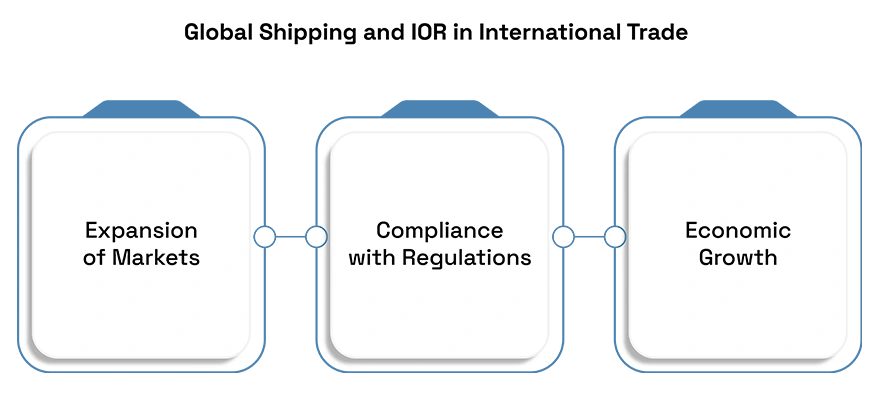
Global shipping and the role of the IOR are significant in international trade for several reasons:
Expansion of Markets: Thus, international trade enables the nations to be able to increase their markets and get hold of products or services that, if otherwise, would have been home-based due to one reason invalid here. This leads to a sense of competition in pricing and makes the consumer have access at home cheaper.
Compliance with Regulations: The IOR guarantees that all imported goods meet the local regulations and standards. Refusal to adhere to these rules attracts massive fines and penalties, maybe goods are confiscated or destroyed in the worst cases.
Management of Taxes and Duties: The IOR is tasked with handling tax and duty considerations that come about as a result of importing traded goods. Complicated payment schedules and calculations can be handled by an IOR adeptly, saving time as well.
IOR Role in Global Supply Chain Management.
Supply chain management (SCM) is a broad process that manages the movement of goods and services from point of origin to consumption. It encompasses many stages, including the process of finding primary materials; transforming these into products and finally delivering such finished goods to consumers.
The IOR is mandated to ensure that all obligations concerning the importation of goods are met. This involves duties like filing the necessary documents to customs, paying taxes, and ensuring that imported goods meet local standards.
The role of IOR in the supply chain integration
Supply chain integration is a strategic process that encompasses the interlinking of production stages within supply chains. This could be in the form of merging suppliers, customers, and all other stakeholders involved with the manufacture and delivery of goods & services.
The IOR is an integral part of supply chain integration. Through compliance with all regulations relevant to its operations and management of taxes as well as duties that are paid for goods imports, IOR ensures efficiency and effectiveness in the supply chain.
IOR Logistics: A General Review
Logistics, in the case of an IOR, implies planning and implementation of detailed operations that are related to importation. This process is complex and involves several tasks:
Obtaining necessary permits and licenses: It is the duty of IOR to get all licenses and permits that are needed for importation. It may involve import licenses, health and safety certificates as well as other permits depending on the nature of goods being imported.
Filing necessary paperwork with customs authorities: The IOR is required to fill and submit all the documents needed by customs authorities. This also involves customs declarations, invoices, and packing lists among other documents that describe the shipment of goods.
Handling tax and duty payments: Importing goods usually leads to the payment of taxes and duties. The IOR must compute and pay such amounts. This presupposes a deep knowledge of the country’s tax laws and tariff schedules.
Ensuring compliance with local regulations: The IOR needs to make sure that every imported good meets the local standards and regulations. This may include the testing and certification, labeling & packaging regulations besides other laws depending on goods.
Understanding IOR Shipping and Transport
IOR means Importer of Record. This is the person or company that makes sure everything follows the rules when goods are shipped into a country. IOR shipping includes handling paperwork, customs forms, and making sure everything is legal. IOR transport is about moving the goods safely and legally, often working with shippers, customs agents, and local partners. IOR shipping and transport help businesses avoid problems, delays, and extra costs when sending goods across borders.
Shipping Logistics
Shipping logistics is an essential aspect of any supply chain. It encompasses all the operations that are required to transport finished goods from their point of production to the end user. Key aspects of shipping logistics include: It is through this provision that the explanation provided by the author makes sense in relation to how she interprets her dream.
Carrier alliances:
These are alliances between two or more shipping companies for the provision of joint services to clients. They can assist in increasing the services provided by individual carriers and also improve the efficiency of shipping activities.
Freight shipping:
This is the shipping of commodities in bulk. It can be done by different means of transportation such as sea, air, rail, and road.
First-mile and last-mile delivery:
The first-mile delivery is the transportation of goods from a retailer to a courier service or as directly as possible. The last mile delivery is the final step of a product being delivered to an end-user customer.
IOR Shipping Process
The IOR shipping process includes checking shipment details for accuracy, preparing all required customs paperwork, and securing any necessary import permits. The IOR also calculates and pays the import duties and works closely with customs officials to ensure the goods are cleared quickly and smoothly for import.
Import Logistics
Import logistics services allow companies to control their global supply chain. These services can include:
Setting up processes such as transloading: Transloading is the process of transferring goods from one mode to another. This can also be used to streamline the supply chain and lower costs.
Taking care of finer details: This may include paperwork, liaison with suppliers and transport providers as well as administration of inventory.
Tracking inventory and shipping processes: Systems for managing inventory and tracking shipments are common in import logistics services. This can also aid companies to handle their supply chain better.
Future Trends: Global Shipping and IOR Changing Role.
The Importer of Record (IOR) role is changing as the global shipping industry goes through a transformation. Here are some key trends that are shaping the future of global shipping and the role of IOR: The situation was further complicated by the fact that most of them had a negative attitude towards work.
Digitalization: Digital adoption is becoming even more popular in the shipping and logistics industry. Major players in shipping and boutique companies have developed their own software systems as well. Advancements in AI and blockchain technology are likely to continue the digitalization of world shipping, automating it even more. This will enhance real-time shipment tracking and supply chain visibility.
Climate Change and Geopolitical Tensions: These may impact the availability of resources, create transportation bottlenecks, disrupt manufacturing operations, and increase costs. Besides, international conflicts and tensions as well as existing ones that have yet to emerge may influence supply chain activities and investments.
Did You Know?
Around 95% of India’s trade volume moves through maritime transport, making the Indian Ocean Region (IOR) a key driver of the country’s global trade network.
FAQ
1.What is global shipping?
Global shipping is the process of moving goods from one country to another. It includes transportation, customs clearance, and delivery while following international trade rules.
2.What does IOR mean in global shipping?
IOR stands for Importer of Record. The IOR is the legally responsible party that ensures imported goods meet local laws and pays duties, taxes, and customs fees.
3.Why is an IOR important in international trade?
An IOR helps businesses avoid delays, fines, and compliance issues. They handle legal and customs responsibilities so shipments move smoothly across borders.
4.How do global shipping and IOR work together?
Global shipping handles the movement of goods, while the IOR manages customs compliance. Together, they ensure goods are shipped legally, cleared on time, and delivered without issues.
5.Who needs IOR services for global shipping?
Companies importing goods without a local legal presence, or those shipping high-value or regulated products, often need IOR services to stay compliant and reduce risk.