Insight
A Foreign Importer of Record plays a key role in simplifying global trade by managing all import-related legal responsibilities in an endpoint country. It makes sure that shipments follow local customs rules, tax requirements, & documentation standards. This model allows businesses to enter new markets without setting up a local legal entity. It is especially useful for companies dealing with regular cross-border shipments & complex regulatory environments. However, selecting a trustworthy partner is important to avoid adherence risks & delays.
Unveiling the Landscape: Foreign Importer of Record
To access new markets and diversify their supply chains, companies participate in a growing volume of cross-border trade in today’s globalized economy. One of the most significant aspects of global commerce is the importation of products into other countries, a process governed by complex laws. The Foreign Importer of Record (IOR), a legal organization in the position of ensuring compliance with import regulations, managing duties and taxes, and supporting the importing country’s customs clearance, is an essential component in this process.
What are the main advantages of using a Foreign Importer of Record?
Using a Foreign Importer of Record helps businesses expand internationally with less risk and faster market entry. It reduces the need to establish local subsidiaries, simplifies customs processes, and ensures compliance with country-specific import laws. Companies can focus on sales and operations while the IOR handles duties, taxes, licenses, and shipment clearance.
The Significance and Function of a Foreign Record Importer
A Foreign IOR is significant since it contains a variety of charges that are essential to the achievement of global trade businesses, as well as to simplify the import process. International Economic Relations, or IOR, are reliable collaborators that offer information on import regulations, tariffs, and customs processes in other countries. By establishing legal responsibility for imports, they minimize compliance risks and ensure the smooth entry of products into global markets. Furthermore, foreign IOR play an important strategic role in market expansion activities by providing enterprises with access to their existing networks and facilitating their entry into new markets. Businesses’ roles as compliance experts and strategic partners enable them to expand globally and effectively handle regulatory complexity.
The Pros and Cons of Using an International Importer of Record
Comparing the Benefits and Drawbacks of Becoming a Foreign Importer of Record
The benefits and drawbacks of using a Foreign IOR in international commerce activities are thoroughly examined in this section. Businesses may make well-informed decisions that are suited to their unique requirements and goals by carefully weighing these pros and cons.
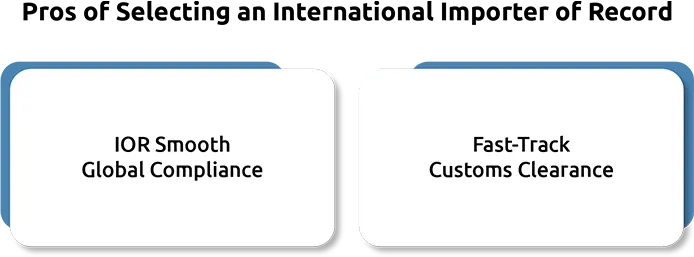
Pros of Selecting an International Importer of Record
Foreign IOR provide smooth compliance with local rules and regulations across many markets thanks to their particular expertise and experience in handling complicated import requirements.
Businesses can lessen the risk of regulatory non-compliance and the resulting fines by assigning their import compliance duties to a Foreign IOR. By reducing delays and related costs, expedited customs clearance procedures made possible by a Foreign IOR experience help to reduce costs. By utilizing a Foreign IOR infrastructure and local experience, companies may more quickly enter new markets and take advantage of growth prospects. Foreign IOR assist in mitigating compliance risks related to cross-border transactions by taking legal responsibility for imports, therefore decreasing the possibility of regulatory infractions and fines.
Cons of Using a Global Importer of Record
When a company relies on a foreign importer of record, it often has to give up some control over import procedures. These processes may not always match the company’s operational needs or preferences. Mistakes or poor management by the foreign IOR can harm both operations and reputation.
A US importer of record or an importer of record USA solution may also bring challenges. Standard approaches from IOR providers can limit flexibility and may not fully address the unique requirements of the importing company. On top of that, there are legal and financial risks, such as contractual disputes, compliance issues, or disagreements, which could disrupt operations and damage the company’s reputation.
Simplifying Global Import Compliance with a Foreign Importer of Record
A Foreign Importer of Record helps businesses manage global import compliance when importing goods to different countries. They make sure all import regulations are followed and prepare the required customs documents for each shipment. This supports smooth cross-border trade & helps avoid delays, charges, or customs problems. A trusted Foreign IOR also manages import duties and other legal requirements, making the import process easier. With proper import compliance, businesses can focus on growing in new markets while their shipments move safely and on time.
How to choose an Importer of record service for global supply
When selecting an Importer of Record (IOR) service for global supply, it’s necessary to understand the IOR meaning, a legal entity responsible for confirming imported goods follow all destination country laws and regulations. A dependable IOR partner helps businesses have global trade compliance, manage customs documentation, and pay import duties or taxes on behalf of the importer. Choose a provider with strong experience in global logistics, a proven approval record, and coverage across various regions to confirm smooth cross-border work and easy customs clearance.
Conclusion
Handling International Trade: The Judgment on Foreign Importer of Record
The benefits and drawbacks of using a Foreign IOR in international commerce activities are outlined in this last section. Businesses may efficiently manage the intricacies of international commerce while optimizing advantages and minimizing risks by considering these considerations.
Did You Know?
CBP can inspect any shipment entering the United States, and the importer is responsible for all related examination costs. Even when using a customs broker, full compliance and documentation accuracy remain the importer’s responsibility.
FAQs
1. What does a Foreign Importer of Record do?
Ans: A Foreign IOR is a legal entity responsible for managing import compliance, tariffs, taxes, and customs clearance in the country where goods are being imported. They act on behalf of the business and take legal responsibility for the import process.
2. Why should a business use a Foreign IOR?
Ans: A Foreign IOR simplifies cross-border trade by ensuring regulatory compliance, reducing fines, speeding up customs clearance, and handling all legal obligations associated with imports.
3. What should companies look for when selecting a Foreign IOR?
Ans: Businesses should consider the IOR’s reputation, reliability, and track record, industry expertise, geographic coverage, and ability to align with the company’s operational and compliance needs.
4. How does a Foreign IOR reduce risk for international shipments?
Ans: By taking legal responsibility for imports, a Foreign IOR mitigates compliance risks, ensures accurate documentation, and helps prevent costly delays or penalties in customs processes.
5. What strategic benefits can a Foreign IOR provide?
Ans: Using a Foreign IOR supports market expansion, ensures smooth entry into new regions, aligns with corporate compliance goals, and allows businesses to focus on operations rather than navigating complex foreign regulations