Introduction
Freight costs are the rate of transporting goods from one location to another by sea, air, road, or rail. Each organization that ships products pays these costs. The price mainly depends on factors such as the distance, the type of cargo, & the shipping path. Freight rates can rise or fall quickly, making it difficult for businesses to handle their shipping cost & budgets.
Global shipping has become more accurate because of wars, trade issues, sanctions, political tensions, & issues at major ports & shipping routes. These events can delay shipments & increase transportation costs. Freight rates change more often than before. Companies that mainly depend on world trade need to handle these updates so they can prepare, manage transportation costs, avoid sudden delays, & keep their supply chains shipping easily.
What Is Freight Rate Volatility?
Freight rate volatility means that the cost of shipping goods changes often. Shipping prices can go up or down because of prices, demand, port delays, weather, trade policies, & global events.
These cost changes make it difficult for businesses to handle their shipping costs & manage their cost. Managing freight rate volatility helps companies prepare for changing shipping costs & make better logistics decisions.
Why Do Diesel Prices Still Dictate Freight Costs?
Despite advances in fuel efficiency & early-stage electrification, diesel remains the trucking industry’s lifeblood. Price swings continue to pose a persistent threat. Geopolitical tensions, refinery issues, & supply chain problems have all contributed to unpredictable spikes. For fleets, a single month’s margin can evaporate overnight on the back of a regional fuel price surge. The volatility is compounded by inflationary pressures across the supply chain. Rising costs for parts, insurance, labor, & repair are straining balance sheets. As economies tighten, rate concessions continue, creating profitability challenges across both spot & contract markets. Brokers leveraging algorithmic pricing models & oversupply in certain regional markets have further narrowed margins.
Why Are International Freight Rates Still High?
Global transportation freight rates remain high as trade improves & geopolitical tensions continue, affecting Indian importers. Industry experts predict ongoing volatility & tight vessel supply, mainly for energy shipments.
Volatility in global shipping routes has caused freight rates to reach high levels, & industry experts expect the pressure to continue in the months ahead. As economies improve & seasonal demand grows rapidly, shipping issues & geopolitical uncertainty are moving the cost landscape for importers & exporters alike, mainly in energy-dependent nations such as India.

Important Factors Driving Freight Rate Volatility
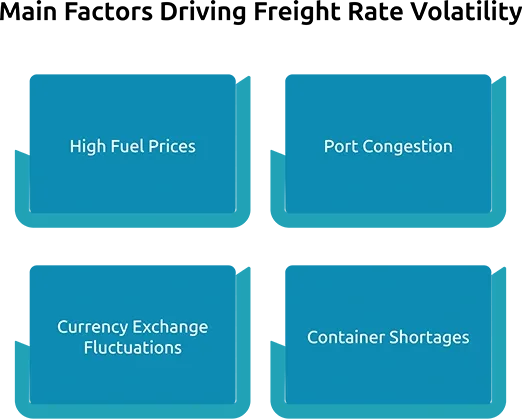
Freight costs do not stay the same all the time. They go up & down because of different conditions around the global market. Things like higher fuel prices, busy ports, container shortages, & economic problems can make shipping more costly. Knowing these factors helps businesses plan better, reduce costs, & avoid unexpected delays.
High Fuel Prices
Fuel is one of the highest costs in transportation. Ships, trucks, trains, & airplanes all need fuel to ship goods. When fuel prices increase, shipping companies pay more money to transport cargo. They mainly add these extra costs to freight charges.
Fuel prices can increase because of political issues or lower oil production. Businesses pay more to ship products across many countries.
Port delay
Port delay happens when too many ships arrive at a port at the same time. The port cannot handle all the ships quickly, so they have to wait their turn.
When ships wait longer, deliveries are delayed, & shipping costs become high. Shipping companies often charge more to manage these extra costs, which increases freight rates. Port congestion can happen because of bad weather, worker shortages, customs delays, or a large number of shipments arriving at once.
Container Shortages
Shipping containers are used to ship goods around the world. If there are not enough empty containers in the right places, exporters cannot ship their products on time.
Container shortages minimize available shipping space & increase demand for containers. This pushes freight rates higher. Businesses may also face delays while waiting for containers to become available.
Currency Exchange Fluctuations
Global trade involves different currencies. When exchange rates change, the cost of buying and shipping goods also changes.
If a country’s currency becomes weaker, importing goods becomes more expensive. This can increase overall shipping costs. Businesses involved in global trade should keep an eye on exchange rates because they can affect freight expenses and profit margins.
Conclusion
Freight rates can change because of many conditions in the world marketr. The growth of fuel prices, bust ports, shortages of container, & political problems can all make shipping more costly. These changes can make it harder for businesses to manage shipping costs & deliver goods on time.
Knowing why freight rates change helps businesses plan better. By handling in advance, working with trustable shipping partners, & keeping track of market changes, companies can reduce risks & handle shipping costs more easily. A strong & flexible supply chain helps businesses continue shipping goods easily.
Did you know?
Around 80% of global trade by volume is transported by sea, making maritime shipping the backbone of international commerce. Even small disruptions at major shipping routes like the Red Sea, Suez Canal, or Panama Canal can increase freight rates, delay cargo, and affect businesses and consumers worldwide.
FAQ
1. Which shipping routes are most affected by geopolitical tensions?
Major global trade routes such as the Red Sea, Suez Canal, Strait of Hormuz, and Panama Canal are highly sensitive to geopolitical events. Disruptions in these routes can increase transit times, raise fuel costs, and push freight rates higher.
2. How do freight rate fluctuations affect product prices?
When shipping costs increase, businesses often spend more to transport raw materials and finished goods. These additional costs may be passed on to customers, leading to higher prices for everyday products.
3. Can long-term freight contracts protect businesses from rate volatility?
Yes. Long-term freight contracts can provide more stable shipping prices for a fixed period. While they may not eliminate all risks, they help businesses manage budgets and reduce the impact of sudden rate increases.
4. Why is supply chain visibility important during periods of freight volatility?
Supply chain visibility allows businesses to track shipments in real time, identify delays early, and respond quickly to disruptions. Better visibility helps companies make informed decisions and reduce the impact of unexpected shipping challenges.
5. What should businesses consider when choosing a logistics partner during uncertain times?
Businesses should look for logistics providers with strong global networks, flexible shipping options, customs expertise, real-time tracking, and experience handling disruptions. A reliable logistics partner can help reduce delays, control costs, and keep supply chains moving even during geopolitical uncertainty.