How Emerging Economies Are Influencing the Future of Global Trade
Global trade is entering a rapid change as developing economies call for changes within the World Trade Organization WTO. Countries across Asia, Africa, Latin America, & the Middle East believe current trade rules should better support today’s economy, digital commerce, long-term development, & the increasing participation of developing nations in global trade. These discussions are becoming increasingly important for both governments or businesses handling in cross-border commerce. Proposed WTO changes may transform customs processes, market access, digital trade policies, and supply chain planning, making it important for companies to stay informed and prepare for changing trade requirements.
Why Emerging Economies Want WTO Reform
Developing economies are requesting WTO reforms to make sure that global trade rules better reflect today’s digital & connected economy. They support stronger rules for digital trade, electronic commerce, and cross-border data flows while supporting development. Many countries also want climate-related trade policies that support sustainability without creating trade restrictions for developing nations. Another key priority is improving the WTO’s trade conflict resolution system to resolve trade conflicts more effectively & provide businesses with greater confidence. These changes goal to create a fairer, more balanced, & stable global trading environment that supports long-term economic growth.
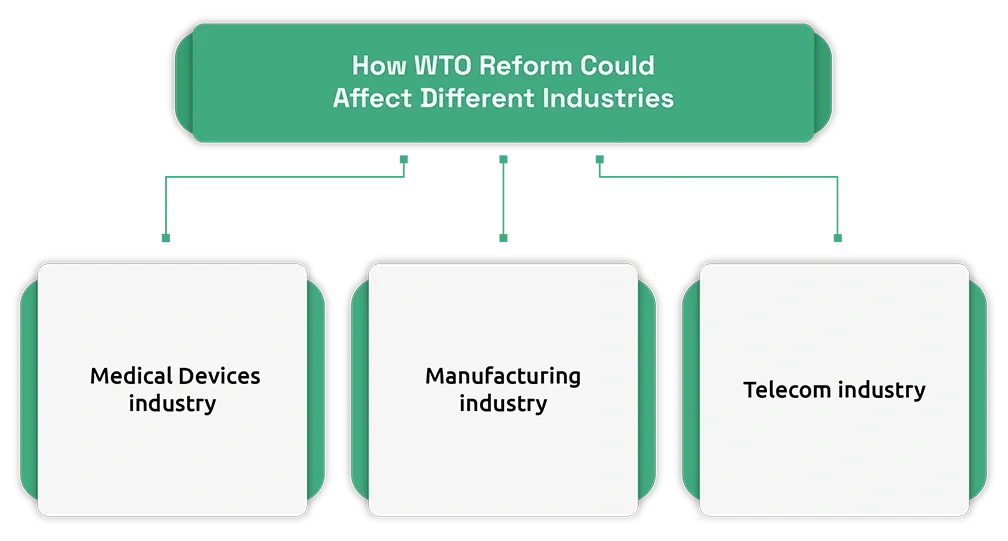
How WTO Reform Could Affect Different Industries
Information Technology industry
The IT industry depends on the smooth movement of servers, networking equipment, semiconductors, & cloud system across borders. WTO reforms that promote digital trade, electronic customs processes, & clear regulations could simplify technology imports, reduce compliance challenges, and improve global supply chain efficiency.
Medical Devices industry
Healthcare equipment providers depend on global trade for medical devices & hospital equipment. WTO reforms focused on customs processes & simplified documentation could support faster imports while maintaining product safety & regulatory compliance.
Manufacturing industry
Production source raw materials, machinery, & components from multiple countries. Simplified customs processes and greater regulatory clarity could reduce delays, lower working costs, and improve global production supply chains.
Telecom industry
Telecom projects require the import of network equipment, fiber optics, and communication hardware. WTO reforms supporting digital trade & modern customs systems could help speed up cross-border shipments while makes sure compliance with national regulations.
Automotive Industry
The automotive and industrial sectors depend on effective imports of machinery, robotics, & engineering equipment. Improved customs clarity & standardized trade processes could minimize shipment delays and support more reliable global production operations.
Country Compliance: Why Local Import Regulations Still Matter
While WTO reforms may enhance global trade, they do not replace national import regulations. Every country continues to implement its own customs procedure, documentation requirements, duties, & product compliance standards. Businesses importing technology, medical devices, or industrial equipment must identify destination-specific rules before shipping. Proper compliance planning helps handle customs delays, sudden costs, & shipment delays. Following local rules also supports smoother customs clearance & more reliable cross-border operations.
How One Union Solutions Helps Businesses Navigate Changing Trade Regulations
As global trade regulations continue to evolve, businesses must keep up with changing customs processes, documentation requirements, & country-specific compliance rules. One Union Solutions simplifies this process by providing Importer of Record IOR & Exporter of Record EOR services, make sure shipments follow with local regulations across multiple countries. From customs documentation & HS code classification to regulatory coordination & temporary imports, our team helps reduce compliance risks, prevent customs delays, and support smooth global trade operations.
How the Global Import Compliance Process Works
The global import compliance process begins with understanding the destination country’s import rules, product classifications, & documentation requirements. Once the requirements are confirmed, businesses prepare important documents such as commercial invoices, packing lists, shipping documents, & import certificates. Accurate HS code classification & duty calculations help make sure compliance and prevent customs issues. After customs authorities review and clear the shipment, the goods are delivered,while compliance records are maintained for future audits and compliance requirements. This structured approach helps reduce delays and supports smooth global trade operations.

How can One Union Solutions support businesses during changing global trade regulations?
One Union Solutions provides Importer of Record & Exporter of Record services that help businesses manage customs documentation, import compliance, regulatory coordination, & global logistics across more than 190+ countries. This support enables organizations to expand into new markets while reducing regulatory complexity & maintaining compliance with local import regulations.
Why Businesses Trust One Union Solutions?
One Union Solutions has through experience supporting global organizations with cross-border trade compliance for information technology, healthcare equipment, telecom, industrial production, aviation, & other highly regulated industries. Our team understands the practical challenges of global imports and works closely with businesses to manage customs documentation, regulatory requirements, & country-specific compliance requirements. By combining industry expertise with global working coverage, we help organizations minimize delays, minimize compliance risks, & maintain effective global supply chains.
Conclusion
WTO reform proposals are shaping the future of global trade by supporting fairer rules, improved customs processes, & greater opportunities for emerging economies. As global trade rules continue to develop, businesses should stay informed and strengthen their compliance strategies to reduce risks & maintain efficient operations. One Union Solutions supports organizations with reliable Importer of Record, Exporter of Record, & global trade compliance services, helping businesses handle changing rules & achieve seamless cross-border trade with confidence.
Did You Know?
The WTO Trade Facilitation Agreement aims to simplify customs procedures, improve transparency, and speed up cross-border trade. According to the WTO, full implementation of the agreement could reduce global trade costs by an average of 14.3%, with major benefits for developing economies.
Frequently Asked Questions
Why are emerging economies pushing for WTO reform?
Developing economies believe that many WTO rules were created when global trade looked very different from today. They are looking for changes that better show the growth of digital commerce, changing supply chains, and the increasing role of developing countries in global trade. Many also want stronger support for economic development, improved market access, & a more effective system for resolving trade conflicts.
How could WTO reform affect international importers?
While WTO changes would not replace national customs laws, they could impact how countries cooperate on trade facilitation, digital documentation, and customs clarity. Businesses involved in global imports may benefit from more predictable trade processes, but they will still need to follow each country’s import rules, taxes, licensing requirements, & product standards.
Can WTO reform proposals improve customs clearance efficiency?
Yes. Many WTO reform proposals focus on trade facilitation, digital documentation, & greater customs clearity. If adopted, these steps could help reduce working delays, improve border coordination, & make customs clearance more efficient while allowing countries to maintain their own import rules.
Why should technology companies pay close attention to WTO reforms?
Technology companies frequently import servers, networking equipment, semiconductors, & telecom systems across multiple countries. WTO changes that support digital trade, efficient customs procedures, & greater regulatory clarity could help reduce compliance challenges & improve the movement of technology products worldwide.
How can businesses prepare for future WTO reforms without disrupting their operations?
Businesses can plan by continuously tracking global trade developments, checking import compliance processes, handling correct customs documentation, & verifying risks in their supply chains.Connect with experienced trade compliance gives also helps companies adjust to shifting rules while make sure smooth cross-border operations.