Global Conflicts and the Growing Pressure on Maritime Trade
Global trade really needs shipping routes that connect businesses which are in import export. Because of problems between countries, tension in some areas and worries about safety some very important shipping routes have been disrupted. This is a problem, for businesses with other countries. When the main shipping routes are not stable shipping companies have to export. This means it takes longer for import export. It also costs more to transport things. It puts a lot of pressure on ports that were not meant to handle so many extra goods. Global trade and shipping routes are very important. When shipping routes are not stable it affects trade in a big way.
If there is a problem on these routes it can quickly affect how things get imported and exported the movement of raw materials, industrial equipment, automotive components, medical devices, and technology products. When ships get stuck at ports businesses have a hard time getting their shipments out. The congestion at ports caused by conflicts is a big worry, for these industries. They rely on shipping lanes to keep their businesses running smoothly.
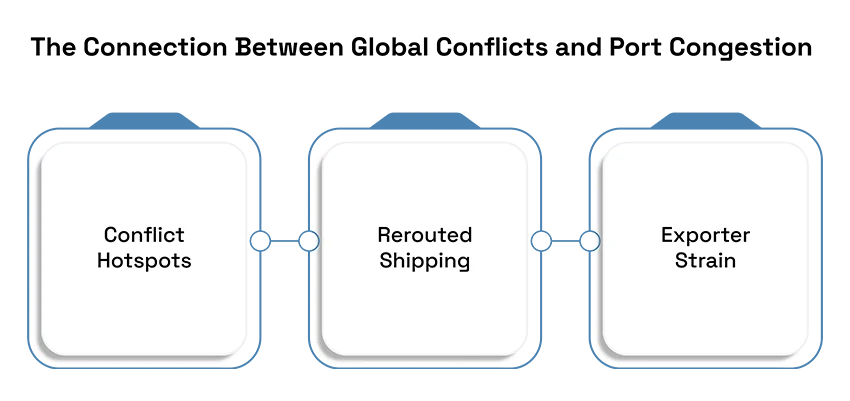
The Connection Between Global Conflicts and Port Congestion
Global conflicts are a problem for ports around the world. There are issues in the Red Sea and the Black Sea is not stable. Because of this shipping companies have to take routes to avoid these areas. This means that other ports are getting too busy. At the time some rules limit trade and some countries are not getting along. This is changing the way cargo is moved around. It is causing problems with shipping schedules. There are not enough containers available for Global conflicts, like these. Global conflicts are really affecting the way things are shipped.
As shipping companies send ships around areas that’re not safe other ports get a lot more cargo. This causes lines of ships a backlog of work at terminals and delays in handling cargo. They impact people who import export. Manufacturers, importers and exporters feel the effects of these changes.
The Hidden Economic Cost of Congested Ports
Port congestion is a problem that affects businesses financially in many ways. When ships have to wait a time at busy ports it costs more to move things around. This means businesses have to pay more for transportation. When deliveries are late it can cause problems, with production. Customers may not get their orders when they expect to, which can be frustrating. To deal with these problems many companies keep products in stock than they normally would. This means they have to pay more to store all these products and they cannot use that money for other things.
For manufacturers in the automotive, IT, medical, and aviation sectors, congestion-related delays can interrupt the flow of critical components, causing production slowdowns and costly manufacturing disruptions. These combined challenges make port congestion not just a transportation issue but a significant economic burden across global supply chains.

Consequences of Port Congestion
Port congestion affects the industry in a big way. It also affects industries but the impact is just as big on them. For the industry it is a problem when shipments of things like semiconductors and electronic modules are late. This can slow down the production of vehicles. Mess up the schedules, for manufacturing. When servers, networking gear and data center equipment get stuck at ports it delays infrastructure rollouts and technology updates. The IT sector faces challenges, with delayed infrastructure deployments and technology upgrades because of held up servers, networking hardware and data center equipment at ports.
Conclusion
Port congestion is a problem now. It is not something that affects how import export are done every day. Port congestion has become a risk for businesses. This risk can really affect how much things cost and when they are delivered. It can also affect how well the whole supply chain works. There are things that can cause problems with shipping. For example fights between countries and changes in shipping routes can cause issues. These things show that businesses should not just focus on saving money when it comes to their supply chains.
Companies that spend money on making their supply chain more flexible will be in a better position to deal with future problems. They will also have an advantage over competitors, in a world where global trade is getting more and more unpredictable.
DID YOU KNOW
“Port congestion linked to global conflicts triggers cascading economic damage, including soaring freight rates, surging insurance premiums, and prolonged delivery delays. ”
FAQs
How do global conflicts cause port congestion?
When active conflicts or geopolitical tensions threaten major maritime routes (e.g., the Red Sea or the Strait of Hormuz), shipping companies are forced to reroute vessels around the Cape of Good Hope.
Why are shipping costs increasing?
The thing is, when ships have to take routes they need more fuel. This means that when ships are delayed at ports or have to sail a lot the costs of running them go up a lot.
What is the impact on businesses and manufacturers?
When there are a lot of ships and goods waiting around it causes a problem with the money that companies use to run their daily operations. This is because the goods and materials that companies need to make things are stuck on ships or waiting at terminals for a time.
How are trade hubs in my area affected?
Trade hubs in my area are affected because India relies a lot on import and merchandise. These imports come through routes like the Red Sea. There are traffic jams at trade hubs in Europe and Singapore and also at ports in India like Mundra and Nhava Sheva
How can supply chains mitigate these economic shocks?
Supply chains can do some things to reduce the impact of these economic shocks. Many organizations are now using special management plans to deal with problems. To avoid traffic jams companies can use tools, like Kuehne+Nagel News & Insights or the Vizion API.