Overview
Vessel delays are no longer just an operational problem; they are a growing approval and economic concern for global traders. When a ship arrives later than scheduled, it stops customs clearance processes, raises issues in automated systems, and can directly impact customs risk scoring. Authorities increasingly depend on data consistency, predictability, and patterns to entry shipment risk. Any mismatch between declared timelines and actual vessel movement can improve how a shipment is profiled, inspected, or even held. For businesses using international freight services, importer of record service, or exporter of record services, understanding how vessel delays affect customs risk scoring is necessary for avoiding penalties, inspections, and unplanned costs.
What’s the Reason for Hold-Ups and Delays in Customs and Other Government Offices
Port Congestion and Documentation Gaps
One of the most common causes for customs hold-ups is port congestion combined with incomplete or inconsistent documentation. When vessels arrive late, documentation frequently fails to work with the updated arrival schedules, increasing the chances of system alerts. This can slow down customs clearance, even when the cargo itself is complete.
System-Driven Risk Profiling
Customs authorities now depend massively on digital risk engines. These systems evaluate routing history, carrier dependability, timing consistency, and past agreement records. Vessel delays disturb this data flow, which may lead officials to assign higher risk scores, quick physical checks, X-ray scanning, or extended review by government offices.
Causes of Vessel Delays Affect Customs Risk
Weather, Port Backlogs, and Carrier Scheduling
Unpredictable weather, port labor shortages, and overbooked terminals are major contributors to vessel delays. When schedules change repeatedly, customs systems detect anomalies. Even dependable shippers using freight forwarding companies near me can face increased scrutiny simply because the carrier’s route shows irregular performance.
Regulatory and Security Inspections
Unexpected inspections at transshipment ports or changes in port security protocols can slow vessel movements. From a customs perspective, frequent delays on the same trade lane can be interpreted as growing risk, affecting future shipments under the same seller, shipper, or importer of record service.
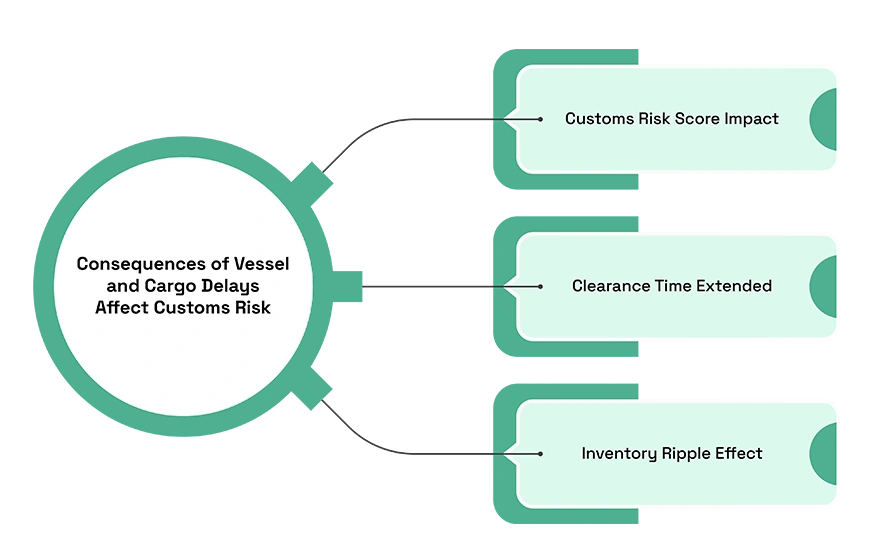
Consequences of Vessel and Cargo Delays Affect Customs Risk
Higher Inspection Rates and Clearance Time
When a shipment is assigned a higher customs risk score, the first impact is usually inspection. This increases clearance timelines and disrupts delivery responsibilities under premium delivery service agreements. Repeated vessel delays can also increase long-term trade, making future imports more likely to be held.
Inventory Disruptions and Cost Escalation
Delays that trigger customs reviews affect more than logistics time. They disrupt inventory and order management, leading to stock shortages, production stoppages, and missed sales cycles. Businesses focused on supply chain optimization frequently underestimate how customs risk scoring can increase the financial impact of vessel delays.
Strain on International Shipping Commitments
Late arrivals can issues with declared international shipping terms, increasing the risk of contractual disputes, demurrage, and warehousing costs. Over time, this can weaken relationships with buyers, carriers, and global partners who depend on predictable cargo shipments.
How One Union Solutions Helps You Avoid Vessel Delays
Proactive Monitoring and Approval Coordination
We work closely with carriers, ports, and authorities to track vessel shipments in real time and align documentation accordingly. By integrating vessel schedules with customs completion processes, they help reduce the data mismatches that frequently raise customs risk scores.
End-to-End Trade Support
Through coordinated international freight services, One Union Solutions confirms that cargo planning, documentation, and regulatory submissions move in coordinated flows. Their structured customs clearance support minimizes the risk that can result from late vessel arrivals.
Importer and Exporter of Record Expertise
With specialized importer of record service and exporter of record services, we work to an agreement safety, confirming completion remains accurate even when schedules change. This protects clients from long-term profiling issues that can arise from repeated vessel disruptions.
Conclusion
Vessel delays increase far more than logistics schedules; they change how customs authorities evaluate the dependability and risk profile of your shipments. In an environment where automated systems dominate border controls, inconsistent arrival data can quickly elevate customs risk scoring, resulting in inspections, clearance delays, and increased costs. Businesses that depend on international freight services, systematic customs clearance, and dependable premium delivery service methods must treat vessel delay management as part of their agreement strategy.
DID YOU KNOW?
What happens when a river port designed for 100,000-DWT ships begins to reach its capacity limits?
FAQs:
How do vessel delays affect customs risk scoring?
Vessel delays disrupt declared schedules and data consistency. Customs risk engines detect these mismatches, which can raise a shipment’s risk profile, leading to inspections, document reviews, or clearance holds.
Can late vessel arrivals trigger more customs inspections?
Yes. Repeated or unexplained delays often signal irregular shipping patterns, which can result in higher inspection rates, X-ray scans, or physical cargo examinations by customs authorities.
Do vessel delays impact the importer of record responsibilities?
They can. Delays may cause documentation misalignment, increasing compliance exposure for the importer of record and potentially affecting future shipment risk assessments.
How can international freight services reduce customs risks from delays?
Professional international freight services monitor vessels in real time, update filings, and coordinate with customs to minimize data gaps that trigger higher customs risk scoring.
Can repeated vessel delays affect future shipments?
Yes. Customs systems build historical risk profiles. Ongoing delays on the same trade lane or importer account can increase long-term scrutiny for future imports and exports.