Introduction
New Executive Orders introduced in 2026. Therefore, more checks of importers, customs brokers, freight forwarding companies, Importer of Record (IOR) providers, and other supply chain users are being done by U.S. Customs and Border Protection (CBP). Improving trade compliance, avoid customs problems, and improving import security are the goals. Companies now need to keep clear shipment records, follow to customs laws, and maintain correct import documents. Shipment delays, customs holds, or charges may result from missing or incorrect data. Businesses can follow CBP rules and provide smoother customs clearance by working with reliable logistics partners with expert IOR services. Businesses should regularly verify their import documents and compliance processes before delivering goods as these regulations become more strict. Reliable logistical support, proper documents, and careful planning may reduce risks, avoid needless delays, and speed up shipments.
What Is Enhanced Vetting in U.S. Customs Enforcement?
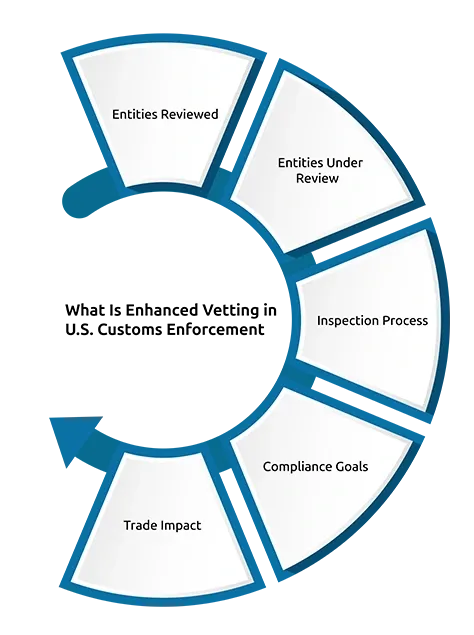
U.S. Customs and Border Protection (CBP) uses improved vetting, a more strict verify process, to check imports & companies involved in international trade. CBP carefully inspects importers, customs brokers, freight forwarders, Importer of Record (IOR) providers, and different supply chain entities as part of the new customs legal processes implemented in 2026. Improving import compliance, improving trade compliance, and improving supply chain security are the purposes. To reduce customs fraud, stop duty compliance, improve national security, and make sure imported goods fulfill all legal demands, the U.S. government implemented more strict customs verification. Companies are required to supply complete shipment records, correct import documents, correct product details, and proper HS codes. This helps CBP in ensuring that imports follow to US customs laws. Businesses involved in international trade are affected by these stronger CBP regulatory methods. Before products are cleared, companies may have to deal with increased document checks and customs inspections. Companies can reduce delays, avoid fines, and make sure smooth international shipments by keeping correct records and following to customs regulations.
Who Will Face Greater Customs Verification?
The new CBP enforcement plans do not belong to importers; they also apply to many other companies involved in the import process. More customs verification may be required for Importer of Record (IOR), customs brokers, freight forwarders, third-party importers, logistics companies, exporters, warehouse operators, and other supply chain members. To make sure companies follow to import and trade compliance laws, CBP may carefully review their company records, import documents, and shipping data. Correct product detail, HS codes, customs values, and other required documents must be provided by importers. While freight forwarders handle global shipments and transport documents, customs brokers help with the planning and submitting of customs documents. When required, IOR service providers work as the legal importer and help companies in following with US customs laws. Logistics companies, exporters, and warehouse officers are all important in managing supply chain compliance. Throughout the shipping process, they must provide clear communication & keep proper shipment records. Every supply chain member can help reduce delays, avoid charges, and make sure a more smooth customs clearance by following to customs regulations and providing thorough documents.
How Enhanced Vetting Affects Customs Brokers and Freight Forwarders
Customs brokers and freight forwarders are required to handle import goods with extra care under the new customs enforcement rules. Before products reach in the United States, they must make sure that all shipment details are proper and prepare correct trade documents in keeping with freight forwarding regulations and customs broker compliance. Additionally, they have to check customer details and review delivery records as part of the customer checks. Early detection of possible compliance problems is helped by a standard risk analysis. Customs brokers and freight forwarders can avoid delays, avoid charges, & provide a more smooth customs clearing process by following to strong logistical compliance processes and keeping detailed records.
The Growing Importance of Supply Chain Transparency
Today, companies require specific details related to every stage of their shipments. Good supply chain visibility allows businesses to follow shipping updates, track the status of goods, and quickly fix problems. Shipment tracking and import tracking also help companies in being ready for customs checks. The import process is more reliable when digital documents remains, suppliers are carefully checked, and correct shipment records are secured. Businesses can share correct details with customs, improve transparent logistics processes, reduce down on delays, and increase improved trade compliance with the support of end-to-end visibility and trade transparency.

Conclusion
Trade compliance is becoming increasingly important for all businesses due to increased customs enforcement. Improved supply chain transparency and correct import documents allow quicker and easier customs clearance. Businesses can follow CBP standards and reduce import risks by working with expert customs brokers and Importer of Record (IOR) services.
Did you know
The Customs Brokerage industry is projected to grow from 29.39 USD Billion in 2025 to 54.76 USD Billion by 2035, exhibiting a compound annual growth rate (CAGR) of 6.42% during the forecast period 2025 – 2035.
FAQ
Why is CBP increasing verification of supply chain participants?
To improve customs compliance, stop fraud, collect proper duties, and protect US trade and national security, CBP is moving forward checking. It helps in making sure that imported goods follow to customs rules.
How can businesses prepare for stricter U.S. customs enforcement?
Companies can provide correct import documents, follow to customs rules, carefully check shipment details, & work with expert customs brokers and IOR service providers.
What role do Importer of Record (IOR) services play in customs compliance?
As the legal importer, IOR services help with handling import documents, taxes, duties, & customs rules. They reduce compliance risks and help businesses in following CBP rules.
How does supply chain transparency improve customs compliance?
Transparency in the supply chain provides companies with clear data about their documents and shipments. This allows more efficient customs clearance, reduces mistakes, & increases trade compliance.
How do freight forwarders support the supply chain process?
Transportation planning, handling shipping time, & contact with suppliers, warehouses, and customs teams are all handled by freight forwarders. This keeps shipments moving smoothly & increases the efficiency of the supply chain.