Introduction
In order to avoid duty evasion and customs fraud, U.S. Customs and Border Protection (CBP) is stepping up customs enforcement in 2026. CBP carefully checks imported goods to make sure that companies pay the correct import charges and follow to U.S. customs requirements. Improving import compliance and supporting all international trade are its main goals. Customs undervaluation, fake declarations, and DDP (Delivered Duty Paid) abuse are some of CBP’s main goals. To reduce customs charges, some importers can use DDP shipping, use incorrect HS codes, or charge reduced product value. In order to avoid this, CBP has implemented more strict checks, backed by further EAPA investigations and a new Executive Order. To avoid delays, fines, or shipment delays, importers should submit correct customs documents, provide the correct product value, and follow to all customs rules. Customs compliance is more important than ever, as proved by CBP’s recent statement that it detected over $1 billion in duty evasion through EAPA checks.
Why CBP Is Increasing Action Against Customs Undervaluation in 2026
In order to avoid duty evasion and secure public funds, U.S. Customs and Border Protection (CBP) stepped up its efforts against customs undervaluation in 2026. Inaccurate product value declarations cause unfairly competing and have an impact on US manufacturers who follow by trade rules. CBP wants to support ethical trade, collect proper import tariffs, and improve U.S. customs laws through more checks and more import compliance standards.
What Is Customs Undervaluation and Why Is It Illegal?
When an importer declares reduces costs for imported goods than their actual costs, it is known as customs undervaluation. This could be handled by provide incorrect details on customs documents, using incorrect invoices, and missing part of the goods cost. Therefore, the importer can pay less in import charges than required. Because this method provides customs officials with incorrect details, it is regarded as customs fraud. U.S. Customs and Border Protection (CBP) may look into the issue and take enforcement action if it finds that a shipment contains incorrect customs documents & an incorrect product value. Companies that are involved in customs undervaluation may be faced with charges, shipment delays, checks by customs, or even legal steps. Importers must always declare the correct product value, provide proper customs documents, and follow to all U.S. customs rules during the import process in order to stay compliant.
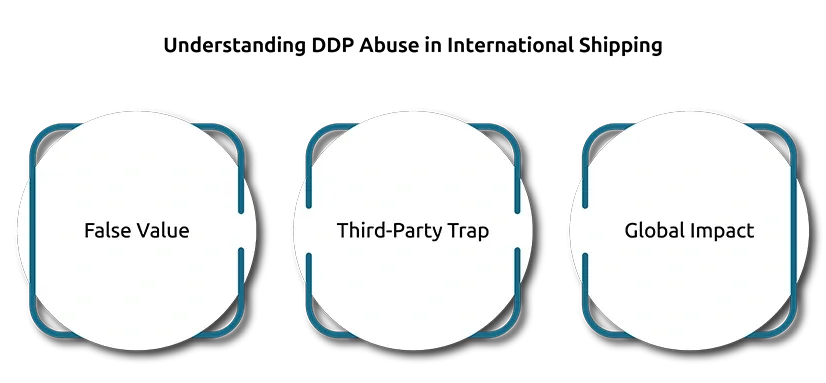
Understanding DDP Abuse in International Shipping
In a global shipping system known as “Delivered Duty Paid” (DDP), the supplier is in charge of handling customs clearance, paying import tariffs and taxes, and delivering products until the customer receives the shipment. When all customs rules are properly followed, it is a helpful option. However, when this delivery method is used to hide the actual importer, give a wrong product cost, or supply incorrect customs details, DDP abuse happens. Sometimes third-party importers are used without making it clear who is legally in charge of the shipment. This could result to problems with the customs process. Customs inspections, shipping delays, duty reviews, economic taxes, and legal steps are only some of the compliance issues that can result from using DDP incorrectly. Businesses should use proper customs documents, provide the correct value of goods, and have a clear understanding of every party’s duties during the import process in order to avoid these problems.
New Customs Enforcement Measures Introduced by CBP
Stronger customs enforcement methods were implemented in 2026 by U.S. Customs and Border Protection (CBP) in an effort to reduce duty evasion and increase import compliance. A new Executive Order provides CBP with additional tools to detect customs issues before shipments reaching the US and supports stricter. checks of imported products. To identify high-risk shipments more quickly, CBP is using AI-based risk analysis and smart data analytics. By comparing import data, product values, countries of origin, and delivery data, these tools help in detecting possible customs fraud or incorrect data. Additionally, CBP has stepped up shipment verification and shipment checks to make sure the goods being imported match the import documents. Also, the department is running more customs audits and working closely with other U.S. government departments to improve enforcement and transfer trade data. Together, these efforts support equal trade, increase supply chain transparency, and help companies following to US customs laws by providing accurate customs documents and product analysis.

How the Enforce and Protect Act (EAPA) Supports Duty Evasion Investigations
Businesses that try to avoid paying the correct import duties are checked by U.S. Customs and Border Protection (CBP) with the help of the Enforce & Protect Act (EAPA). It gives CBP the power to review import records, verify customs documents, and look into shipments that may include false trade details or duty evasion. The company keeps track on import processes, reviews shipping data, and checks the accuracy of claimed value, country of origin, and product details as part of CBP investigations. CBP can take enforcement steps to protect equal trade and make sure companies follow by US customs laws if it finds evidence of duty evasion. Customs charges, extra tax payments, shipment delays, and other legal steps may be applied on businesses who are found to be in violation of EAPA. The importance of import compliance and proper customs documents for businesses involved in global trade was shown in 2026 when CBP reported using EAPA investigations to detect over $1 billion in duty evasion.
Conclusion
To increase import compliance, U.S. Customs and Border Protection (CBP) is stepping up its efforts to avoid customs undervaluation, DDP misuse, and duty evasion. Companies must follow to U.S. customs regulations, use proper customs documents, and provide the correct product value. Reducing compliance risks, avoiding charges, and allowing a smooth customs clearance can be achieved by working with knowledgeable customs brokers and Importer of Record (IOR) service providers.
Did you know
The U.S. Census Bureau and the U.S. Bureau of Economic Analysis announced today that the goods and services deficit was $73.3 billion in June, down $4.4 billion from $77.6 billion in May, revised.
FAQ
Why is CBP targeting customs undervaluation in 2026?
CBP is stopping duty evasion, protecting equal trade, collecting correct import duties, & making sure businesses follow customs regulations.
What is DDP abuse in international shipping?
DDP abuse happens when businesses misuse DDP shipping to hide importer details & provide incorrect customs information.
How does the Enforce and Protect Act (EAPA) work?
EAPA allows CBP to investigate duty evasion, review import records, & take action against customs violations.
How can technology improve customs compliance and supply chain transparency?
Technology improves shipment tracking, document accuracy, compliance tracking, & helps businesses handle international trade more efficiently.
What penalties can businesses face for customs fraud?
Businesses may face fines, shipment delays, customs checks, extra duty payments, & legal steps for customs fraud.