Introduction
The Importer of Record plays an important role in global trade by ensuring that goods entering a country comply with all local laws, customs laws, regulations, & tax requirements. Working as the legal entity mainly responsible for imports, the IOR handles useful processes such as documentation, duties, tariffs, & regulatory approvals to ensure easy customs clearance. For businesses developing into global markets without a local presence, managing the IOR role is useful to avoid delays, fines, & compliance risks while handling useful cross-border operations.
Understanding the Role of an Importer of Record
An Importer of Record (IOR) is the legally responsible entity that ensures your goods enter a destination country in full compliance with local customs laws, import regulations, duties, and tax requirements. Whether you are shipping IT hardware, data center equipment, medical devices, or telecom infrastructure, having a reliable IOR service is not optional, it is essential. One Union Solutions acts as your trusted importer of record in 190+ countries, managing every step from HS code classification and documentation to customs clearance and final delivery so your business faces zero delays, zero penalties, and zero compliance risk.
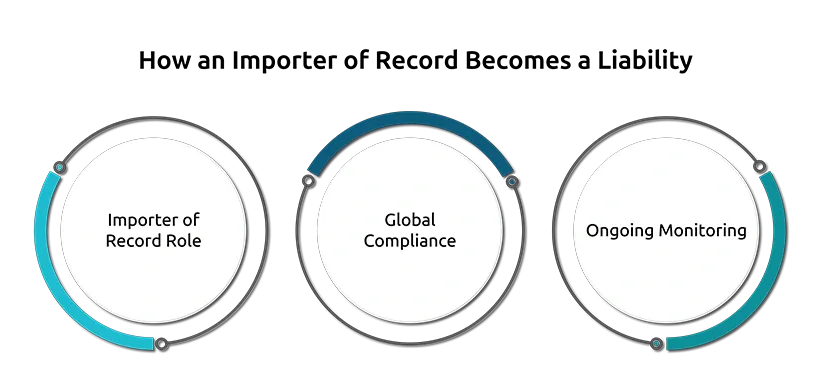
How an Importer of Record Becomes a Liability
An Importer of Record becomes a liability when compliance responsibilities are not handled continuously. Even small paperwork issues can cause critical issues for companies operating across many countries.
One of the most important issues is incorrect customs papers. Wrong & missing information on commercial invoices, incorrect product descriptions, can cause customs authorities to place shipments on hold until additional information is provided.
Incorrect HS code classification is another main risk. Every imported product must be classified correctly to verify applicable duties, taxes, & regulatory needs. Using the wrong classification may result in underpaid duties, customs verification, or additional financial fines.
Companies also face problems when import permits or product verification are skipped. Many countries need approvals before exact technology, medical devices, telecommunications equipment, or industrial products can be imported. Failing to obtain these approvals may prevent shipments from clearing customs.
The Business Impact of a Poor IOR Strategy
The impact of selecting the wrong Importer of Record extends far beyond customs clearance. Delayed shipments can interrupt production schedules, postpone customer installations, & increase project costs. Businesses importing data center equipment, medical devices, or telecommunications network often work within strict project timelines, making customs delays mainly costly.
Financial fines can also become important. Customs officials may apply fines for incorrect declarations, missing documentation, inaccurate valuation, or non-compliance with local laws. Shipments may be takes until compliance issues are resolved.
Repeated customs issues can also damage a company’s reputation. Customers expect reliable deliveries, & frequent delays may minimize confidence in a business’s ability to handle global operations. Reputation is just as valuable as operational efficiency.

Industries That Face Higher Import Risks
Every importer faces compliance responsibilities, some industries are facing greater risks because they import regulated, costly , or technically difficult products.
Technology companies mainly import servers, networking equipment, storage systems, & AI networks that may need specific classifications or regulatory approvals. Healthcare organizations importing medical devices must deal with additional documentation & product registration need.
Telecommunications companies often import equipment subject to licensing & technical certifications, while aviation businesses must handle strict import controls for aircraft components & management equipment. Automotive manufacturers importing spare parts & production equipment also depend on correct customs documentation to avoid issues to manufacturing schedules.
Conclusion
An Importer of Record is much more than an administrative requirement. It is an important part of global trade compliance & plays an important role in the success of global supply chain operations. Selecting an inexperienced or unreliable IOR can expose businesses to customs delays, financial issues, shipment holds, & operational issues that affect customers & long-term growth.
As customs laws become more regulated & international trade becomes more strict, businesses should check their Importer of Record strategy regularly. Connecting with an experienced & updated IOR provider helps minimize risk, improve customs procedures, & ensure goods move across borders efficiently. A trusty Importer of Record is not simply a logistics partner it is an important safeguard for successful global business operations.
Did you know?
The World Customs Organization (WCO) recommends that customs administrations use risk management and intelligence-based screening to identify high-risk shipments instead of inspecting every import. This means businesses with incomplete documentation, incorrect HS code classifications, or poor compliance records are more likely to face customs inspections, shipment delays, and additional scrutiny.
FAQ
Can my business still be liable if I hire a third-party Importer of Record?
Yes. While a third-party Importer of Record manages customs compliance on your behalf, your business may still face financial, operational, or reputational consequences if shipments are delayed, documentation is inaccurate, or regulations are not followed. Choosing a qualified and experienced IOR is essential.
What are the warning signs that my current Importer of Record may be putting my shipments at risk?
Frequent customs delays, repeated requests for additional documents, incorrect duty calculations, poor communication, limited knowledge of local regulations, and recurring compliance issues are common signs that your Importer of Record may not be effectively managing your imports.
How does an Importer of Record support businesses without a local legal entity?
An Importer of Record can legally import goods into countries where a business does not have a registered local entity. This allows companies to expand into new markets, complete international projects, and deploy equipment without establishing a local company.
Can choosing the wrong Importer of Record increase my overall import costs?
Yes. An inexperienced IOR can lead to customs penalties, shipment storage charges, inspection fees, reclassification costs, and project delays. These unexpected expenses often exceed the cost of working with a professional IOR service from the beginning.
How often should businesses review their Importer of Record strategy?
Businesses should review their IOR strategy regularly, especially when entering new markets, importing new product categories, expanding internationally, or when customs regulations change. Regular compliance reviews help identify risks before they affect shipments and business operations.