
Shipping depends on time, planning, & clear contracts. Goods move across seas, ports, & countries every day. But sometimes, weather events interrupt everything. Bad weather, or heavy snow, can stop ships, close ports, & delay cargo. When this happens, companies often use force majeure clauses in shipping contracts.
Understanding how weather triggers force majeure helps businesses avoid losses & legal issues.
What Is a Force Majeure Clause?
A force majeure clause is a rule written in a contract. It protects a company when something happens that no one can control. These events make it impossible to follow the contract. In shipping, force mainly usually covers natural disasters, government actions, or major disruptions. Bad weather is one of the most common reasons companies depend on this clause.
Why Weather Is a Major Risk in Shipping
Shipping happens in open environments. Ships travel across oceans. Ports sit near coastlines. Roads & railways connect ports to cities. All these areas are exposed to weather risks. When the weather becomes extreme, normal work stops. Ships cannot sail safely. Cranes cannot load or unload cargo. Trucks and trains cannot move goods. This leads to delays and missed deadlines.
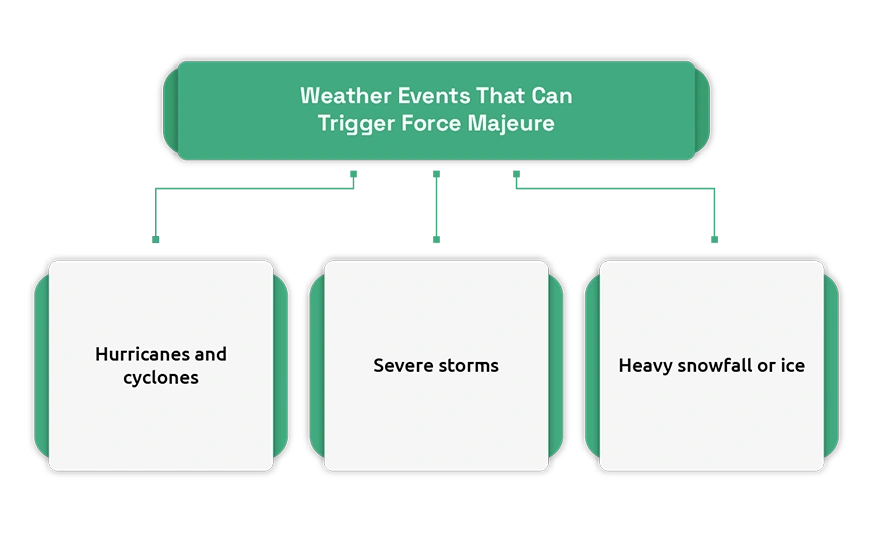
Weather Events That Can Trigger Force Majeure
Not all bad weather counts as force majeure. It must be serious and unexpected. Common weather events that may qualify include:
- Hurricanes and cyclones that shut down ports
- Floods that damage terminals and roads
- Severe storms with strong winds and rough seas
- Heavy snowfall or ice blocking transport routes
- Extreme heat is affecting cargo safety and equipment
Normal seasonal weather usually does not qualify. The weather must be severe enough to stop operations completely.

How Weather Disrupts Shipping Operations
Weather can affect shipping at every stage. A port may close for safety reasons. A vessel may be forced to wait at sea. Cargo may be stuck at a terminal. Inland transport may also stop due to damaged roads or rail lines. When these delays happen, companies may fail to meet delivery dates, loading schedules, or payment terms. At this point, force majeure may apply.
When Can a Company Use Force Majeure?
A company can use force majeure only when some conditions are met. The weather event must be completely beyond the company’s control & serious enough to make normal operations impossible. It must also directly prevent the company from performing its contractual duties, such as shipping, loading, or delivery, rather than causing a minor delay. In addition, the contract must clearly mention or allow weather-related events under its force majeure clause. The affected company is also expected to take reasonable steps to minimize the impact, such as rerouting cargo or adjusting schedules where possible. If it is found that the delay could have been avoided through better planning or alternative actions, the force majeure claim may not be accepted.
Importance of Giving Notice
Most contracts need a quick written notice. The affected party must inform the other side as soon as possible. The notice should explain what happened & how it affects the shipment. Documents such as weather alerts, port closure notices, or shipping logs help support the claim. Without proof, force majeure claims often fail.
Effect on Liability and Costs
When a force majeure is accepted, the company is usually not punished for delays. Penalties & damages may be paused. However, this does not always mean the contract ends. In many cases, the contract is only suspended until conditions return to normal. Extra costs like storage or insurance may still apply, depending on the agreement.
Common Disagreements
Issues often develop when one party believes the weather was predictable. For example, seasonal rains or winter snow may not qualify in some regions. Problems also happen when companies fail to take backup steps, such as rerouting cargo or using alternative transport. Courts often check whether a reasonable effort was made.
Why Clear Contract Language Matters
Clear contracts minimize confusion. A good force majeure clause clearly lists weather events, notice rules, & responsibilities. Loose wording leads to disputes & delays. Many companies now update contracts to reflect changing weather patterns & higher climate risks.
Conclusion
Weather is one of the biggest risks in shipping. Many storms, floods, & extreme conditions can stop operations without warning. Force majeure clauses help protect businesses when these events make shipping impossible. Force majeure is not automatic. The weather must be severe, the contract must allow it, & proper notice must be given. Clear agreements, good planning, & quick communication are key. As the weather becomes more unpredictable, understanding force majeure is no longer optional. It is used for safe, fair, & easy shipping operations.
Did You Know?
North America’s winter road maintenance infrastructure depends on a complex network of salt suppliers, distributors, and logistics providers that has remained largely unchanged for decades. This interconnected system moves approximately 40 million tonnes of de-icing materials annually across the continent, yet operates with increasing strain as aging production facilities, environmental constraints, and geopolitical supply chain risks converge.
FAQ
What does force majeure mean in shipping
Force majeure means an unexpected event that no one can control. In shipping, it protects companies when serious problems like extreme weather stop them from moving goods as planned.
Which weather events can trigger force majeure in shipping?
Events such as hurricanes, floods, severe storms, heavy snow, and extreme heat can trigger force majeure if they completely stop shipping operations or make them unsafe.
Does normal bad weather count as force majeure?
No. Normal or seasonal weather is usually expected and does not qualify. The weather must be unusual, severe, and beyond normal conditions.
What should a company do when weather causes shipping delays?
The company should inform the other party quickly, explain the situation, and share proof like weather alerts or port closure notices. They should also try to reduce delays where possible.
Does force majeure cancel a shipping contract?
In most cases, no. Force majeure usually pauses the contract until the weather improves. Once operations return to normal, the contract continues