Introduction
Ports are the support of global trade, working as a critical entry point that connects nations, industries, and consumers. With over 80% of global trade by size carried through seaport ways, the efficiency of ports directly impacts logistics, supply chain performance, and overall trade competitiveness. Modern organizations must guide international export regulations, customs clearance support, and difficult Incoterms such as DAP (Delivered at Place) and DDP shipping (Delivered Duty Paid). Also, effective ports are necessary for reducing fees, simplifying work, and global trade logistics and agreements.
As trade volumes continue to grow, ports must adopt advanced technologies and streamlined processes to handle increasing demand. Digital customs systems and automation help reduce congestion and improve turnaround times. Collaboration between port authorities, freight forwarders, and customs agencies further enhances operational efficiency. Together, these measures strengthen global supply chains and support seamless cross-border trade.
Why Ports Matter for the Global Economy for Competitiveness
Ports play an important role in allowing global trade facilitation, confirming that goods move smoothly from exporters to importers. They work as hubs where freight forwarding services, customs brokerage, and comprehensive import-export support converge. For example, an organization that depends on an importer of record services or an exporter of record services for how quickly cargo can be processed at ports.
Also, trade agreements and systems such as the Generalized System of Preferences and the correct use of harmonized system codes (HS Codes) or HTS harmonized tariff schedules require smooth customs clearance support at ports. Effective management reduces issues and confirms quick access to global trades, specifically for industries such as IT, aviation, medical, and automotive, which demand quickness, approval, and accuracy.
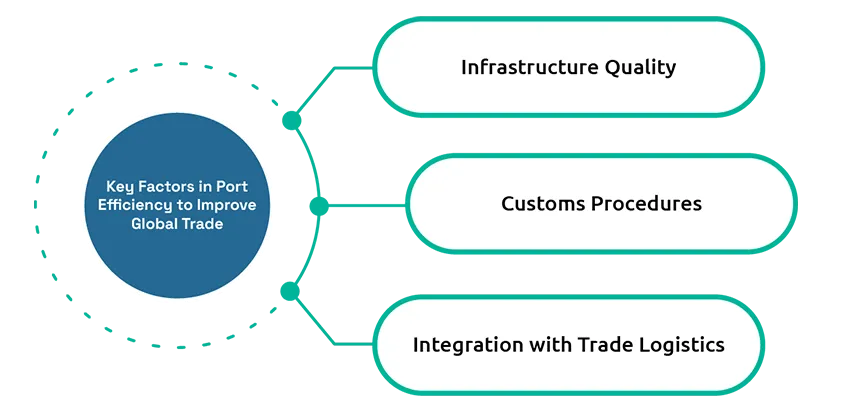
Key Factors in Port Efficiency to Improve Global Trade
Several factors influence port performance and, ultimately, their role in global supply chain services:
- Infrastructure Quality – Modern cargo stations, smart cranes, and digitized yard management speed up loading and unloading, reducing container turnaround time.
- Customs Procedures – Ports with simplified export customs brokerage and delivery duty paid logistics provide faster clearance, reducing delays.
- Integration with Trade Logistics – Ports connected to freight forwarding companies, international shipping solutions, and inland logistics confirms smooth cargo movement beyond the port gates.
- Technology Adoption – Automation, digital tracking, and blockchain-based systems improve accuracy in handling HS Codes and tariff categorizations.
- Skilled Workforce & Governance – Effective labor management and transparent guidelines create a business environment for trade logistics and agreements.
Sustainability and Innovation in the Port Sector
In today’s Global trade is not just about fast but also about sustainability. Ports are using green technologies, such as cranes, renewable energy sources, and improved container scheduling, to reduce carbon impact. These innovations work with global efforts to make global trade facilitation more strong. Also, digital platforms allow real-time visibility across DDP logistics, customs processes, and international shipping solutions. For example, advanced tracking helps businesses using DDP services confirm agreement with HTS harmonized tariff schedule requirements. The combination of innovation and eco-friendly methods strengthens ports’ global competitiveness while supporting industries in meeting environmental goals.
How Port Efficiency Impacts Trade Competitiveness?
Effective ports contribute directly to a country’s trade competitiveness by reducing costs, shipping times, and confirming predictable deliveries. For exporters, simplified clearance procedures mean goods reach global markets faster, supporting business growth. Importers benefit from smoother processes through importer of record services, customs brokerage, and DDP shipping solutions that confirm full agreement with international export regulations.
Also, efficient ports encourage foreign investment and strengthen supply chain dependence. Businesses engaged in comprehensive import-export support or dependent on freight forwarding services find that effective ports provide the flexibility and reliability required in today’s changing markets. Ultimately, port efficiency confirms a nation’s goods remain competitive on price, quality, and delivery schedules.
Conclusions
Port efficiency is more than just operational speed; it is a driver of global supply chain services, agreements, and international competitiveness. By combining strong infrastructure, smooth customs clearance support, and sustainable innovations, ports help businesses navigate the difficulties of Incoterms, HS codes, and global trade facilitation. If through export customs brokerage, Delivered Duty Paid logistics, or freight forwarding services, effective ports play an important role in shaping how nations and businesses grow in global trade.
DID YOU KNOW?
In India, Port authorities reduced container operation documents by 33% (from 143 to 96) and bulk cargo documents by 29% (from 150 to 106).
FAQs:
Q1. Why is port efficiency important in global trade?
Port efficiency lowers shipping costs, reduces transit times, and accelerates customs clearance, helping businesses remain competitive in international markets.
Q2. How do ports influence international supply chains?
Ports function as critical logistics hubs that connect freight forwarders, customs brokers, and inland transport networks, ensuring seamless movement of goods across borders.
Q3. What role do Incoterms like DDP and DAP play in port operations?
Incoterms define delivery and cost responsibilities between buyers and sellers. Efficient port operations support smoother execution of DDP and DAP shipments by minimizing customs and handling delays.
Q4. How does technology improve port efficiency?
Technologies such as automation, digital documentation, and blockchain improve tariff accuracy, reduce processing delays, and provide real-time shipment visibility for import-export operations.
Q5. Which industries benefit most from efficient ports?
Industries including IT, aviation, healthcare, and automotive benefit significantly from efficient ports due to their need for fast, compliant, and reliable cargo handling.