
Introduction
In today’s quickly growing economy, digital transformation in supply chains is changing how goods move across regions. Modern trade depends not only on ports, airports, and warehouses, but also on a digital chain that provides quick and clarity. As organizations expand into new markets, they must guide international export regulations, customs clearance support, and difficult documentation, and Incoterms. Digitalization confirms these processes are handled more efficiently, helping businesses stay competitive.
For industries such as automotive, IT, aviation, and medical, a technology-driven supply chain is necessary. Automotive manufacturers depend on global supply chain services for on-time parts delivery, IT organizations depend on freight forwarding services for valuable electronics, aviation requires correct customs brokerage, and medical suppliers must confirm agreement with international shipping solutions for urgent equipment.
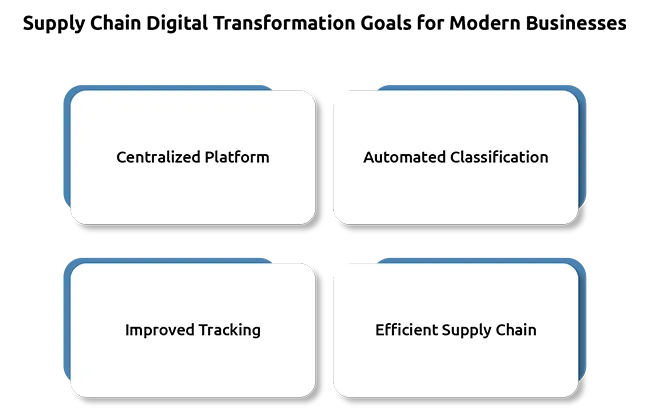
Supply Chain Digital Transformation Goals for Modern Businesses
The main goals of supply chain digitalization such as efficiency, visibility, and agreement. Businesses increasingly focus on combining comprehensive import-export support into centralized platforms. This helps reduce documentation, simplify approvals, and work shipments with programs such as the Generalized System of Preferences, which benefits exporters in eligible countries. Digital tools also improve trade shipping and agreements by automatically categorizing goods under the correct HS Code and applying the correct Incoterms, such as DAP or Delivered Duty Paid logistics. Automation reduces the risk of costly issues, improves customs brokerage, and confirms smooth global trade. For IT organizations, digital systems provide transparency in global electronics shipments. Automotive manufacturers can track supplier performance across regions. Aviation suppliers use blockchain and AI to confirm spare parts are traceable, while the medical industry uses digitalization to maintain temperature-sensitive shipments.
How to Implement Digital Transformation in Supply Chain
Implementing digital transformation requires strategic steps:
- Assessment of Current Systems organizations must identify gaps in international shipping solutions and estimate how automation can improve processes.
- Technology Adoption – AI, IoT, and blockchain can digitize operations, allowing indicative demand planning, shipment tracking, and automated documentation. For example, DAPs and DDP shipping can be executed smoothly through digital freight platforms.
- Integration with Trade Partners – Strong collaboration with exporter of record services, importer of record services, and cargo forwarding services confirms smooth coordination and live updates across borders.
- Compliance Automation – By digitizing export customs brokerage and combining HTS harmonized tariff databases, businesses reduce delays in customs clearance support and obtain strong approval to international export regulations.
Digital Transformation in Supply Chains to Improve Global Trade Efficiency
Digitalization grows efficiency by working with manufacturers, suppliers, freight forwarders, and customs officials on a single platform. Automated systems grow Delivery Duty Paid services, reduce issues in trade documentation, and increase global trade facilitation. Blockchain provides secure and transparent documentation, which is critical for freight forwarding services and comprehensive import-export support. Predictive analytics reduces supply chain risks, while real-time tracking ensures goods under DAP or Delivered Duty Paid logistics reach destinations without delays. In the IT industry, live tracking stops theft or loss of sensitive devices. Automotive manufacturers benefit from correct analytics to maintain assembly line flow. Aviation depends on digital agreement systems to meet international standards, and medical suppliers confirm urgent deliveries reach hospitals on time through improved international shipping solutions.
Benefits and disadvantages of Digitalization in the Supply Chain improvement?
Advantages:
- Greater visibility across global supply chain services.
- Faster and more accurate customs clearance support.
- Reduced risks of misclassification under HS codes or HTS harmonized tariff schedules.
- Improved cost efficiency in freight forwarding services and comprehensive import-export support.
- Stronger approval of international export regulations and trade logistics, and agreement.
Challenges:
- High upfront costs of digital infrastructure.
- Difficulties in combining with older systems used by trade partners.
- Increased submission to cybersecurity risks when managing sensitive trade data.
- Workforce training challenges when adapting to digital platforms.
Conclusions
The digital transformation in supply chains is not just a growth but an essential for confirming global trade efficiency. Working with Incoterms to accept Delivered Duty Paid logistics, businesses that embrace digitalization gain a huge competitive edge. By connecting processes such as customs brokerage, importer of record services, and exporter of record services under a unified system, organizations can unlock dependence and sustainability in the future of trade.
Digital supply chains enable faster decision-making through real-time data and predictive insights. Automation reduces manual errors while improving compliance with international trade regulations. Enhanced visibility also helps businesses respond quickly to disruptions and changing market demands. Together, these capabilities build more resilient, transparent, and future-ready global trade operations.
DID YOU KNOW?
AI-enabled supply chains drive value. Organizations with higher AI investments in supply chain operations have reported 61% higher revenue growth than their counterparts.
FAQs:
Q1: What is digital transformation in supply chains?
Digital transformation in supply chains involves adopting technologies such as AI, IoT, and blockchain to automate logistics, customs clearance, trade documentation, and shipping processes, improving efficiency, visibility, and compliance.
Q2: How does digital transformation improve global trade efficiency?
It enables real-time shipment visibility, reduces customs delays, ensures accurate HS code classification, streamlines Incoterms such as DAP and DDP, and uses predictive analytics to minimize operational risks.
Q3: Why is digitalization important for industries like automotive, IT, aviation, and healthcare?
These industries rely on time-sensitive, secure, and compliant deliveries. Digital solutions support on-time movement of automotive components, IT hardware, aviation spare parts, and temperature-controlled medical equipment.
Q4: What role do Importer of Record (IOR) and Exporter of Record (EOR) services play in supply chain digitalization?
IOR and EOR services support digital supply chains by managing customs brokerage, tariffs, compliance, and documentation through technology-enabled platforms aligned with international trade regulations.
Q5: What are the key challenges of digital supply chain transformation?
Common challenges include high implementation costs, integration with legacy systems, cybersecurity concerns, and the need for workforce training and change management.