Introduction
West Asia has been working as a major hub for global trade facilitation, with its major location linking Europe, Asia, and Africa. Also, the recent conflict escalation in the region threatens not only calm and security but also the steadiness of logistics and global supply chain services. Major seaports, airports, and trade routes passing through West Asia, any supply can lead to higher logistics charges, delays, and increased dependence on freight forwarding services, customs brokerage, and international shipping solutions. For exporters and importers, the support is high as they struggle to adapt to quickly changing trade conditions.
In such a volatile environment, businesses must focus on risk management and flexible logistics planning. Diversifying shipping routes and partnering with reliable trade service providers can reduce disruptions. Accurate customs documentation and compliance become even more critical to avoid delays and penalties. Proactive strategies enable companies to maintain supply chain resilience in the face of regional instability.
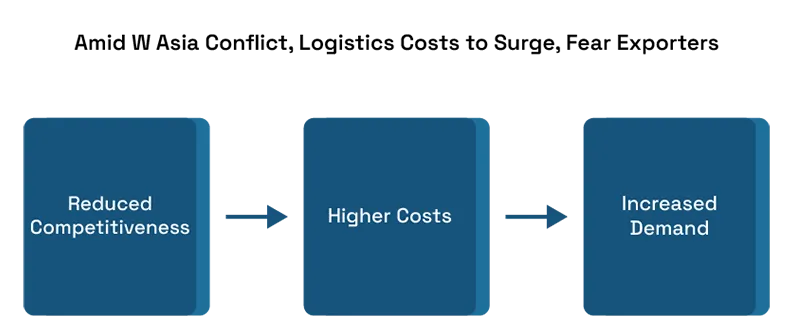
Amid W Asia Conflict, Logistics Costs to Surge, Fear Exporters
Exporters and importers alike are concerned about the sharp growth in trade logistics and agreement costs. Rising insurance premiums, disrupted shipping schedules, and rerouted containers through longer sea paths increase delivery time and expenses. Businesses using DAP, DDP shipping, or Delivered Duty Paid logistics are specifically vulnerable, as sellers are responsible for covering the higher logistics and customs costs. On the other hand, importer of record services and exporter of record services become essential for companies struggling to manage international export regulations, customs documentation, and customs clearance support. Exporters fear that the burden of rising costs will reduce competitiveness, particularly in markets where tariff concessions under the Generalized System of Preferences (GSP) are already shrinking.
Key Impacts on Logistics Costs for Global Trade
The ongoing instability is pushing up logistics fees, creating problems at ports, and increasing warehousing and handling charges. This directly affects global trade logistics, growing costs for necessary sectors such as automotive, medical, and IT equipment exports. For businesses depending on comprehensive import-export support, the situation means additional dependency on special partners providing export customs brokerage and customs clearance support. Also, problems in shipping schedules complicate adherence to Incoterms such as DAPs, DDP shipping, and DDP services, where clear granting of responsibilities is vital to avoid problems between buyers and sellers. Increased risks also drive exporters to carefully verify HS codes and the HTS harmonized tariff schedule to reduce delays during inspections.
Economic Strategies for Global Trade
To reduce risks, businesses are looking at various routing strategies, depending on international shipping solutions that avoid high-risk zones while maintaining cost efficiency. Using freight forwarding services with strong expertise in global supply chain services and international export regulations can help organizations adapt more effectively. Some exporters are turning to comprehensive import-export support providers who manage everything from customs brokerage to DDP services. Third-party services to trusted partners, exporters can confirm agreement with changing tariffs, avoid penalties, and maintain competitive pricing even in times of disruption. Also, accurate classification of products under the right HS code and working with the harmonized system code are vital strategies to stop extra customs charges and disputes.
Key Factors Increased Logistics Costs Globally
Several global factors contribute to rising costs in addition to the West Asia conflict. These include:
- Growing energy and logistics prices are impacting freight charges.
- Increased insurance premiums for shipments through conflict-prone waters.
- Stricter trade logistics and agreement measures require increased documentation and customs clearance support.
- Longer delivery timelines are forcing businesses to supply inventory and increase warehousing costs.
- Higher dependence on freight forwarding services and export customs brokerage to manage difficult documentation under updated international export regulations.
- For organizations using Incoterms such as DAP or Delivered Duty Paid logistics, these elements can increase costs, as sellers must cover all risks and expenses until final delivery.
Conclusions
The advance of conflict in West Asia is more than a regional issue; it has global consequences for trade, logistics, and supply chain resilience. Growing fees in shipping, customs handling, and agreements requirement for organizations to adopt smarter plans, such as using various routes, working with expert freight forwarding companies, and using importer of record services and exporter of record services. With customs brokerage, international shipping solutions, and comprehensive import-export support, businesses can continue working in line with global trade facilitation standards despite problems. Also, mastering the balance between risk, cost, and agreement will determine which exporters remain competitive in the growing global trade.
DID YOU KNOW?
Exports to Israel fell by 63.5 percent, exports to Jordan fell by 38.5 percent, and exports to Lebanon fell by 6.8 percent.
FAQs:
Q1. Why is the West Asia conflict increasing logistics costs?
The conflict disrupts major trade routes, increases insurance premiums, causes shipment delays, and raises dependence on freight forwarding and customs brokerage services.
Q2. How are exporters using DAP or DDP shipping impacted?
Under Incoterms such as DAP and DDP, sellers assume responsibility for logistics, customs clearance, and delivery costs, making them more exposed to rising fees, delays, and geopolitical risks.
Q3. What role do Importer of Record (IOR) and Exporter of Record (EOR) services play during this period?
IOR and EOR services help businesses maintain compliance with customs regulations, manage documentation, and meet tariff requirements, reducing the risk of penalties and clearance delays during uncertain conditions.
Q4. Which industries are most affected by higher logistics costs in West Asia?
Industries such as automotive, IT equipment, aviation, and medical supplies are particularly impacted due to their reliance on timely shipments and efficient customs clearance.
Q5. How can exporters reduce risks amid rising logistics costs?
Exporters can mitigate risks by diversifying trade routes, partnering with experienced freight forwarders, ensuring accurate HS code classification, and leveraging end-to-end import-export compliance solutions.