Introduction
In today’s global economy, global trade flows are changing more than ever. Countries depend heavily on effective logistics systems and Importer and Exporter of Record Services, not only to move goods but also to stay competitive in volatile markets. Also, the rise of new tariffs has delayed supply chains, pushing imports to surge while causing export problems. Businesses are now forced to adapt by focusing on trade logistics and approval, global supply chain services, and comprehensive import-export support to remain resilient.
Recent trade has changed the requirement for stronger partnerships between organizations and their logistics providers. For many organizations, the challenge is not only moving goods across borders but also guiding the difficult world of tariffs, customs, and international export regulations.
Why Tariffs Are Impacting Imports and Exports Differently
Despite growing tariffs, imports continue to grow because of high demand for medical goods, raw materials, and technology that are difficult to replace with local options. Organizations have been ready to absorb costs or adjust their fee plans to maintain stable supply chains. Also, exports are slowing down due to tariff backoff from trade partners, making it more difficult for local businesses to remain competitive in global trade. The role of customs clearance support, freight forwarding services, and customs brokerage becomes crucial. By using global trade facilitation services, businesses can avoid costly delays at borders and confirm agreements even in tariff-heavy environments. This explains why logistics providers have become central players in helping organizations maintain a balance between imports and exports.
Role of Incoterms and Tariff Classifications
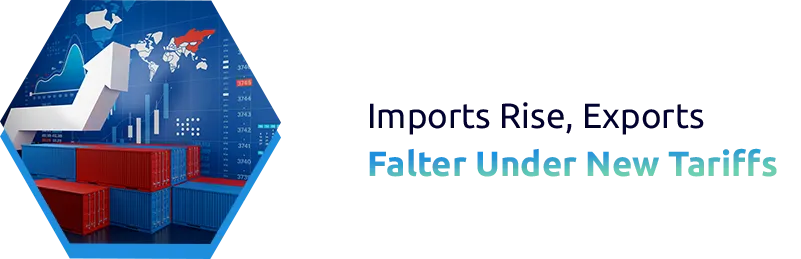
Trade contracts today depend heavily on the correct use of Incoterms. These global rules define the responsibilities of buyers and sellers in global trade transactions. Also, using DAP (Delivered at Place) or Delivered Duty Paid logistics affects who pays duties, manages risks, and arranges logistics. Many organizations prefer Delivery Duty Paid services as they provide predictability, mainly under changing tariff guidelines. Equally important is proper categorization. Tariff schedules are based on the Harmonized System Code (HS code) and the HTS harmonized tariff system. A small mistake in assigning a harmonized system code can result in shipment delays, heavy penalties, or changes in duties. We provide comprehensive import-export support to confirm that goods are accurately classified, avoiding unnecessary costs.
Importer and Exporter of Record Services
With tariffs tightening trade rules, compliance has become a priority. Businesses increasingly rely on importer of record services to handle import-related obligations, from documentation to tariff payment. Also, Exporter of Record services and export customs brokerage confirm that organizations meet all legal and regulatory issues when moving goods out of a country. These services provide satisfaction by confirming that shipments follow international export regulations and that goods are cleared without issues. For organizations expanding into multiple markets, comprehensive import-export support from one union solutions has become a necessity rather than an option.
Logistics Solutions in a Tariff World
The logistics industry has responded to tariffs with adaptive solutions. Providers now offer DAPs and DDP shipping to reduce risks for businesses trading across borders. These solutions transfer responsibility to logistics providers, allowing companies to focus on growth rather than customs complexities. Also, advanced freight forwarding services and international shipping solutions are helping organizations improve costs despite tariff increases. By combining global supply chain services with live data tracking and predictive analytics, logistics providers can confirm that goods are moving effectively.
The Future of Trade Under New Tariffs
As tariffs continue to change global trade, businesses must build flexibility. Those who use special customs brokerage, global trade facilitation, and logistics services will be able to stand out more effectively. The future of trade will demand flexibility, where organizations choose the right mix of Incoterms, tariff classifications, and agreement partners. Working with providers that deliver trade logistics and approval expertise, businesses can maintain strong import performance and gradually strengthen their export competitiveness.
Conclusion
The global trade is changing quickly under the pressure of tariffs. While imports are still on the rise, exports face challenges from regulatory and cost issues. Also, by depending on solutions such as importer of record services, export customs brokerage, HS code accuracy, and DDP shipping, businesses can continue to grow. Logistics is no longer just about moving goods; it is about confirming agreement, managing tariffs, and delivering comprehensive import-export support.
To succeed in this evolving trade environment, companies must adopt smarter, technology-driven compliance strategies. Proactive tariff planning and accurate documentation help reduce financial exposure and shipment delays. Partnering with experienced global trade service providers ensures regulatory alignment across markets. Ultimately, a compliance-focused logistics approach enables businesses to remain competitive despite shifting trade policies.
DID YOU KNOW?
China’s exports surged 8.1 percent on an annualized basis in April, higher than economists’ expectations of 2 percent growth.
FAQs:
Q1. Why are imports increasing despite higher tariffs?
Imports continue to rise due to strong demand for essential goods such as medical equipment, technology, and critical raw materials that cannot be easily sourced locally. Many businesses absorb higher costs to maintain supply chain continuity.
Q2. Why are exports struggling under new tariff policies?
Exports face challenges as trading partners impose retaliatory tariffs, reducing price competitiveness in global markets and increasing compliance and operational burdens for exporters.
Q3. How do Incoterms like DAP and DDP affect tariff management?
Incoterms define the allocation of costs, risks, and responsibilities between buyers and sellers. DAP and DDP arrangements help businesses manage tariff exposure by clearly outlining who is responsible for duties, taxes, and logistics.
Q4. What role do HS codes and tariff classifications play in global trade?
Accurate HS code classification is critical to determining correct duties and avoiding customs delays or penalties. Errors in classification can significantly increase costs, especially under evolving tariff regimes.
Q5. How can Importer of Record (IOR) and Exporter of Record (EOR) services support businesses?
IOR and EOR services handle regulatory compliance, documentation, and tariff obligations, ensuring smooth customs clearance and legal adherence for cross-border trade.