Introduction
The UK has been growing as a global trade hub, connecting organizations with opportunities across Europe, Asia, Africa, and the US. The UK has modern systems for seaports such as Felixstowe, Southampton, and London Gateway, and growing airports such as Heathrow and Manchester. The UK plays an important role in international shipping solutions and global supply chain services. Achieving smooth UK imports and exports requires businesses to work with international export regulations, customs processes, and effective trade logistics and approval plans.
To navigate this complex trade environment, businesses must ensure accurate documentation and compliance with UK customs regulations. Partnering with experienced logistics providers helps reduce delays and manage regulatory changes effectively. Advanced digital trade solutions further improve visibility and efficiency across shipments. Together, these strategies enable companies to maximize the UK’s position as a key global trading gateway.
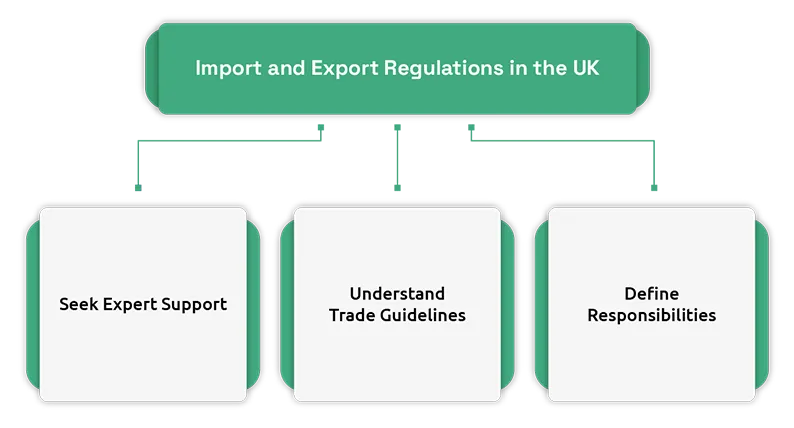
Import and Export Regulations in the UK
The UK follows strong international export regulations designed to confirm safe, clear, and compliant cross-border trade. Businesses frequently depend on comprehensive import-export support, such as exporter of record services and importer of record services, to guide these systems effectively. Major guidelines such as the Generalized System of Preferences (GSP) allow reduced taxes for some developing countries, supporting global trade facilitation. Also, organizations must conform to HS codes and the HTS harmonized tariff schedule to exactly classify goods for trade agreements. Incoterms such as Delivered at Place (DAP), DDP logistics play an important role in setting responsibilities between buyers and sellers in UK trade logistics. Using freight forwarding services, customs brokerage, and customs clearance support, organizations can simplify trade work without getting agreement problems.
Customs Procedures and Documentation Requirements
Smooth UK imports and exports depend on correct paperwork and customs clearance support. Organizations must have all the important documentation, such as trade invoices, packing lists, bills of lading, and approval of country use of HS codes, which helps customs administration take duties, tariffs, and taxes effectively. Many organizations outsource customs procedures to freight forwarding services or export customs brokerage experts to reduce delays and confirm adherence to international shipping solutions. Importer of record services and exporter of record services are increasingly depended upon by global organizations looking for smooth entry into the UK market while confirming adherence to trade logistics and agreements.
Tariffs, Taxes, and Trade Agreements Impacting UK Trade
Tariffs and taxes are a major factor in growing trade flows in and out of the UK. The Generalized System of Preferences provides lower taxes for some organizations, while long-term agreements expand market entry. Knowing the HTS harmonized tariff systems is important for organizations to calculate taxes correctly and manage costs.
Delivery duty paid service (DDP) arrangements and Delivered Duty Paid logistics solutions are becoming increasingly popular for importers who prefer comprehensive import-export support without unwanted expenses. Also, DAP shipping terms provide flexibility in risk and responsibility between exporters and importers. Businesses using customs brokerage services, freight forwarding service providers, and global supply chain services can better guide taxes while confirming agreement with global trade rules.
Managing Risks and Challenges in UK Import-Export
Even with the UK’s modern logistics systems, businesses still face problems related to changing tariffs, developing trade agreements, and customs complexities. Trade logistics and agreement risks can be reduced by accepting dynamic plans, such as partnering with customs clearance support experts and freight forwarding companies.
International shipping solutions, exporter of record services, and comprehensive import-export support providers play a vital role in addressing issues such as delayed shipments, misclassified goods under the HS code system, or unexpected tax load. Organizations that work with DDP shipping terms or Delivered Duty Paid logistics arrangements frequently reduce financial uncertainties while confirming smooth delivery across borders.
Conclusions
Seamless UK imports and exports require a strong hold of international export regulations, customs procedures, and tariff implications. With growing reliance on freight forwarding services, customs brokerage, importer of record services, and exporter of record services, businesses can achieve efficient global trade facilitation while minimizing risks. By using international shipping solutions, comprehensive import-export support, and advanced trade logistics practices, the UK remains a vital hub in the world of global supply chain services.
DID YOU KNOW?
In the second quarter of 2025, the value of exports from the United Kingdom was approximately 227 billion British pounds, while imports into the country were around 241 billion pounds, resulting in a trade deficit of around 14.4 billion pounds for the quarter.
FAQs:
Q1: What documents are required for UK imports and exports?
A: Key documents include a commercial invoice, packing list, bill of lading or airway bill, and accurate HS code classification to ensure smooth customs clearance.
Q2: How do HS codes and HTS harmonized tariffs affect UK trade?
A: HS codes and HTS tariffs classify products, determine applicable duties and taxes, and help businesses comply with UK and international trade regulations.
Q3: What role do Incoterms like DDP and DAP play in UK imports and exports?
A: Incoterms define the responsibilities of buyers and sellers. Under DDP, the seller covers all delivery-related costs, while DAP involves shared responsibilities between both parties.
Q4: Why should businesses use Importer of Record (IOR) or Exporter of Record (EOR) services in the UK?
A: IOR and EOR services ensure regulatory compliance, manage customs documentation, and help businesses avoid clearance delays when trading in the UK.
Q5: How can freight forwarding and customs brokerage simplify UK trade?
A: Freight forwarders and customs brokers manage transportation, documentation, and compliance processes, enabling seamless cross-border movement of goods.