Introduction
The logistics industry is no longer just about moving goods from one location to another. In today’s interconnected economy, logistics has changed into a high-tech service industry that combines digital tools, automation, and global trade facilitation. Organizations are under increasing pressure to comply with international export regulations, enhance Delivery Duty Paid (DDP) shipping solutions, and provide enhanced customs clearance support to remain competitive. From global supply chain services to trade logistics and agreements, the sector is rapidly evolving into a comprehensive import-export support system that not only ensures efficiency but also delivers valuable services to businesses worldwide.
What Is Transformation in Logistics?
Transformation in logistics refers to the change from traditional, manual work to a technology-driven ecosystem. This includes the adoption of digital supply chain platforms, live tracking, cloud-based management systems, and predictive analytics. More than just freight forwarding service providers, modern cargo freight forwarders provide comprehensive import-export support, international shipping solutions, and customs brokerage to ensure smooth operations. Importer of record services and exporter of record services also play a critical role in helping organizations guide the trade across the region and remain aligned with the HTS harmonized tariff schedule and Incoterms.

Major Technologies Driving the Transformation in the Logistics Industry
Many advanced technologies are transforming how logistics is managed across global supply chains. Automation and artificial intelligence are enabling automated warehouses, smarter route planning, and AI-driven warehouse management systems that reduce errors and improve overall efficiency. Blockchain technology is enhancing transparency in trade logistics and agreements by creating secure and tamper-proof transaction records.
The use of IoT and smart devices allows real-time cargo tracking, helping companies manage delivered duty-paid logistics while maintaining full supply chain visibility. Cloud-based solutions are also improving collaboration among freight forwarding service providers, customs brokers, and international partners. In addition, data analytics is playing a key role in strengthening customs clearance support and ensuring compliance with international export regulations. Together, these technologies are not only simplifying logistics operations but also opening new growth opportunities for international shipping solutions and global supply chain services.
How the Logistics Industry Is Growing
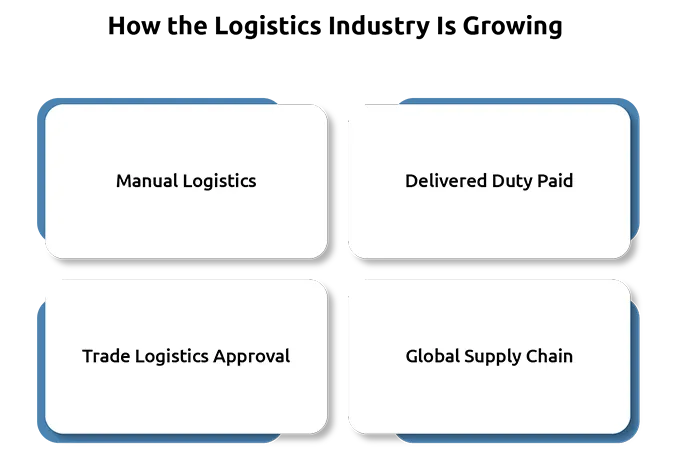
The logistics industry has evolved from being completely manual to becoming a strategic enabler of trade and growth. Businesses now expect logistics providers to deliver more than just cargo forwarding services. They demand integrated solutions, including Delivered Duty Paid logistics, trade logistics and approval, and global supply chain services. Also, freight forwarding service providers are expanding into end-to-end global trade facilitation, which includes export customs brokerage, importer of record services, and exporter of record services. These innovations allow organizations to reduce risks, follow HS codes, and use comprehensive import-export support to meet market demands and quick logistics.
Advantages of Digital Transformation in Logistics
The digital transformation of logistics provides several measurable benefits:
- Efficiency and Speed: Automated systems and digital platforms reduce delays in customs clearance support and international shipping solutions.
- Approval and Accuracy: Combinations of Incoterms, HS code checks, and HTS harmonized tariff regulations confirm smoother trade logistics and approval.
- Cost Savings: Delivery Duty Paid service methods, combined with freight forwarding companies providing combined customs brokerage, lower overall supply chain fees.
- Flexibility: International export regulations and DDP shipping models are managed smoothly with digital tracking and reporting.
- Global Reach: Exporter of record services and importer of record services allow businesses to enter new markets confidently, supported by comprehensive import-export support and global supply chain services.
- Also, digital transformation turns logistics into a proactive, high-tech partner for organizations rather than just a backend service provider.
Conclusions
The logistics industry is undergoing a profound transformation into a high-tech service sector, driven by digital technologies, agreement demands, and global supply chain services. From customs brokerage and export customs brokerage to Delivery Duty Paid logistics and comprehensive import-export support, businesses now depend on logistics providers for global trade. The integration of freight forwarding services, international shipping solutions, trade logistics, and agreement systems confirms that companies can grow in an increasingly regulated and competitive environment. As logistics continues to grow, companies that support this transformation will not only simplify their work but also gain an advantage in international trade.
DID YOU KNOW?
The logistics industry is expanding due to the rapid growth of the e-commerce sector in the last decade. The global digital logistics market size is estimated to reach 120.33B USD by 2032, representing a CAGR of 17.8%.
FAQs:
Q1: What does transformation in the logistics industry mean?
Transformation in logistics refers to the shift from traditional, manual operations to technology-driven processes, using automation, AI, IoT, and digital platforms to enhance global trade facilitation.
Q2: How are freight forwarding companies adapting to digital logistics?
Freight forwarding service providers now offer comprehensive import-export support, customs brokerage, DDP shipping, and real-time cargo tracking powered by digital tools.
Q3: Why is Delivery Duty Paid (DDP) shipping important in modern logistics?
DDP shipping ensures that sellers handle all costs and compliance requirements, including customs clearance and tariffs, making international trade smoother for buyers.
Q4: What role do Importer of Record (IOR) and Exporter of Record (EOR) services play?
IOR and EOR services help businesses comply with international trade regulations, HTS harmonized tariff schedules, and Incoterms, reducing risks in global trade.
Q5: What are the benefits of digital transformation in logistics?
The benefits include faster customs clearance, cost savings, improved compliance with HS codes, greater supply chain visibility, and easier market expansion.