Introduction
International trade operations become most anxious when facing customs clearance requirements. The customs clearance system maintains many rules and paper requirements that introduce possible bureaucratic issues that generate delays and extra expenses. It becomes extremely challenging for companies in the aviation industry, healthcare organizations, and those working with IT/data centers and automobile equipment sectors to address these obstacles. Noncompliance with customs rules and basic documentation mistakes lead to major delays, early penalties, and additional expenses that proper procedures can help prevent. The following text examines customary mistakes during customs clearance and recommends solutions to prevent them.
Common Customs Clearance Challenges
Incomplete or Incorrect Documentation
Insufficient or incorrect documentation is why customs clearance processes get delayed. Insufficient documentation, incorrect classification of tariffs, and missing invoices force customs authorities to delay goods through additional examinations. Using incorrect documentation combined with missing documentation imposes penalties and adds expense because customs officials charge fees for such non-compliance. Aviation and healthcare businesses experience substantial expenses when incorrect documentation occurs. Product delivery times extending between days to weeks depend on the speed at which the problem is resolved.
Complex Tariffs and Duty Structures
The complex tariff and duty structures across nations present a major challenge for businesses to overcome. The clarity of customs guidelines varies between countries because some nations maintain elaborate systems, including concealed fees and taxes. Businesses risk unexpected expenses and delayed deliveries because they fail to understand international tariffs and duties, which results in customs authorities withholding shipments until the proper payment arrives. Product exporters must understand tariff codes and duty rates for all target countries. Small errors in duty computations for IT and automobile equipment could generate substantial expenses based on the high value of these goods.
Customs Inspections and Border Delays
Customs random checks represent an intrinsic part of the customs inspection procedures. The inspections happen more frequently based on the characteristics of your traded goods and your trading partner’s nation. Your business supply chain suffers delays when goods require inspection, leading to substantial disruptions in your planned schedule. A shipment cross-reference for inspection activates more frequently when mislabeling, packaging complications, and incorrect declarations occur.
Strategies to Avoid Customs Clearance Nightmares
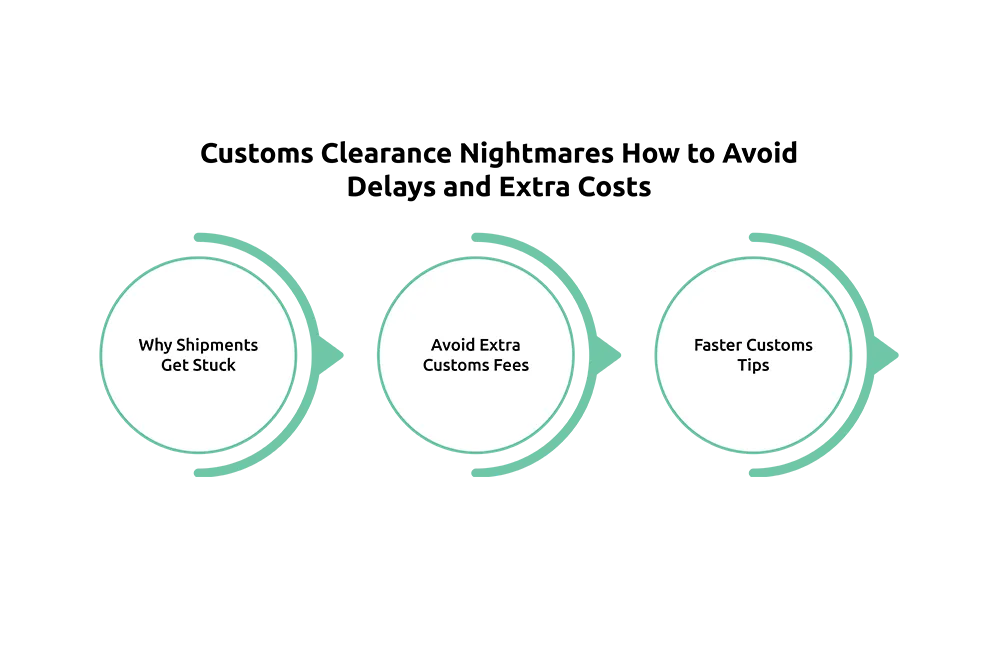
How do businesses move high-tech equipment when software isn’t enough
Software can track your cargo, but it can’t navigate the complex trade laws and sanctions that stop shipments. Using an Importer of Record (IOR) provides a legal partner on the ground to handle physical inspections and tax details. They take full responsibility for your GPUs and servers, preventing the seizures and fines that software often misses. This hands-on support ensures your tech clears customs smoothly and stays on schedule.
Engage in Regular Trade Compliance Training
Training your team in customs regulations is necessary because the rules tend to be complex and show variations between nations. The training provides essential knowledge about current regulations and necessary documentation and performance standards to each member of the customs team.
Your team will identify possible issues during regular training sessions, which will help them prevent major problems and achieve efficient customs clearance. The healthcare and IT fields require special attention due to strict compliance standards. Trade compliance training investments empower employees to stop making mistakes through effective participation in customs clearance operations.
Choose a customs broker you trust to handle your solution needs
The international shipping process requires expert assistance from customs brokers because they understand complex regulations and documentation rules. Benefits of working with reliable customs brokers include efficient clearance services and complete handling of paperwork together with destination country regulatory implementation.
The benefits of working with skilled customs brokers personify themselves, particularly in fields such as aviation and healthcare that demand precise licenses or accreditations. The brokers’ assistance includes handling tariff classifications and duty computations, which minimizes the probability of errors and delays. A trusted broker relationship ensures assurance and prevents avoidable customs process delays with their assistance.
Conclusion
Customs clearance does not have to be a costly or difficult issue in global trade. Understanding the most common issues, such as documentation errors, difficult tariff systems, inspections, and regulatory changes, businesses can take steps to reduce delays and avoid fees. Investing in technology, training teams on approval, working with expert customs brokers, and creating for inspections all contribute to easy cross-border work. For industries such as aviation, healthcare, IT, and automobile equipment, where accuracy and timing are vital for shipments. Get expert support from One Union Solutions, organizations can guide customs clearance effectively, secure their supply chains, and confirm quicker, complete global shipments.
Did You Know?
Customs is an authority or agency in a country responsible for collecting tariffs and for controlling the flow of goods into and out of a country.Traditionally, customs has been considered as the fiscal subject that charges customs duties and other taxes on import and export.
FAQs
1 Why is my shipment suddenly being audited by AI?
Customs now uses AI-driven risk profiling to scan digital data. If your paperwork doesn’t perfectly match the data submitted by your carrier, the computer automatically flags the shipment for an inspection before it even touches the ground.
2 Will the new “Small Shipment” taxes affect my personal orders?
Yes. Most countries have now removed tax-free limits (like Vietnam’s old 1M VND rule). Now, almost every item—no matter how cheap—gets hit with VAT and duties, so expect a small extra bill for every international package.
3 How do I avoid being blacklisted for “Misdeclaration”?
Don’t guess your HS Codes. Authorities are now cross-referencing product descriptions with images using AI. If your code implies a lower tax than the actual item, you won’t just get a fine; you could lose your import license for “repeated non-compliance.
4 Is “Green Logistics” documentation now mandatory?
In 2026, many regions require carbon footprint reporting for every shipment. If you don’t include these sustainability disclosures in your digital paperwork, your goods might be held at the border for “environmental non-compliance”.
5 Can I still get my equipment through customs without a local office?
Yes, but you need an Importer of Record (IOR). They take on all the legal and tax liabilities for you. It’s the easiest way to clear complex equipment like medical devices or IT servers without having a physical business presence in that country.