Global trade in 2026 is developing rapidly, but it is also changing fast. New technology, changing markets, & world events are affecting how countries buy & sell goods. Businesses have more opportunities to grow, but they also face challenges such as strict laws of all regions, higher costs, & delivery issues. Many companies are now providing services like IT & digital solutions across borders.
New markets in regions like Asia, Africa, & the Middle East are growing quickly, making more chances for businesses to develop. Online shopping across countries is also increasing, making it easier to reach international customers. To succeed in this growing environment, companies need to stay updated, follow rules carefully, & be ready to stay up to date & adapt to new technologies.
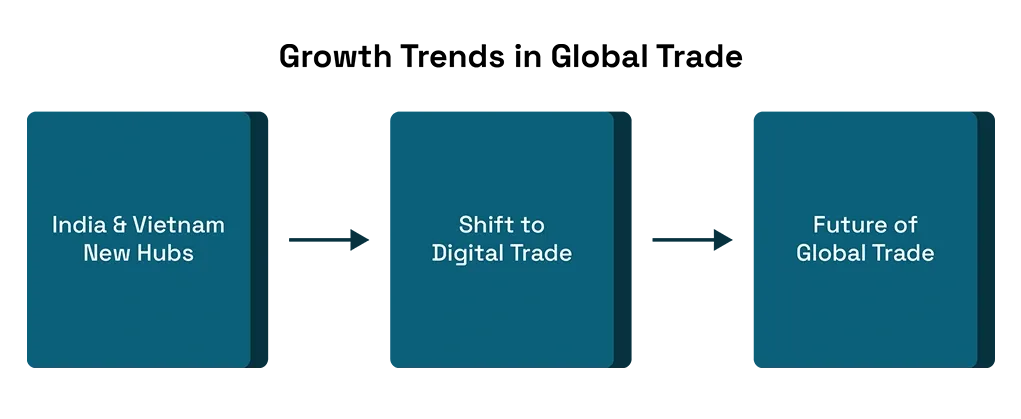
Growth Trends in Global Trade
Developing economies, especially in Asia, the Middle East, & Africa, are playing a main role in driving trade development. Countries like India & Vietnam are becoming main for manufacturing & export, attracting global businesses seeking cost-effective & usable solutions similar to traditional markets.
Another major growth factor is the development of services trade. Digital services such as IT solutions & cloud computing are rising faster than physical goods. This shift is especially useful for countries with strong digital networks & skilled employees.
Cross-border e-commerce is also contributing mainly to trade growth. With more consumers shopping online internationally, businesses are reaching global markets more easily than ever before. This has increased demand for efficient logistics, faster delivery systems, & simplified customs processes.
Challenges in Global Trade
While growth remains positive, global trade in 2026 faces many difficult challenges. One of the biggest concerns is geopolitical risk. Trade tensions, regional issues, & changing regulations are affecting supply chains & increasing the cost of doing business globally. These issues lead to delays, higher costs, & stricter regulations.
Another major issue is compliance. Countries are strict on their import-export regulations & laws, requiring businesses to follow detailed documentation, tax rules, & customs procedures. Failure to deal can result in penalties, shipment delays, or even legal issues. For many companies, especially small & medium-sized enterprises, managing compliance has become a main problem.
Supply chain issues continue to affect global trade as well. Issues such as port congestion, labor shortages, & using freight rates are making logistics more unpredictable. Businesses are finding it difficult to manage consistent delivery timelines & control costs.
Sustainability is another growing risk. Governments & organizations are introducing stricter environmental regulations, including carbon taxes & emission standards. Companies must now adopt greener practices, which can increase operational costs but are useful for long-term success.
Opportunities for Businesses
Despite these challenges, global trade in 2026 gives many opportunities for businesses that are willing to adapt. One of the biggest opportunities lies in supply chain development. Companies are no longer depending on a single country for manufacturing. They are developing their operations across many locations to minimize risks.
Engaging markets presents another main opportunity. Regions such as Southeast Asia, Africa, & the Middle East are experiencing quick economic growth & increasing demand for goods & services. Businesses that enter these markets early can gain a complete advantage & build strong long-term relationships with customers.
Technology is also creating new opportunities in global trade. Artificial intelligence, automation, & digital platforms are helping businesses to start operations, reduce risk, & improve decision-making. Digital freight solutions allow companies to track shipments in real time, while AI-powered tools can predict demand & use supply chains.
The growing importance of specialized services like Importer of Record & Exporter of Record solutions is helping businesses expand globally without establishing a local presence. These services simplify compliance, manage documentation, & ensure smooth cross-border transactions.
Sustainability, while a challenge, also presents an opportunity. Companies that adopt eco-friendly practices & invest in green logistics can improve their brand value & meet the expectations of environmentally conscious customers. Sustainable practices can also lead to long-term cost savings.

Conclusion
International trade in 2026 is a starting point for growth, challenges, & opportunities. While businesses must deal with geopolitical risks, compliance requirements, & supply chain problems, the potential for expansion remains strong. Growing markets, digital transformation, & developing trade strategies are opening new doors for all global industries.
The key to success lies in adaptability & forward-thinking. By using technology, developing supply chains, & staying updated with laws & regulations, companies can not only overcome challenges but also improve in the ever-changing world of global trade.
Did you know?
Vietnam is projected to remain one of the fastest-growing economies in the region. The World Bank expects the country’s economy to expand by 6.3% in 2026 and 7.7% in 2027.
FAQ
1. What is global trade in 2026?
Global trade in 2026 refers to the buying and selling of goods and services between countries, shaped by new technology, changing markets, and global events.
2. What are the main challenges in global trade in 2026?
The main challenges include strict regulations, supply chain delays, rising costs, and unpredictable global situations that affect trade operations.
3. Why is global trade still growing in 2026?
Global trade is growing because of increasing demand, digital services, cross-border e-commerce, and the rise of developing markets.
4. What opportunities does global trade offer businesses in 2026?
Businesses can expand into new markets, use digital tools, improve supply chains, and reach global customers more easily through online platforms.
5. How can businesses succeed in global trade in 2026?
Businesses can succeed by staying flexible, following trade rules, using technology, and exploring new markets to reduce risks and grow.