Introduction to Cross-Border E-commerce: A Global Growth Opportunity
Cross-border e-commerce means buying and selling products between people and businesses in various countries using online platforms. In simple terms, it allows organizations to sell their products to customers around the world through the internet. Today, it is one of the fastest-growing parts of international trade.
With cross-border e-commerce, exporters can reach out to their international customers without needing offices or physical stores in each and every country. This makes it easy & cost-saving for organisations to grow internationally.
For import-export companies, particularly in industries like IT, aviation, medical, & automotive, cross-border e-commerce creates new opportunities for growth. It helps organizations to reach more buyers, reduce reliance on local markets, & increase sales potential.
However, this growth also comes with challenges. Organizations must deal with different rules, customs regulations, shipping issues, & compliance requirements in each country. Managing these properly is important for smooth international operations.
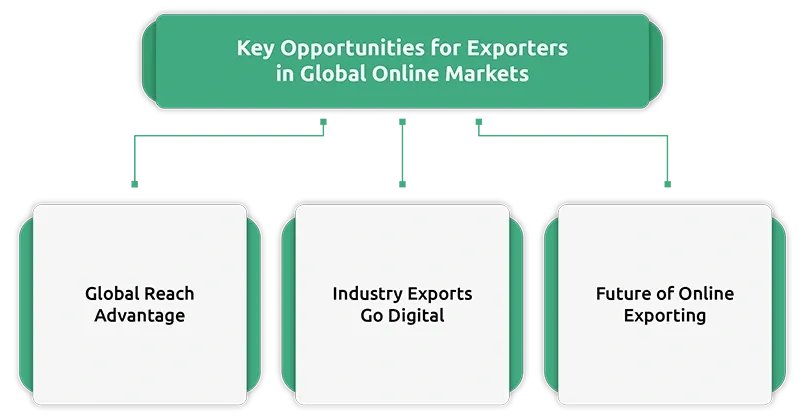
Key Opportunities for Exporters in Global Online Markets
One of the biggest benefits of cross-border e-commerce is that it gives exporters access to customers all over the world. Organizations can show their goods & items in many countries at the same time, which greatly increases their reach. For example, IT hardware exporters can sell networking equipment internationally, aviation parts suppliers can work with airlines in different countries, & medical equipment sellers can supply hospitals worldwide.
Another important benefit is brand growth. When organizations export internationally & maintain a good quality product, they become more trusted and better known. Automotive parts exporters can develop strong relationships with international manufacturers, while medical suppliers can secure long-term contracts with hospitals & healthcare providers.
Cross-border e-commerce also reduces dependency on traditional distribution channels. Instead of depending only on wholesalers or intermediaries, exporters can directly reach out to the buyers through digital platforms. This helps them to earn better profits and gives them more control over pricing.
Additionally, modern technology has made international trade much easier. Digital payment systems, fast online transactions, improved tracking systems, and global courier services have simplified transactions for exporters in industries like IT, aviation, medical, and automotive.
Major Challenges in Cross-Border E-commerce
Even though cross-border e-commerce provides many benefits, it also comes with a few challenges that exporters need to manage carefully.
One of the main challenges is customs rules and regulations. Every country has its own import regulations, paperwork requirements, & taxes. For industries like aviation and medical equipment, these rules & regulations are even stricter because of safety standards & certifications.
Shipping and logistics services can also be difficult. International shipping may get delayed due to customs clearance, transport issues, or missing papers. Products like automotive parts & medical equipment usually need special packaging & managing, which can increase both cost & difficulties.
Another challenge is currency exchange changes. Since payments are made in different currencies, exporters may lose money if exchange rates change suddenly.
Payment security is also a concern. Although digital payment systems are improving, some regions still do not have fully safe or smooth international payment options. This can delay payments or create risks.
Lastly, competition is very strong in international digital markets. Exporters not only compete with local sellers but also with international organisations providing similar products at lower prices.
Essential Strategies for Successful International Selling
To succeed in cross-border e-commerce, exporters need a clear plan that focuses on rules, shipping, & customer satisfaction.
First, it is important to understand international rules and regulations. Companies in the IT, aviation, medical, & automotive sectors must make sure their products address the standards of the destination country. Proper papers & certifications also help to avoid delays at customs.
Second, selecting the right logistics service partners is very important. Reliable shipping services & tracking systems help to ensure faster deliveries & better customer experience. Working with experienced import-export service providers can also make customs clearance easier.
Third, digital tools play a big role in success. Exporters should use e-commerce platforms, digital marketplaces, and automated systems to handle orders easily. Data tools can also help to identify which countries have the highest requirement for their products.
Fourth, localization is very useful. This means translating product details, adjusting prices for different markets, & understanding local culture and customer preferences.
Finally, risk management is necessary. Exporters should be prepared for changes in currency value, shipping delays, & new regulations to avoid losses & run their business smoothly.
The Role of Import-Export Expertise in Global Expansion
For industries like IT, aviation, medical, and automotive, expert help in import and export is very important. These industries usually deal with expensive, sensitive, or highly regulated products. Because of this, proper management of customs paperwork, rules, & shipping is important for smooth international trade.
When businesses use experienced import-export support, they can reduce risks, save time, and avoid high-cost mistakes. It also helps to improve delivery speed & reliability.
In today’s competitive global market, fast and smooth operations give companies a strong advantage & help them grow more easily.
The Future of Cross-Border E-commerce and What Exporters Should Prepare For
The future of cross-border e-commerce looks very promising. New technologies such as artificial intelligence (AI), blockchain, and automation are making international trade faster, easier, and more transparent.
AI tools are helping businesses better understand customer demand and predict what people will buy. Automation is reducing manual work by handling tasks like customs paperwork. At the same time, live tracking systems are improving shipment visibility, allowing both businesses and customers to know the exact location of their orders.
In the coming years, exporters in industries like IT, aviation, medical, and automotive will benefit from quicker trade processes and stronger global supply chains. This will help them deliver products faster and reach international customers more easily.
However, businesses will also need to keep up with changing rules and invest in digital tools to stay competitive in the global market.
Sustainability will also become very important. Companies will need to focus on eco-friendly packaging, better delivery routes, and low-carbon shipping methods. These practices will play a major role in shaping the future of international trade.
Conclusion
Cross-border e-commerce is changing the way exporters do business around the world. It gives great growth opportunities, especially for companies in the IT, aviation, medical, and automotive industries. At the same time, it also brings challenges like different rules & regulations, shipping delays, & payment issues.
With proper planning, the right use of technology, & strong import-export knowledge, businesses can enter global markets more easily and grow their international presence successfully.
Did You Know?
Global cross-border e-commerce is expected to reach $7.9 trillion by 2030, showing how fast international online trade is growing.
FAQs
- What is cross-border e-commerce?
Cross-border e-commerce means buying and selling products between different countries through online platforms. It allows businesses to reach international customers without having a physical store in those countries. - Why is cross-border e-commerce important for exporters?
It helps exporters expand their business globally, reach more customers, and increase sales without investing heavily in physical infrastructure. - How does logistics impact cross-border e-commerce?
Logistics plays a major role in timely delivery. Efficient shipping partners and tracking systems help reduce delays and improve customer satisfaction. - What are the main challenges in cross-border e-commerce?
Some common challenges include customs regulations, shipping delays, currency exchange risks, payment security issues, and strong global competition. - How can exporters manage customs and compliance issues?
Exporters can manage these challenges by understanding country-specific rules, maintaining proper documentation, and working with experienced import-export service providers.