Introduction
Global trade has become more difficult than ever, with supply chains extending across global industries and compliance requirements. Import-export organizations face the constant challenge of dealing with international export regulations, customs clearance support, and changing tariff systems. Using these services, such as Importer of Record and Exporter of Record, has become vital, as they confirm that organizations can legally move goods across borders without regulatory issues. Also, Delivered Duty Paid service has gained attention, allowing shippers to take full responsibility for customs duties, taxes, and shipping to the final location, providing buyers with a smooth experience. By using technology working with IOR, EOR, and DDP services, organizations can reduce approval risks, simplify documentation, and achieve more effective global trade facilitation. From AI tools to digital customs platforms, supply chain technology is transforming how businesses manage import-export compliance today.
Evolution Of Supply Chain Technology Tackles Import/Export Compliance Headaches
A requirement for fast, clear, and compliance has driven the evolution of supply chain management. Also, manual processes dominated import-export registration and export customs brokerage, resulting in delays, high costs, and penalties due to errors. Today, integrated global supply chain services combine automation, data analytics, and compliance monitoring to confirm every shipment meets international trade rules. Importer of record services and exporter of record services now depend on digital platforms that allow businesses to ship globally while adhering to local compliance requirements.
How can AI help with trade compliance documentation?
Artificial Intelligence is becoming a powerful ally in handling trade compliance documentation. AI-powered platforms can automatically classify products under the correct HS code or HTS harmonized tariff schedule, reducing the risk of misclassification. They also track changing Incoterms and identify potential risks in contracts. For businesses engaged in freight forwarding service operations, AI helps to simplify DDP shipping by verifying regulatory requirements and automating customs documents. Comprehensive import-export support platforms that use AI also help businesses stay compliant with export register filings and provide real-time customs clearance support.
Impact Of Supply Chain Technology Import/Export Compliance On Global Business
Adopting advanced supply chain technology has a direct impact on global business operations. Delivered Duty Paid logistics have become more dependable through automation, allowing organizations to expand their trades without worrying about unknown fees or approval issues. Businesses using global supply chain services enjoy quick customs processing, reduced penalties, and smoother trade across the region. Technology compliance systems also improve trust between trading partners, as clear international export regulations become easier to maintain. For industries such as automotive, medical devices, aviation, and IT, this efficiency change into stronger global competitiveness.
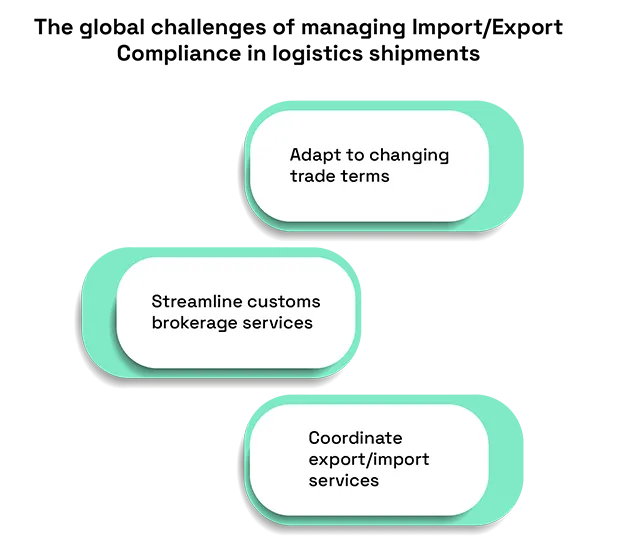
The global challenges of managing Import/Export Compliance in logistics shipments
Although advancements have been made, challenges remain in managing import-export compliance in logistics shipments. Different nations have their own guidelines and systems, and keeping up with constant updates to trade laws is difficult. For instance, organizations must work with changing Incoterms, manage customs clearance support, and confirm accurate documentation in every shipment. Also, coordinating export customs brokerage and importer of record services across different administrations can be a resource use. Without dependable, comprehensive import-export support, organizations risk penalties, shipment delays, or loss of market opportunities. This makes technology and digital approval platforms not just beneficial, but necessary in logistics shipments.
Conclusion
Technology is changing the future of global trade by reducing the headaches related to import/export compliance. From AI-driven documentation to digital customs platforms, businesses can now access smooth, comprehensive import-export support and global supply chain services. Using freight forwarding service providers with strong technology integration confirms smoother logistics shipments, accurate use of HS codes, and compliance with international export regulations. As trade continues to grow more difficult, organizations that hold these technological tools, whether through importer of record services, exporter of record services, or Delivered Duty Paid logistics, will be best positioned to grow in the competitive import-export business service.
By adopting digital trade solutions, companies can minimize compliance risks and avoid costly delays at customs. Technology also enhances real-time visibility across shipments, enabling better decision-making and faster issue resolution. Automated systems improve accuracy in documentation while reducing manual effort and operational costs. Ultimately, technology-driven trade management creates a more resilient and scalable global supply chain.
DID YOU KNOW?
Supply chain and logistics management specialist Cofactr is among the companies now seeking to deliver technological solutions to these headaches. The U.S. start-up recently acquired artificial intelligence platform Factor.
FAQs
Q1. What is the role of an Importer of Record (IOR) in global trade?
An Importer of Record ensures full compliance with local customs regulations, manages duty and tax payments, and assumes legal responsibility for goods entering a country.
Q2. How does an Exporter of Record (EOR) support trade compliance?
An Exporter of Record oversees export compliance by preparing export documentation, securing licenses, and ensuring shipments leave the origin country in accordance with regulations.
Q3. Why is Delivered Duty Paid (DDP) service important in logistics?
DDP service allows the seller to manage all duties, taxes, and shipping obligations, providing buyers with a seamless delivery experience and eliminating unexpected import costs.
Q4. How does AI help with trade compliance documentation?
AI streamlines compliance by accurately classifying goods under correct HS codes, monitoring regulatory updates, validating documentation, and reducing the risk of errors or penalties.
Q5. What challenges do businesses face in import-export compliance?
Businesses must navigate diverse regulatory frameworks, frequent policy changes, complex customs procedures, and extensive documentation, making automated and technology-driven solutions increasingly essential.